

Surprising fact: nearly half of short-term reset followers see a noticeable change on the scale within the first seven days, often from lost water rather than pure fat.
This guide explains what the boiled egg diet 2 week plan is, who it suits, and what to expect in 14 days.
The core idea is simple: eggs plus lean protein and low-carb vegetables, eaten on a tight meal schedule with water or zero-calorie drinks.
Who it’s for: people seeking a short, structured reset to reduce decision fatigue and make calorie control easier.
Read on for clear rules, foods to eat and avoid, nutrition targets, meal prep tips, two full weekly menus, common side effects, and a safe wrap-up to prevent rebound weight changes.
What you’ll need: eggs, lean proteins, low-carb vegetables, a few berries or citrus, seasonings, and water, tea, or coffee.
Key Takeaways
- Expect early scale shifts; much can be water loss.
- This is a short-term reset, not a long-term solution.
- Meals focus on eggs, lean protein, and low-carb veggies.
- Follow the rules, watch side effects, and plan post-reset steps.
- Simple shopping and set meals reduce decision fatigue.

What the Boiled Egg Diet Is and Why People Use It for Weight Loss
Many people choose an egg-focused reset because it simplifies meals and cuts carbs. In practice, the egg diet is a low-carb, higher-protein pattern built around three daily meals and zero-calorie drinks. This is precisely what the boiled egg diet 2 week plan achieves.
How it works in the body
Lower carbs, faster water changes
When carbohydrate intake drops, the body uses stored glycogen. Glycogen holds water, so early scale loss often reflects water, not just fat. That change can be rapid for some people and gives quick feedback.
Why eggs act as the protein anchor
Eggs supply complete protein and steady amino acids. That supports fullness and reduces snacking, which helps lower overall calorie intake.
What “rapid” weight loss really means
Rapid results usually mix water loss with real fat loss. Metabolism matters, but the main driver is the calorie deficit created by a short, restricted food list and simple meal rules. People like this approach for its ease, predictable portions, and quick motivation.
| Feature | Effect | Why it matters |
|---|---|---|
| Low carbs | Less glycogen/water | Fast scale changes, needs hydration |
| High protein | More fullness | Fewer cravings, lower calorie intake |
| Simple meals | Better adherence | Easy cooking and tracking |
Before You Start: Who Should Avoid the Egg Diet and When to Talk to Your Doctor
Safety comes first. A short, restrictive plan can be useful, but it isn’t right for everyone. Check your medical history and current medicines before changing intake or starting any new diet.
Who should avoid or use medical supervision
- Allergies or pregnancy: anyone with an egg allergy, pregnant or breastfeeding people, and those with a past eating disorder should not follow this without care.
- Heart risk: people told to restrict dietary cholesterol or at high heart disease risk should get personalized guidance on egg consumption.
- Medications and chronic conditions: if you have diabetes, kidney disease, or take blood pressure meds, talk to a clinician. Rapid weight loss can change medication needs and labs.
How low-calorie approaches can backfire
Very low-calorie diets may cause fatigue, lower workout capacity, and make long-term adherence harder.
Even with high protein, inadequate calories can harm muscle recovery and performance. Monitor energy and stop if you feel dizzy or unusually weak.
| Concern | Why it matters | Action |
|---|---|---|
| Cholesterol risk | Some people need to limit intake | Get tailored guidance |
| Diabetes / BP meds | Weight shifts alter dosing | Consult clinician before starting |
| Low energy & muscle | Low calories reduce recovery | Prioritize protein and rest |
Final note: This is a short-term strategy, not a permanent nutrition plan. Personalize choices to protect your health and stop early if symptoms worsen.
Core Rules of the Boiled Egg Diet 2 Week Plan
A short list of daily habits makes sticking with this reset far easier than guessing meals. The rules are straightforward: eat three set meals each day, skip snacks, and stick to water or other zero-calorie beverages.
How meals are arranged
Three planned meals keep hunger predictable and cut grazing. Pick consistent times so your body adapts and you avoid impulse eating.
Typical egg target and placement
Most common variations use about 2–3 eggs per day. Eggs usually appear at breakfast and one other meal, paired with lean protein and non-starchy vegetables.
Hydration and zero-calorie beverages
Water is the default. Unsweetened tea and black coffee are allowed. These drinks protect the calorie deficit without causing big appetite swings.
A Great Way to Get Started on the Right Foot!
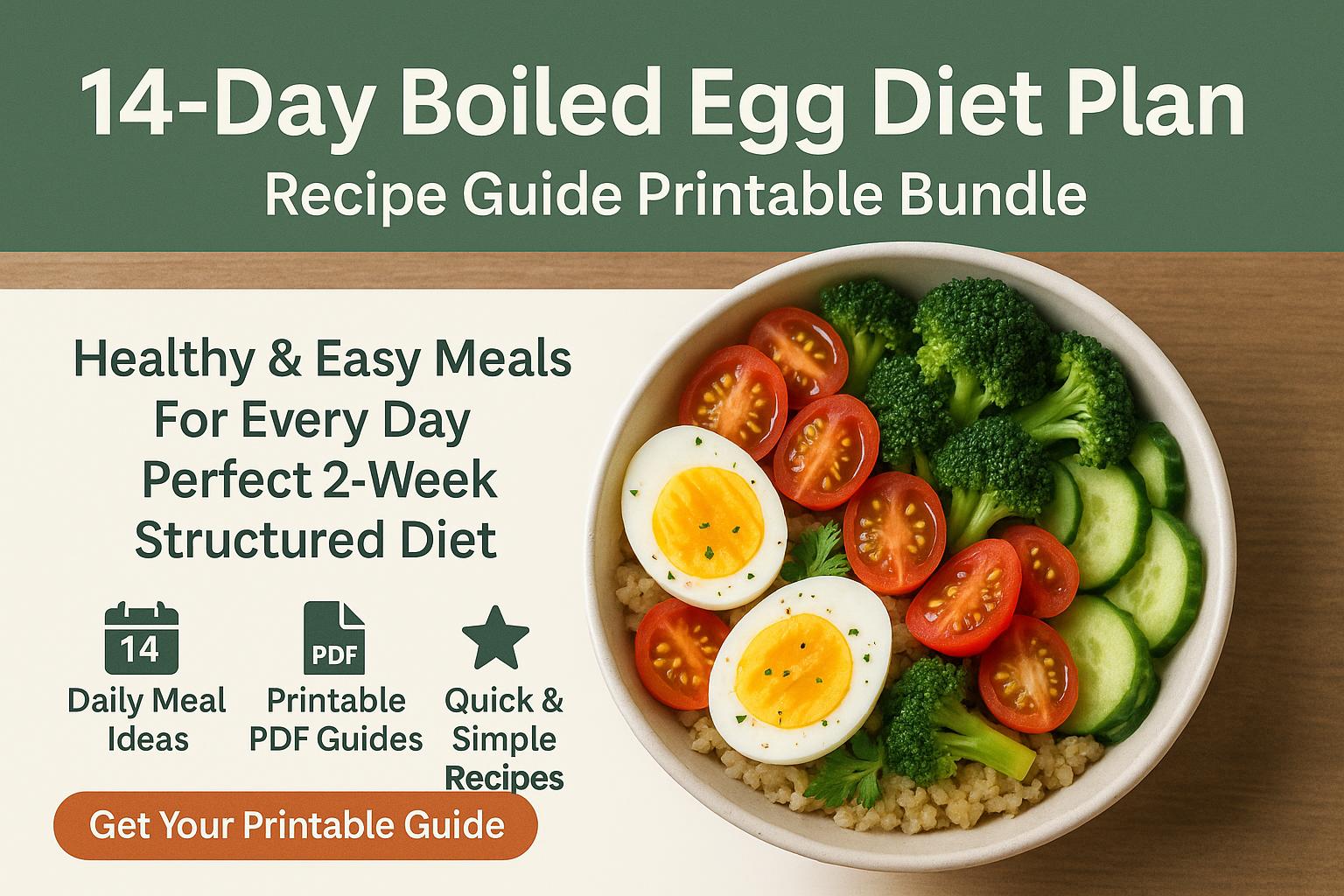
14-Day Boiled Egg Diet Plan
Recipe Guide Printable Bundle
Healthy, easy meals laid out for you day-by-day. A simple two-week structure you can start immediately.
- 14 Daily Meal Ideas
- Printable PDF Guides
- Quick & Simple Recipes
- Instant Download
Instant Download! Start Right Away!
Why hard-boiled versions are emphasized
Hard-cooked eggs are portion-stable and easy to batch-prep. They avoid hidden oils and extra calories that frying or heavy dressings add.
| Rule | Why it matters | Quick tip |
|---|---|---|
| Three meals/day, no snacks | Controls calories and prevents grazing | Pre-decide meals each morning |
| 2–3 eggs per day | Provides steady protein and fullness | Use one at breakfast and one with lunch or dinner |
| Only zero-calorie drinks | Preserve calorie deficit and hydration | Skip sweetened coffee, juice, and alcohol |
What breaks the rules: sweetened drinks, alcohol, and frequent snacking. If energy or mood drops, pause and reassess with a clinician if needed.
Foods to Eat vs. Foods to Avoid for Better Results
A focused shopping list and simple swaps help you stick to the reset without guesswork.
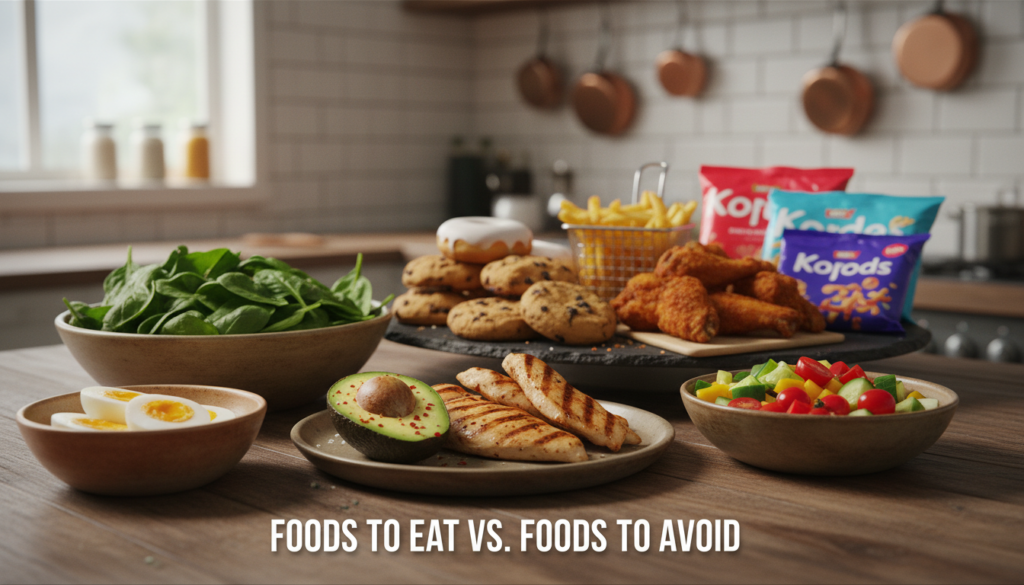
Yes — shop for these foods:
- boiled eggs, chicken breast, turkey, canned tuna, salmon, cod
- Leafy greens, spinach, broccoli, asparagus, zucchini, cucumbers, mushrooms, peppers
- Low-sugar fruits: grapefruit and small portions of berries
Using fruit and portions
Use fruits strategically. Grapefruit is common, and berries are allowed in moderation because they keep added sugar low.
What to avoid for better results
Avoid processed foods, added sugar, alcohol, juice, fried foods, and most starchy carbs. These items raise calories and can stall progress.
| Category | Recommended | Restricted |
|---|---|---|
| Proteins | Chicken, fish, turkey, tuna | Fried meats, breaded cuts |
| Carbs & grains | Small amounts only if flexible | Most grains, whole grains often limited, bread |
| Legumes & dairy | Limited beans; plain Greek yogurt if allowed | Large servings of legumes, sweetened yogurt, full-fat dairy |
Build-your-plate formula: eggs or lean protein + two non-starchy vegetables + optional approved fruit. Keep meals simple and repeatable for best adherence.
Nutrition Targets and What You’re Actually Eating for Two Weeks
Knowing what each meal actually provides helps you see whether the short reset meets real nutrition needs.
Quick nutrition snapshot
One large egg contains about 78 calories, ~6.3 g of protein, ~5.3 g fat, and ~0 g carbs.
This simple truth table clarifies why eggs repeat on menus: they deliver steady protein and predictable calories when meals are repetitive.
Daily calorie context
Popular versions land near 800–1,000 calories per day. That creates a big calorie deficit and fast scale changes for many people.
Warning: low intake can cause low energy, poorer workouts, and stronger cravings for some.
Key nutrients and common gaps
Eggs supply important nutrients beyond protein. Expect choline for brain and liver support, vitamin D for bone and immune health, and carotenoids like lutein and zeaxanthin for eye health.
Major shortfalls are fiber and calcium. Eggs contain no fiber and offer only about 24 mg calcium each, while adults need roughly 1,000–1,300 mg/day.
- Workaround: fill plates with non-starchy vegetables to boost fiber without adding many carbs.
- Calcium tip: consider fortified options if dairy is limited and talk to a clinician if bone health is a concern.
| Item | Per large egg | Why it matters |
|---|---|---|
| Calories | ~78 kcal | Predictable portions help control intake |
| Protein | ~6.3 g | Supports fullness and muscle preservation |
| Key nutrients | Choline, vitamin D, lutein, zeaxanthin | Brain, bone, and eye support |
Bottom line: eggs provide real nutrition density, but they do not deliver a fully balanced intake alone. Add plenty of vegetables and consider fortified choices to cover gaps during the short program.
A Great Way to Get Started on the Right Foot!
14-Day Boiled Egg Diet Plan
Recipe Guide Printable Bundle
Healthy, easy meals laid out for you day-by-day. A simple two-week structure you can start immediately.
- 14 Daily Meal Ideas
- Printable PDF Guides
- Quick & Simple Recipes
- Instant Download
Instant Download! Start Right Away!
Meal Prep Tips to Make the Plan Easy, Affordable, and Consistent
A little planning turns restrictive days into automatic, stress-free eating. Build a simple routine so the right foods are ready when hunger hits.
Batch-cooking and safe storage
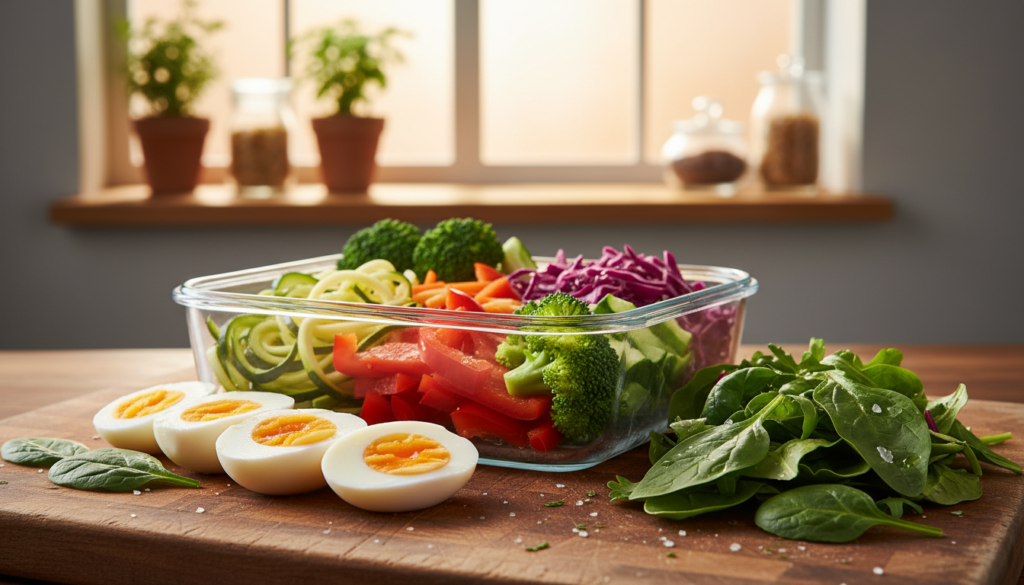
Make a large pot of boiled eggs ahead and chill them promptly. Aim for a 4–5 day supply to cut morning prep time.
Storage tip: refrigerate within two hours, keep eggs chilled, and toss any with an off smell or odd texture.
Fast lean protein shortcuts
Use rotisserie-style plain chicken breast, pre-cooked grilled chicken strips with clean labels, canned tuna, or frozen fish fillets you can bake in 15 minutes.
These shortcuts keep meals consistent when the week gets busy.
Simple vegetable add-ons
Bulk up plates with large bowls of mixed greens, steamed broccoli, roasted asparagus, sautéed mushrooms, cucumber salads with vinegar, or zucchini noodles.
“When protein and vegetables are prepped, impulse eating drops and adherence rises.”
- Budget wins: eggs, frozen vegetables, canned fish, and bulk greens cut cost.
- Repeatable routine: same breakfast; rotate lunch and dinner proteins for variety.

- Cooks 10 eggs in shells to a hard, medium or soft consistency with the 600-watt heater
- Poaching tray with 4-egg capacity and omelet tray with 3-egg capacity
- Brushed stainless steel lid; blue LED indicator, audible alert and standby mode

- MULTI FUNCTIONAL EGG COOKER: The Evoloop egg boiler is ideal for a busy solitary person or family to make hard-boiled eg…
- SIX EGG CAPACITY: Save time and water by cooking up to six eggs to soft, medium, or hard-boiled firmness; this method is…
- EASY TO STORE and SAVES SPACE: The boiled egg cooker measures about 7.6 inches tall and 5.6 inches wide and 8.6 inch len…

- MAKE EGGS 6 WAYS. If you and your family love eggs, you need the world’s most versatile egg cooker in your kitchen. With…
- MAKE 4 EGG BITES, 4 POACHED EGGS OR 9 HARD-BOILED EGGS. Cook up to 4 egg bites or 4 poached eggs in about 10 minutes or …
- PREPARE OMELETS, SCRAMBLED EGGS, FRIED EGGS AND MORE. Built-in 5.25” PFAS-Free nonstick skillet for making omelets, scra…
- HALF COST, HALF TIME, DOUBLE EGGS: Cook 12 eggs at once with our upgraded evoloop egg cooker, stackable design saves spa…
- MULTI FUNCTIONAL EGG COOKER: The Evoloop egg boiler is ideal for a busy solitary person or family to make hard-boiled eg…
- EASY TO STORE and SAVES SPACE: The boiled egg cooker is easy to carry around; The 2-layer design lets you customize it f…

- HALF COST, HALF TIME, DOUBLE EGGS: Cook 12 eggs at once with our upgraded evoloop egg cooker, stackable design saves spa…
- MULTI FUNCTIONAL EGG COOKER: The Evoloop egg boiler is ideal for a busy solitary person or family to make hard-boiled eg…
- EASY TO STORE and SAVES SPACE: The boiled egg cooker is easy to carry around; The 2-layer design lets you customize it f…
Two-Week Boiled Egg Diet Plan: Week One Menu
Start week one with a simple, repeatable rhythm you can follow every day. Aim for three meals per day: eggs at breakfast, lean protein at lunch, and eggs or protein again at dinner with non-starchy vegetables.
Day-by-day meal pattern
- Days 1–3: Breakfast — 2 boiled eggs + spinach or kale. Lunch — grilled chicken with asparagus. Dinner — baked fish with broccoli.
- Days 4–5: Breakfast — egg salad over mixed greens (watch mayo). Lunch — tuna in lettuce wraps. Dinner — turkey or lean steak with steamed greens.
- Days 6–7: Breakfast — 2 eggs + sautéed mushrooms. Lunch — canned salmon over salad. Dinner — grilled chicken and zucchini.
Fruit rotation rules
Use fruits sparingly. If allowed, have half a grapefruit or a small citrus once per day. Keep portions small to protect the low-carb structure.
Sample plate ideas and portion tips
- Egg salad over greens — control mayo to limit calories.
- Grilled chicken with asparagus — prioritize protein first, veg for volume.
- Fish with broccoli — bake or steam with lemon and herbs.
- Turkey with steamed greens — swap protein sizes to adjust hunger.
Quick note: Expect early water-weight shifts in these days. Stay hydrated and choose grilled, baked, or steamed cooking to keep added fats low.
Two-Week Boiled Egg Diet Plan: Week Two Menu and How to Keep It From Getting Boring
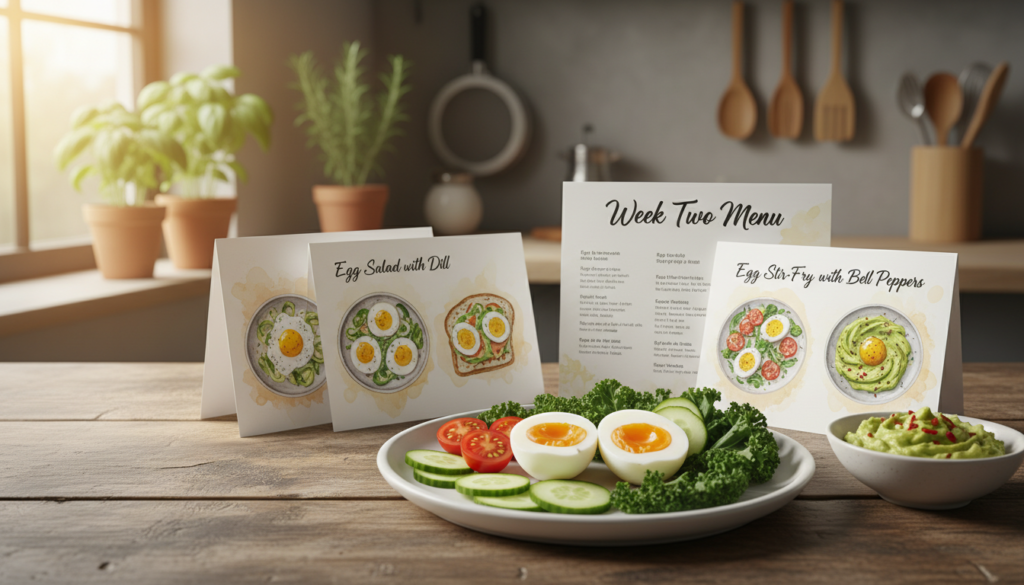
Small changes to proteins and vegetables make the second half far easier to follow. Week two keeps the same low-carb rules but adds variety so meals feel less repetitive.
Rotate lean proteins: swap cod for salmon, tuna for chicken, or turkey for lean beef. These swaps keep plates satisfying while staying within the structure.
Change vegetables to alter texture and flavor. Try spinach one day, kale the next, or trade zucchini for broccoli. Mixed greens make quick salads when time is short.

Flavor and cooking tips
Seasonings are your secret weapon. Use lemon, vinegar, mustard, garlic, pepper, chili flakes, paprika, and Italian herbs to boost taste with almost no calories.
Pick a flexible cooking method each day: grilled, baked, steamed, or air-fried with minimal oil. These choices help eating fit a normal schedule and improve adherence.
Simple week-two menu ideas
- Breakfast: 1–2 eggs with spinach or mixed greens and lemon.
- Lunch: grilled chicken or tuna over kale or zucchini noodles.
- Dinner: baked salmon or cod with asparagus or broccoli.
| Swap | Why | Example | Tip |
|---|---|---|---|
| Cod ↔ Salmon | Flavor & nutrients | Baked cod with lemon; grilled salmon | Use herbs to vary taste |
| Spinach ↔ Kale | Texture change | Wilted spinach; massaged kale salad | Vinegar or lemon brightens greens |
| Zucchini ↔ Broccoli | Crunch vs. softness | Zoodles vs. steamed florets | Roast broccoli for depth |
| Chicken ↔ Tuna | Lean protein rotation | Grilled chicken; tuna lettuce wraps | Keep portions consistent |
Fruit rules: follow your chosen version — grapefruit or small berries in rotation. If you eat out, choose a grilled lean protein and vegetables to stay on track.
Managing Side Effects and Staying Safe During Rapid Weight Loss
Quick results can feel motivating, but your body may send signals that need attention. Learn how to ease common side effects so safety and health stay first.
Common, manageable symptoms: constipation from low fiber, headaches or fatigue from low carbs, and irritability from low calorie intake. These are often temporary and can improve with simple steps.
Digestion support: add extra non-starchy vegetables at each meal and drink plenty of water to aid regularity. If constipation begins, discuss fiber options like psyllium or ground flax with a clinician before starting them. Small changes to foods and hydration help most people.
Energy and exercise: low-calorie, low-carb periods can reduce performance. Shift workouts to brisk walking, short strength sessions, or lower intensity until energy returns. Prioritize sleep and protein to protect muscle and recovery.
When to stop and seek help: mild hunger is normal. Stop the program and call a clinician if you get dizziness, fainting, chest pain, severe weakness, or if medications (especially for diabetes or blood pressure) behave differently.
“Focus on how you feel, not just the scale; safety matters more than fast numbers.”
Conclusion
A short, structured reset can jump-start results, but it works best as a brief tool — not a permanent fix.
The boiled egg diet 2 week plan and similar egg-based approaches create quick scale changes by cutting calories and carbs, with eggs acting as a protein anchor to curb hunger.
This approach is restrictive and may lack fiber and calcium. It may not suit people with certain medical issues or those on medications.
Exit smart: raise calories slowly (about +200–300/day), reintroduce carbs in small steps like oats or sweet potato, keep protein high, and add more vegetables and fruit before wider choices.
Focus on routines — meal prep, protein-first plates, and fewer processed foods — so any short loss becomes a healthier habit, not a rebound. If you have health concerns or take meds, consult your clinician before, during, or after this diet plan.