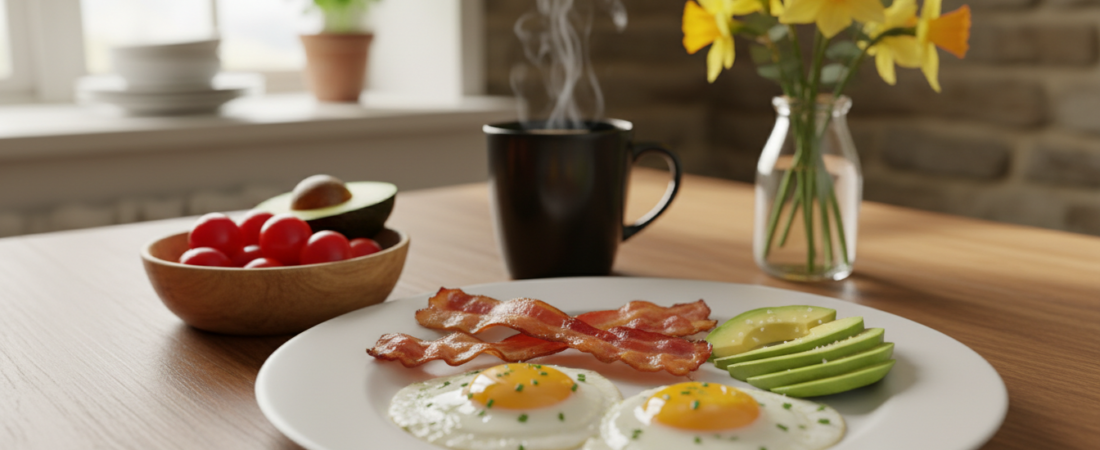
Surprising fact: over three days of egg-forward mornings we felt fuller between meals and saved time on prep — and that change stuck.
The egg‑fast challenge is a simple test: center your morning on eggs and see how they affect hunger, energy, and shopping costs. This guide walks you through our three-day experiment and shows practical ways to upgrade breakfast without extra hassle.
Expect a skimmable list of quick recipe ideas, basic protein math, and meal prep tips you can use on weekdays and weekends. We cover microwave fixes and wraps for hurried mornings, plus quiche and frittata options for slow days.
We also tackle common questions: how to pair eggs with veggies, beans, or whole grains, and what to know about cholesterol. The focus is on filling morning meals that carry you to lunch while keeping shopping simple—think Trader Joe’s eggs and pantry staples.
Key Takeaways
- Egg-centered mornings can reduce hunger before lunch and simplify prep.
- Simple recipes work for busy weekdays and relaxed weekends.
- Combine eggs with vegetables or grains for balanced meals.
- Quick protein math helps plan satisfying portions.
- We address cholesterol concerns and practical meal swaps.
Why we tried an egg-fast in the first place
To test a simple swap that could change our mornings. We centered three mornings on a repeatable plate and tracked how that affected hunger, prep time, and how much we spent. The goal was clear: a cheaper, higher-protein morning routine that didn’t add fuss.
The goal: a cheaper, higher-protein morning routine
Real life pushes us to overspend at the start of the day — coffee-shop sandwiches, packaged bars, or last-minute takeout. We wanted a way to cut that habit while still feeling satisfied for hours.
What the plan looked like for three days
For each day, the central item sat on the plate and we mixed in affordable add-ons for variety. That meant vegetables, a bit of cheese, leftover deli meat, or a slice of bread or wrap when we wanted it.
- Rules: eat around the same time each morning, keep prep quick on weekdays, and skip specialty ingredients.
- Track how the meal changed mid-morning cravings and snack choices later in the day.
What happened when we ate eggs for three days
Eating mostly eggs each morning for three days revealed fast wins in steady energy and fewer cravings. Research and practical counseling point to a better feeling of fullness when mornings include more protein, and we saw that play out in real life.
Energy, cravings, and staying full between breakfast and lunch
Most mornings we felt steadier energy and fewer mid-morning dips. That meant less rummaging for snacks and fewer “I need something sweet” urges before lunch.
Satiety showed up as longer stretches without hunger and smaller snack portions when we did eat.
How variety kept it doable
Adding cheese, chopped veggies, or occasional deli meat kept the plan from feeling repetitive. Those add-ins also helped hit extra grams of protein and made each meal more enjoyable.
What we missed and what we’d change next time
We missed crunchy textures and fruit-forward plates. Next time we’d rotate flavors, batch-cook vegetables, and plan one no-cook option to break up texture.
- Note on fat: the type and amount of added fat changed how heavy a meal felt; balance fats with vegetables when you want a lighter finish.
- See the recipe list later for practical swaps that reflect these tweaks.
Why eggs are a budget MVP for protein breakfasts
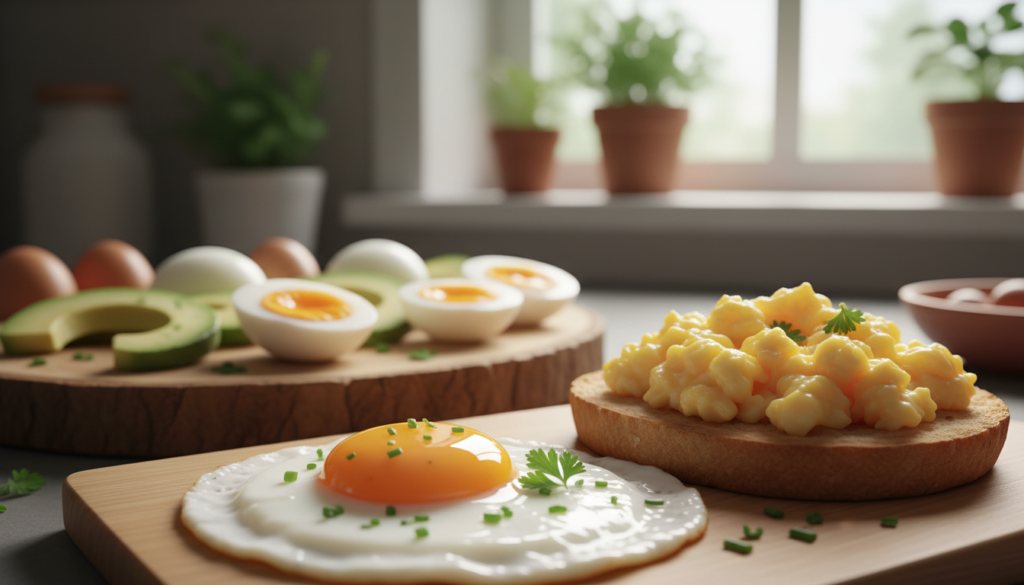
Simple, quick, and versatile — eggs turn pantry basics into reliable morning plates. They are a complete source of protein and often one of the most affordable items on the shelf. That combination makes them an easy foundation for many recipes.
A Great Way to Get Started on the Right Foot!
14-Day Boiled Egg Diet Plan
Recipe Guide Printable Bundle
Healthy, easy meals laid out for you day-by-day. A simple two-week structure you can start immediately.
- 14 Daily Meal Ideas
- Printable PDF Guides
- Quick & Simple Recipes
- Instant Download
Instant Download! Start Right Away!
Complete nutrition and fast cooking
One or two eggs deliver essential amino acids and cook in minutes. Scrambles take under five minutes, a mug recipe fits the microwave, and a sheet-pan bake serves a crowd.
Pairs, scales, and cuts waste
Eggs mix well with frozen spinach, shredded cheese, or leftover veggies. Use the same ingredients to make a single omelet or a casserole for several people.
“A little planning turns a single pan into weekday meals and fewer trips to the store.”
- Speed: minutes to cook, or batch-bake for the week.
- Flexibility: mug, skillet, or oven — same base ingredients.
- Cross-meal use: breakfast, lunch, or a snack to cut food waste.
| Method | Time | Best for |
|---|---|---|
| Scramble | 3–5 min | Single servings, fast prep |
| Microwave mug | 2–3 min | One-person quick meal |
| Sheet-pan bake | 25–35 min (hands-off) | Family meal or meal prep |
| Muffin-tin cups | 20–25 min | Grab-and-go portions |
Next up: practical targets so you can plan meals that meet your goals without overthinking every gram.
Protein targets to aim for at breakfast (without overthinking it)
Aim for a practical grams goal each morning that keeps you full longer. Research suggests roughly 30 grams protein at breakfast helps satiety and steadier energy through mid-day.
Quick math that actually works
Easy math: one large egg gives about 6 grams protein. Two to three eggs form a solid base without needing a scale.
How to reach 20–30 grams per serving
- 2 eggs (12 g) + 1 oz cheddar (~7 g) = ~19 grams.
- 2 eggs (12 g) + 1/2 cup cottage cheese (~14 g) = ~26 grams.
- 2 eggs (12 g) + 2 oz cooked sausage (~10 g) = ~22 grams.
No need to obsess. Use these quick builds as guides. Spreading grams protein earlier in the day often cuts afternoon cravings. The recipes later are organized to help you hit these ranges per serving without fancy ingredients.
| Build | Approx. grams | Good for |
|---|---|---|
| 2 eggs + cheddar (1 oz) | ~19 grams | Quick skillet or sandwich |
| 2 eggs + cottage cheese (1/2 cup) | ~26 grams | No-cook add-on or bowl |
| 2 eggs + shredded chicken (2 oz) | ~24 grams | Wraps or scramble boost |
Are eggs okay if you’re watching cholesterol?
Many people worry that eggs will spike blood cholesterol, but the evidence is less dramatic than headlines suggest.
For most adults, dietary cholesterol has only a small effect on blood cholesterol. Studies show that saturated fat and overall diet shape levels more than cholesterol in food. That means a morning plate can include whole eggs without major concern for many people.
Practical caveats and medical guidance
If you have a specific condition — such as familial hypercholesterolemia, kidney disease, or other clinician-directed limits — follow personalized medical advice. Talk to your provider before changing protein intake.
Balance fats and add volume
Make meals feel lighter by pairing eggs with fiber-rich vegetables and whole grains. Spinach, tomatoes, and peppers add bulk, vitamins, and fiber without lots of added fat.
Yolk benefits
Egg yolks contain antioxidants like lutein and zeaxanthin. These nutrients support eye health and add value beyond basic protein.
| Concern | What research says | Simple swap |
|---|---|---|
| Dietary cholesterol | Minimal impact for most adults | Keep portions and overall diet balanced |
| Saturated fat | Has greater effect on blood lipids | Use cooking oils low in saturated fat |
| Medical conditions | Needs individual guidance | Consult your clinician |
Budget‑Friendly High‑Protein Breakfasts with Eggs
No-specialty shopping required: a handful of pantry staples turns eggs into reliable morning plates. Below are quick recipes you can rotate through a week without extra fuss.
A Great Way to Get Started on the Right Foot!
14-Day Boiled Egg Diet Plan
Recipe Guide Printable Bundle
Healthy, easy meals laid out for you day-by-day. A simple two-week structure you can start immediately.
- 14 Daily Meal Ideas
- Printable PDF Guides
- Quick & Simple Recipes
- Instant Download
Instant Download! Start Right Away!
Microwave spinach & cheddar eggs (mug method)
Beat two eggs in a microwave-safe mug, stir in a handful of chopped spinach and a sprinkle of cheddar, then cook 60–90 seconds, stirring once. Spinach adds volume and nutrients while cheese boosts staying power.
Bell pepper & cheese egg cups (meal prep)
Halve large bell peppers, crack an egg into each, top with shredded cheese, and bake 15–20 minutes. Store in the fridge up to four days for grab-and-go mornings.
Mushroom omelet with garlic (stovetop win)
Sauté sliced mushrooms with minced garlic, add beaten eggs, and fold. Garlic brings depth and makes this feel restaurant-level without extra cost.
Pepper-ring “egg in a hole” with avocado-style topping
Use thick pepper rings instead of bread, fry an egg in the center, and top with smashed avocado or a lemon-tahini dollop for fresh fats.
Tomato-simmered eggs with whole-wheat bread
Simmer crushed tomatoes, crack in eggs, and cook until set. Serve with toasted whole-wheat bread for dipping and extra fiber.
Sunny-side-up over a spinach-packed quesadilla
Fill a tortilla with sautéed spinach and a little cheese, crisp in a skillet, and finish with a sunny-side-up egg on top for a crunchy, satisfying meal.
- Budget notes: use frozen spinach, buy store-brand cheese, and prioritize leftover produce first to cut costs.

- Cooks 10 eggs in shells to a hard, medium or soft consistency with the 600-watt heater
- Poaching tray with 4-egg capacity and omelet tray with 3-egg capacity
- Brushed stainless steel lid; blue LED indicator, audible alert and standby mode

- MULTI FUNCTIONAL EGG COOKER: The Evoloop egg boiler is ideal for a busy solitary person or family to make hard-boiled eg…
- SIX EGG CAPACITY: Save time and water by cooking up to six eggs to soft, medium, or hard-boiled firmness; this method is…
- EASY TO STORE and SAVES SPACE: The boiled egg cooker measures about 7.6 inches tall and 5.6 inches wide and 8.6 inch len…

- MAKE EGGS 6 WAYS. If you and your family love eggs, you need the world’s most versatile egg cooker in your kitchen. With…
- MAKE 4 EGG BITES, 4 POACHED EGGS OR 9 HARD-BOILED EGGS. Cook up to 4 egg bites or 4 poached eggs in about 10 minutes or …
- PREPARE OMELETS, SCRAMBLED EGGS, FRIED EGGS AND MORE. Built-in 5.25” PFAS-Free nonstick skillet for making omelets, scra…
- HALF COST, HALF TIME, DOUBLE EGGS: Cook 12 eggs at once with our upgraded evoloop egg cooker, stackable design saves spa…
- MULTI FUNCTIONAL EGG COOKER: The Evoloop egg boiler is ideal for a busy solitary person or family to make hard-boiled eg…
- EASY TO STORE and SAVES SPACE: The boiled egg cooker is easy to carry around; The 2-layer design lets you customize it f…

- HALF COST, HALF TIME, DOUBLE EGGS: Cook 12 eggs at once with our upgraded evoloop egg cooker, stackable design saves spa…
- MULTI FUNCTIONAL EGG COOKER: The Evoloop egg boiler is ideal for a busy solitary person or family to make hard-boiled eg…
- EASY TO STORE and SAVES SPACE: The boiled egg cooker is easy to carry around; The 2-layer design lets you customize it f…
Scrambled eggs upgrades that stay cheap and filling
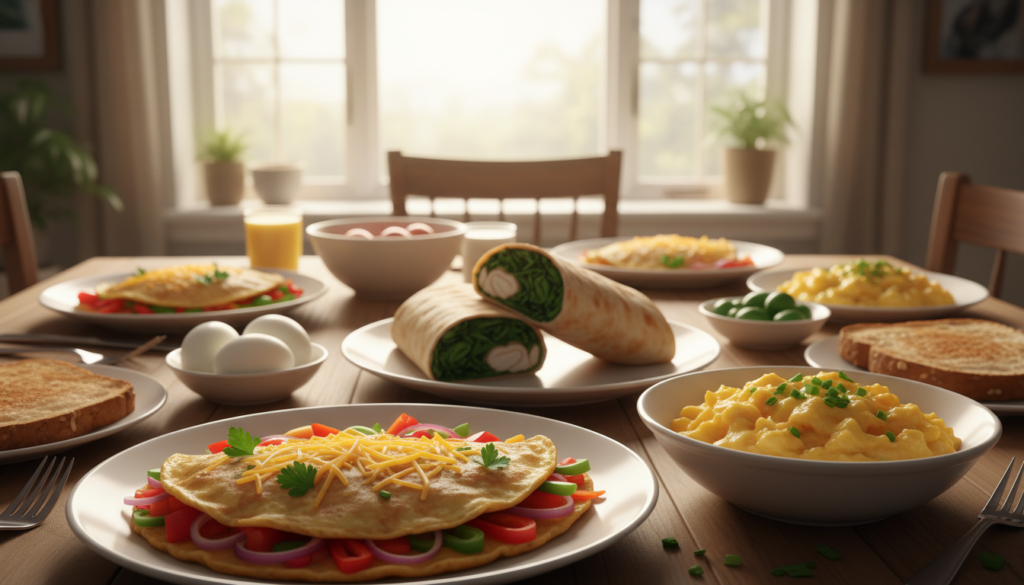
Scrambled plates are the quickest way to turn pantry scraps into a filling morning meal. They cook fast, forgive uneven chopping, and scale easily from one pan to a batch for later.
Country-style scramble: peppers, onion, and potatoes
Country-style scrambles combine diced green peppers, sweet onion, and cubed red potatoes. Sear the potatoes first so they crisp, then toss in peppers and onion until soft.
Stir in beaten eggs and finish gently. This one-pan meal packs volume and tastes like a diner plate. Example: a serving can hit about 25 grams protein when you add a bit of cheese.
Sausage and cheese for 20+ grams
Want a heavier start? Brown sliced sausage, fold in eggs, and stir in shredded cheese near the end.
This version reliably pushes you past 20 grams protein and keeps hunger at bay for longer shifts or long mornings.
Leftovers playbook from the fridge
Dice leftover ham or last‑night roast veggies and toss them into a hot skillet. Wilt a handful of spinach or reheat roasted peppers to bring color and fiber.
Season cheaply: garlic powder, smoked paprika, or a spoonful of salsa lift simple ingredients fast.
- Portion tip: cook double and store half for tomorrow’s meal or a packed lunch.
- Storage: refrigerate up to three days; reheat gently in a skillet or microwave.
| Scramble Type | Key Add-ins | Approx. grams protein |
|---|---|---|
| Country-style | Peppers, onion, red potatoes, cheese | ~25 g |
| Sausage & cheese | Sausage, shredded cheese | 20–28 g |
| Leftovers mix | Ham, roasted veggies, spinach | 15–26 g (depending on add-ins) |
Muffin-tin egg recipes for grab-and-go meal prep
Muffin-tin cups are the weekday hero for quick, reliable meal prep. Make a batch on Sunday and you’ll have ready servings all week. They free up mornings and cut decision fatigue.
Ham, Cheddar, and broccoli cups
This combo tastes familiar and feels complete in two bites. Salted ham gives savory depth, Cheddar adds melt and tang, and broccoli adds fiber and color.
Tip: use frozen broccoli florets thawed and chopped to save prep time.
Sausage and Gruyère-style cups for freezer stashing
Brown crumbled sausage first so the cups stay juicy. Gruyère melts nicely and lifts the flavor without needing fancy steps.
These cups freeze well if you avoid overbaking; pull them slightly underdone, cool, and flash-freeze on a sheet before bagging.
Storage and fast reheats
Stash cups in the fridge up to four days or label freezer bags for longer storage. Write the date on the bag so you use older batches first.
Reheat times: microwave 45–75 seconds per serving from fridge, or 2–3 minutes from frozen (thaw a minute first if possible). For crisp edges, use a toaster oven for 6–8 minutes.
Protein-boost trick: stir a tablespoon of cottage cheese into the egg base for extra creaminess and added grams per serving. It blends quietly and keeps cups tender.
Crustless quiche ideas for brunch, lunch, or dinner
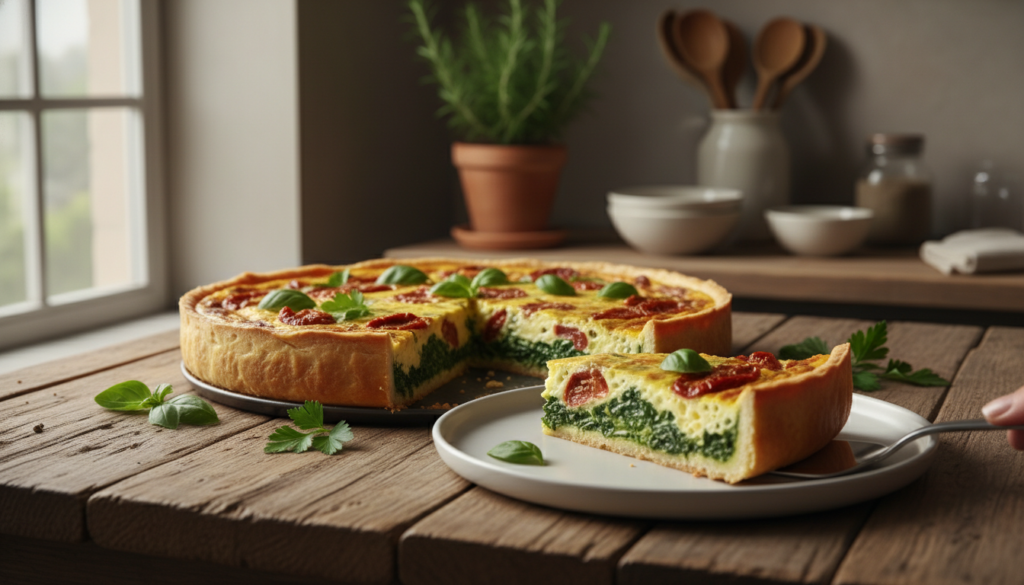
Crustless quiche is fast to assemble and feels special without the pastry. It makes a great dish for brunch or a simple dinner and reheats cleanly for lunch the next day.
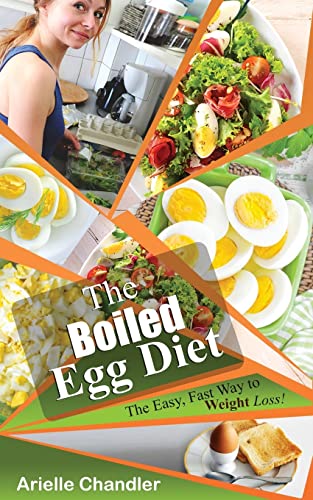
The Boiled Egg Diet: The Easy, Fast Way to Weight Loss!: Lose Up to 25 Pounds in 2 Short Weeks! (Healthy Living and More)
The Boiled Egg Diet: The Easy, Fast Way to Weight Loss!
Lose up to 25 Pounds in 2 short weeks!
- Are you looking to shed pounds quickly?
- Do you want a well-structured meal plan to get you started?
- Are you looking for a diet that will help you ditch those love handles?
If you want to burn fat, become healthier, feel great, and do it all without having to inconvenience yourself with gimmicky diets, then this book is for you.
***This is the Original, Best Selling, Boiled Egg Diet Cookbook – often imitated but never duplicated! Completely re-edited and reformatted in 2023 for your reading pleasure!***
The boiled egg diet is a diet that, as you guessed it, mainly consists of hardboiled eggs. Of course, that isn’t all that you’ll need to eat to shed those pounds! With hardboiled eggs mixed with healthy metabolism-boosting fruits, low-carb vegetables, and other lean proteins, you’ll watch the pounds melt away in as little as two weeks.
Celebrities such as Nicole Kidman and Charles Saatchi have reportedly followed a boiled-egg diet. Kidman allegedly consumed only hard-boiled eggs before starring in “Cold Mountain,” while Saatchi, the ex-husband of chef Nigella Lawson and founder of the ad agency Saatchi & Saatchi, has also adopted the boiled-egg diet.
Many people have reported losing up to 25 pounds in just a few short weeks, but results may vary. In: The Boiled Egg Diet: The Easy Fast Way to Weight Loss! Lose up to 25 Pounds in 2 Short Weeks by Arielle Chandler you’ll find all the information you need to get started, recipes to help you along the way, and a one-week meal plan to get you started on the right track. There’s no reason to deal with unwanted fat when this diet can help you shed those pounds in no time at all!
Ham and spinach crustless option with easy cheese swaps
Stir diced ham and wilted spinach into beaten eggs, pour into a pan, and bake. Swap Cheddar for a Gruyère-style or Jarlsberg-style cheese for a nuttier note.
If spinach is not on sale, use Swiss chard or frozen greens. Leftover cooked ham stretches well and keeps costs down.
Zucchini quiche that leans on feta-style flavor
Grate excess zucchini, squeeze out moisture, and fold in crumbled feta or a fontina substitute. This version is the go-to when you have too much summer squash and want a veggie-heavy plate.
Quiche Lorraine–inspired options when you want something hearty
Think bacon, scallions, and a melting cheese for a richer result. It works for brunch or an easy “breakfast for dinner” night.
Make once, eat twice: slice into portions, refrigerate up to four days, or freeze for longer. Use seasonal vegetables, store-brand shredded cheese, and leftover cooked meat to keep costs down.
“Crustless quiche proves a simple pan can feed a week of meals.”
Frittatas and egg casseroles that hit 20 grams of protein or more
Big-batch bakes are the easiest way to reach 20+ grams per serving and skip morning cooking. Make one pan, slice it into portions, and you have ready plates for weekday mornings or a relaxed brunch.
Hash brown breakfast casserole with bacon and Cheddar
Frozen hash browns cut prep time and keep costs low. Layer them, add crisped bacon and shredded Cheddar, pour beaten eggs, and bake until set.
Result: about 21 grams protein per cup, hearty texture, and a crowd-pleasing finish that feels indulgent.
Asparagus & feta frittata for a fresh brunch plate
This frittata blends tender asparagus and tangy feta for a lighter-tasting option that still delivers serious grams protein.
Serve with fruit or a small salad to round the meal and make it feel like a special brunch without extra work.
Spinach, mushroom, and Gruyère-style casserole for a crowd
Layer sautéed mushrooms and spinach, sprinkle grated Gruyère-style cheese, then add the egg base. The mushrooms add savory depth on a modest budget.
Slice thin for larger gatherings or thicker for filling weekday portions.
Make-ahead egg bakes you can prep the night before
Workflow: mix ingredients, cover, refrigerate overnight, then bake in the morning. This step saves minutes and keeps the meal flexible for a family schedule.
Portioning tip: cut into equal squares, label for lunches, and refrigerate up to four days so nothing goes to waste.
| Recipe | Key add-ins | Approx. grams protein | Best use |
|---|---|---|---|
| Hash brown casserole | Frozen potatoes, bacon, Cheddar | ~21 g per cup | Meal prep or brunch |
| Asparagus & feta frittata | Asparagus, feta, eggs | ~27 g per half | Brunch or light lunch |
| Spinach-mushroom-Gruyère | Spinach, mushrooms, Gruyère-style | 20–26 g per serving | Family-style trays |
High-protein egg breakfasts with a Tex-Mex twist
Tex-Mex flavors add big taste and simple ingredients that keep morning meals exciting. Staples like tortillas, canned beans, and jarred salsa bring variety without much fuss. They also help stretch a small amount of sausage or chorizo across several servings.
Quick breakfast wraps: eggs, Cheddar, and optional black beans
Assemble a fast wrap: scramble eggs, sprinkle Cheddar, and add a spoonful of black beans for fiber and extra grams. Roll in a warmed tortilla and toast briefly for a crisp edge.
Tip: stash wraps in the fridge for easy meal prep and reheat in a skillet or microwave.
Chorizo breakfast bowl with beans and pico-style topper
Brown a small amount of chorizo or sausage, fold in beans, and top the bowl with a quick pico made from tomatoes, onion, and cilantro. A serving can hit ~24g protein per serving while stretching flavor across bowls.
Tex-Mex egg casserole for meal-prep lunches and quick dinners
Layer eggs, cooked sausage, beans, and salsa in a pan and bake. This casserole yields portions that reheat cleanly for lunch or an easy dinner and delivers about ~20g protein per serving.
- Why it works: beans, tortillas, and salsa are low-cost staples that prevent boredom.
- Spice control: keep mixes mild and let diners add hot sauce at the table.
- Budget tip: use canned beans, store-brand salsa, and whatever vegetables are on hand.
| Dish | Protein per serving | Best use | Quick notes |
|---|---|---|---|
| Breakfast wrap | ~19–22 g | Grab-and-go | Optional black beans add fiber |
| Chorizo bowl | ~24 g | Hearty morning or brunch | Pico brightens and stretches meat |
| Tex-Mex casserole | ~20 g | Meal prep for lunch/dinner | Reheats well; freeze portions |
Cheese, cottage cheese, and Greek yogurt: affordable protein boosters
Dairy add-ons can turn a simple plate into a more filling morning without extra stove time. Cottage cheese and greek yogurt are quick ways to raise grams of satiety while keeping prep minimal.
Cottage cheese breakfast bowl for no‑cook mornings
Build a simple bowl: a cup of cottage cheese, a handful of chopped fruit, a sprinkle of walnuts, and a dash of cinnamon. It’s a no‑cook plan that often delivers about ~15–20 grams.
How cottage cheese boosts baked dishes
Stir cottage cheese into quiche bases or muffin cups to add moisture and extra grams without changing the recipe much. It softens texture and stretches servings so each piece feels more filling.
Greek yogurt pairings to round out a plate
Serve greek yogurt alongside an egg plate or mix it into overnight oats. Combine yogurt, oats, and chia or use greek yogurt as a dip for fruit to nudge totals closer to ~20 grams.
Mix-and-match tip: pair a scoop of cottage cheese or greek yogurt with a piece of fruit and a slice of toast or a small savory side to hit your target without strict tracking. Buy larger tubs, choose store brands, and use yogurt in sauces or dressings to cut waste and save money.
Meal prep, storage, and reheating for real life
A simple Sunday routine is the easiest way to make weekday mornings calm and ready. Pick one baked item and one grab‑and‑go so you have variety without extra fuss.
What to batch-cook on Sunday
Make one casserole or crustless quiche for the week and one batch of egg cups or wraps. This combo covers both sit‑down mornings and rushed exits.
Time tip: set aside 60–90 minutes on Sunday to cook and cool before storing.
Fridge and freezer strategy
Refrigerate up to half the batch for the next four days and freeze the rest. That way you avoid repeats and have options all week.
Label containers with the date. Store egg cups in the fridge for up to 4 days; casseroles can go in the freezer for 1–2 months.
Fast reheats: microwave vs oven vs air fryer
Microwave: fastest for mornings — 45–90 seconds from fridge. Oven: best texture, 10–15 minutes at 350°F. Air fryer: crisp edges in 4–6 minutes.
While coffee brews, pop a wrap in the microwave or a tray in the oven so both finish about the same time.
“Store promptly, reheat until hot, and don’t leave egg dishes at room temperature for long.”
- Wrap best practice: cool fillings before rolling, wrap tightly, and label with dates.
- Freeze half, refrigerate half to keep variety.
- Reheat until steaming hot; use oven or air fryer if you want crisp edges.
| Item | Storage (fridge) | Storage (freezer) | Quick reheat |
|---|---|---|---|
| Egg cups | Up to 4 days | 2 months | Microwave 60–90 sec; air fryer 4–6 min |
| Casserole / quiche | 3–4 days | 1–2 months | Oven 10–15 min; microwave 90–120 sec |
| Wraps | 2 days (best) | 1–2 months (unwrap & rewrap) | Microwave 60–90 sec; skillet 2–3 min per side |
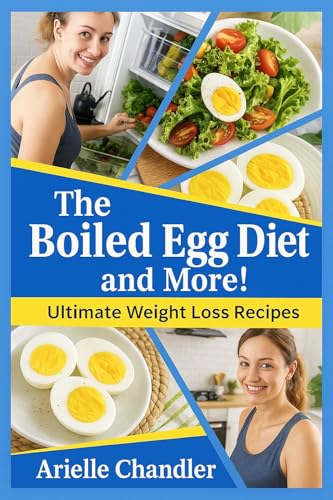
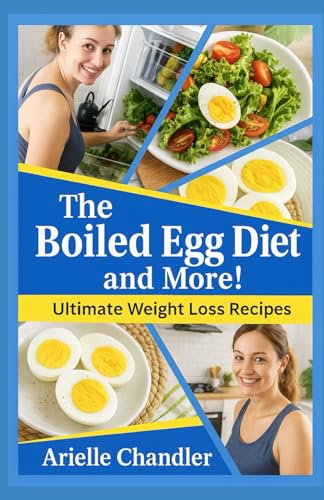
THE BOILED EGG DIET AND MORE! Ultimate Weight Loss Recipes
The long-awaited sequel to Arielle Chandler’s 2018 Best Seller: The Boiled Egg Diet: The Easy, Fast Way to Weight Loss! — the first book ever published about the Boiled Egg Diet craze!
Now, Arielle returns with The Boiled Egg Diet and More! — an exciting, expanded guide that goes beyond the basics to help you lose weight, boost brain power, enhance mood, and enjoy delicious egg-centered meals every day.
Inside this ultimate companion volume, you’ll discover:
- Simple and effective boiled egg recipes for fast, healthy weight loss
- Over 150 new creative meal ideas blending eggs with fresh, seasonal ingredients
- Brain-boosting recipes that enhance focus, memory, and emotional balance
- Global egg traditions and recipes from around the world
- Long-term meal planning strategies for sustainable results
- How to pickle, cure, preserve, and store eggs for maximum flavor and convenience
- Gorgeous party ideas, egg bars, and entertaining tips for every season
Whether you loved the original Boiled Egg Diet or you’re discovering the amazing power of eggs for the first time, this beautifully expanded guide gives you everything you need to turn simple eggs into extraordinary meals for weight loss, wellness, and everyday celebration.
Get ready to crack open endless possibilities — and take your journey to vibrant health and joyful eating to the next level!
Perfect for beginners, busy cooks, and seasoned egg lovers alike.
How to keep it budget-friendly at the grocery store
Start small and shop smart. A short list and a clear plan make mornings easier and reduce waste. Pick a base, add a veg, then a simple protein booster and you’re set for multiple meals.
Build meals around low-cost staples
Staples to buy: eggs, frozen veggies, and cheese. Frozen spinach, pepper-and-onion blends, and plain frozen mixes keep costs steady and last months in the freezer.
Use what you already have
Check your fridge for mushrooms, spinach, tomatoes, or bread before shopping. Leftover slices of bread or roasted mushrooms can turn a scramble into a hearty plate fast.
Stretch a dozen into many meals
Mix eggs into bowls, casseroles, or wraps and add potatoes, beans, or a scoop of cottage cheese to bulk servings. One dozen often becomes four to six breakfasts and a couple of lunch portions.
- Grocery strategy: buy eggs first, add one veg (fresh or frozen), and one protein boost (cheese, yogurt, or beans).
- Frozen veg tip: keeps costs predictable and cuts waste—spinach and pepper blends are especially handy.
- Leftover plan: turn slices of quiche or casserole squares into packed lunches or an easy dinner for the family.
| Item | Why buy | Stretching ideas |
|---|---|---|
| Eggs | Versatile base | Scrambles, cups, quiche (4–6 meals per dozen) |
| Frozen spinach | Lasts long, adds volume | Mix into omelets, casseroles, or mug recipes |
| Cheese | Boosts satiety | Sprinkle on scrambles or melts into cups |
| Mixed veg (peppers/onions) | Flavor and fiber | Saute for bowls, add to wraps or toast on bread |
Conclusion
The three-day experiment showed that a steady morning plate can reshape your midday hunger. Small, repeatable swaps made each day easier and more predictable.
Quick takeaway: aim for roughly 20–30 grams in the morning. One large egg gives about 6 grams, so pair eggs with cheese, yogurt, or beans to reach your target and feel fuller until lunch.
Fast formats worked best: microwave eggs for speed, egg cups for grab-and-go, and casseroles for simple meal prep. Use the recipe ideas here to pick one style and test it this week.
Consistency beats perfection. Try one change for a few days, tweak servings in grams if needed, and bookmark recipes so breakfast stays varied over time. Small habits add up across the day.