
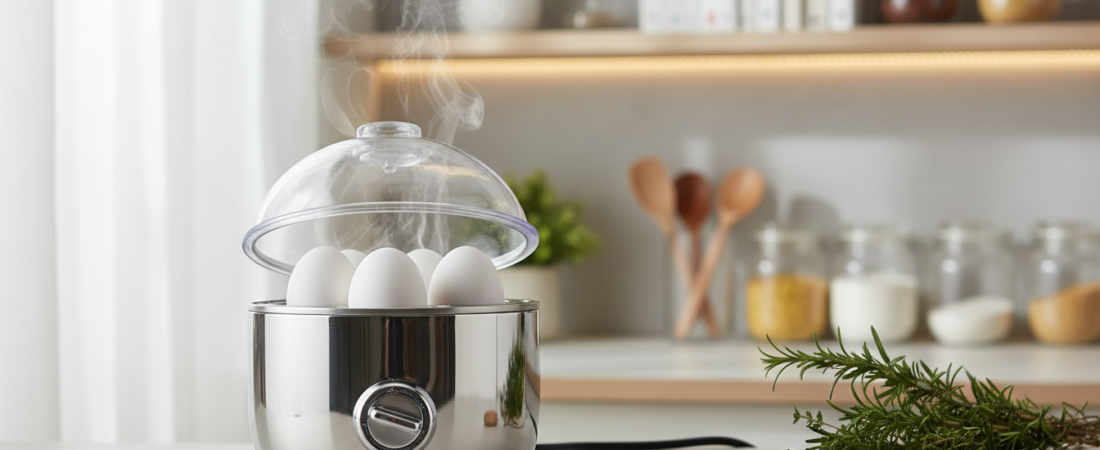
Surprising fact: more than 35% of U.S. households bought a countertop device for eggs in recent years, and interest has surged as people rediscover quick, healthy breakfasts.
An egg cooker is a small appliance that steams or poaches eggs to a set doneness. It’s back in kitchens because it saves time and delivers consistent results for busy mornings.
This roundup explains what “best egg cookers 2026” means for shoppers comparing features and reliability. We focus on real-world results: hard-boiled eggs, poached eggs, and extras like egg bites and omelets.
Use this guide to match a cooker to your routine—fast weekday breakfasts, meal prep, or tight-space living. We preview categories (overall, large-capacity, budget, microwave, and egg bites) so you can jump to the right option quickly.
What “best” means here: consistency, ease of use, realistic cleaning, and smart design that still matters after the first week. We’ll also cover measuring water, using or skipping piercing tools, and keeping the machine clean over time.
Key Takeaways
- Egg appliances deliver repeatable results for busy mornings.
- This guide tests hard-boiled, poached, and egg-bite performance.
- Categories help you find options for capacity and budget.
- “Best” focuses on real-world consistency and easy cleaning.
- We include practical tips on water measurement and upkeep.
Why an Egg Cooker Is Worth It for Busy U.S. Kitchens in 2026
Mornings move faster when you can set a small appliance and walk away while it steams eggs to the right doneness. A reliable egg cooker cuts down on babysitting a pot and helps you plan breakfast without extra stress.
Set-it-and-walk-away steam cooking vs. babysitting a saucepan
Steam-based models use less than an inch of water to simmer. You add eggs at the start, which lowers cracking risk compared with lowering into boiling water.
Automatic shutoff and an audible alert mean fewer overcooked items and less cleanup. That simplicity is great for school lunches, quick breakfasts, and work-from-home mornings.
Typical cook-time range in real tests for boiled and poached eggs
In our tests most electric models finished hard-boiled eggs in about 10–20 minutes. A microwave-style Nordic Ware unit was faster at roughly 9 minutes 30 seconds, depending on wattage.
- Faster in practice because you skip heating a large pot
- Poaching trays make the technique repeatable for multiple servings
- Less monitoring, more consistent food, and saved time overall

- Cooks 10 eggs in shells to a hard, medium or soft consistency with the 600-watt heater
- Poaching tray with 4-egg capacity and omelet tray with 3-egg capacity
- Brushed stainless steel lid; blue LED indicator, audible alert and standby mode

- MULTI FUNCTIONAL EGG COOKER: The Evoloop egg boiler is ideal for a busy solitary person or family to make hard-boiled eg…
- SIX EGG CAPACITY: Save time and water by cooking up to six eggs to soft, medium, or hard-boiled firmness; this method is…
- EASY TO STORE and SAVES SPACE: The boiled egg cooker measures about 7.6 inches tall and 5.6 inches wide and 8.6 inch len…

- MAKE EGGS 6 WAYS. If you and your family love eggs, you need the world’s most versatile egg cooker in your kitchen. With…
- MAKE 4 EGG BITES, 4 POACHED EGGS OR 9 HARD-BOILED EGGS. Cook up to 4 egg bites or 4 poached eggs in about 10 minutes or …
- PREPARE OMELETS, SCRAMBLED EGGS, FRIED EGGS AND MORE. Built-in 5.25” PFAS-Free nonstick skillet for making omelets, scra…
- HALF COST, HALF TIME, DOUBLE EGGS: Cook 12 eggs at once with our upgraded evoloop egg cooker, stackable design saves spa…
- MULTI FUNCTIONAL EGG COOKER: The Evoloop egg boiler is ideal for a busy solitary person or family to make hard-boiled eg…
- EASY TO STORE and SAVES SPACE: The boiled egg cooker is easy to carry around; The 2-layer design lets you customize it f…

- HALF COST, HALF TIME, DOUBLE EGGS: Cook 12 eggs at once with our upgraded evoloop egg cooker, stackable design saves spa…
- MULTI FUNCTIONAL EGG COOKER: The Evoloop egg boiler is ideal for a busy solitary person or family to make hard-boiled eg…
- EASY TO STORE and SAVES SPACE: The boiled egg cooker is easy to carry around; The 2-layer design lets you customize it f…
How Egg Cookers Work: Steam, Water, and Automatic Shutoff
The secret to consistent results is simple: a measured amount of water turns to steam and sets the whites and yolks. Change the amount and you change the doneness.
Why the amount of water controls doneness from soft- to hard-boiled
Most machines work like a rice cooker: add a measured cup of water, place the eggs, and start the hot plate. The water boils, creates steam, and that steam cooks the eggs.
Less water = shorter steam time and softer yolks; more water = longer steam time and firmer yolks. The amount of water is effectively your timer.
Microwave egg devices vs. electric egg cookers
Electric models use a built-in heating plate for steady output and an automatic shutoff when the water evaporates. That shutoff prevents overcooking and avoids the gray-green ring that spoils hard-boiled eggs.
Microwave units use microwave energy instead of a heating element. They heat faster but depend on microwave wattage and timing charts. Handle them carefully—you often lift a container with very hot water and trapped steam.
- Core method: measured water → steam → eggs cook until water is gone.
- Automatic shutoff = consistent results and less babysitting.
- Choose a compact microwave option for no-cord convenience or an electric cooker for repeatable output.
| Feature | Electric cooker | Microwave device |
|---|---|---|
| Heat source | Built-in plate | Microwave oven |
| Consistency | High | Variable (depends on wattage) |
| Speed | Moderate | Faster |
| Safety notes | Auto shutoff, cooler lid handling | Move carefully; hot water and trapped steam |
Shopping tip: if you value repeatable results, pick a model with clear water marks and an audible alert. If you need a compact, no-cord option, a microwave device will save counter space but needs careful timing.
What We Looked For: Testing Standards That Actually Matter
We tested each device using real kitchen routines to see which ones gave reliable results day after day. Our checks were practical and repeatable so shoppers get usable guidance.
Hard-boiled eggs were refrigerated, cooked per the manual, chilled, peeled, and inspected. We flagged any gray-green ring, uneven whites, or crumbly yolks as failures.
Poached eggs were made on included trays with a quick spray of nonstick. A winning tray produced cleanly set whites and runny yolks that hold for plating or toast.
Daily ease and safety
We noted readable water marks, a reliable measuring cup, clear dome lids, cord length, and whether audible alerts were present. Lack of an alarm on some models, like Hamilton Beach in one set, made perfect doneness harder to hit.
Cleaning reality
Dishwasher-safe trays and wipe-down bases scored higher. We tested heating-plate cleaning with a wet cloth and vinegar for hard-water residue. If upkeep is annoying, the machine rarely stays in regular rotation.
- Great hard-boiled eggs: smooth whites, bright yolks, no gray-green ring.
- Good poaching: set whites, runny yolks, usable tray shape.
- Practical features win: clear markings, safe lids, and easy cleaning.
best egg cookers 2026: Quick Picks for Every Kind of Egg Eater
Quick picks to help you choose a model fast. Below are tested options for different needs: versatility, large capacity, tight space, budget, and egg-bite fans.
Best overall for consistent hard-boiled, soft-boiled, and poached eggs
Cuisinart Egg Central — sturdy build, multiple trays, and steady results. Ideal for a household that wants one device that can do it all. Capacity and versatility are the main advantages.
Best large-capacity cooker for meal prep and big families
Dash Rapid Egg Cooker (double-decker) — cooks up to a dozen eggs and nests parts for storage. Great for meal prep and batch boiling. Expect clear visibility and fast throughput.
Best value compact egg cooker under $20
Dash compact model — accurate for boiled and poached eggs, loud alert, and a tiny footprint. Good for budget shoppers who still want reliable results.
Best microwave egg cooker for small spaces
Nordic Ware microwave egg cooker — no cord and minimal storage space. It’s quick but requires care when handling hot water from the microwave.
Best option for egg bites fans
Dash Egg Bite Maker — makes egg bites in about 10–12 minutes with silicone cups. Fast and simple, though it’s specialized and lacks an audible alarm.
- Who each pick is for: all-around households, meal-prep families, budget buyers, dorm/RV users, and egg-bite fans.
- Key factors: capacity, speed, alert system, cleaning ease, and useful accessories.
- What to expect: most models rely on measured water to control doneness, so the included cup and instructions matter as much as the machine.
Best Overall Egg Cooker: Cuisinart Egg Central for Versatility
When a machine balances sturdy construction with simple controls, it becomes the one you actually keep on the counter. The Cuisinart Egg Central blends a solid feel with straightforward buttons, so it performs well day after day in a busy kitchen.
Why it stands out: the unit feels durable, the interface is easy to read, and results stay consistent even near full capacity. This electric egg cooker handles routine tasks without fuss.
Capacity and capabilities: it fits about ten boiled eggs, poaches four on the included tray, and ships with a small omelet tray. Use it for boiled eggs across doneness levels, poaching, or quick no-pan omelets.
- Cooks 10 eggs in shells to a hard, medium or soft consistency with the 600-watt heater
- Poaching tray with 4-egg capacity and omelet tray with 3-egg capacity
- Brushed stainless steel lid; blue LED indicator, audible alert and standby mode
Watch-outs and real-world notes
The measuring cup includes a piercing needle that can make the cup wobble on counters. Set the cup securely before filling to avoid spills.
Also, the omelet tray runs small in practice. Expect two eggs with light mix-ins to work better than a claimed three-egg fill.
“Simple controls and repeatable results are what make this model a keeper for daily use.”
| Feature | What to expect | Practical note |
|---|---|---|
| Capacity | ~10 boiled eggs; 4 poached | Good for families and meal prep |
| Accessories | Poaching tray, omelet tray, measuring cup | Omelet tray is small; cup has piercing needle |
| Controls | Simple buttons, audible alert on some versions | Easy to use; buzzer may need manual shutoff |
Bottom line: If you want a versatile cooker that reliably covers everyday styles without a steep learning curve, the Cuisinart Egg Central hits the sweet spot for most U.S. households.
Best Large-Capacity Egg Cooker: Dash Rapid Egg Cooker for a Dozen Eggs
If you need a full carton of ready-to-eat eggs in one cycle, this double-decker model is built for that routine. The dash rapid design emphasizes speed and volume so meal prep is faster and more dependable.
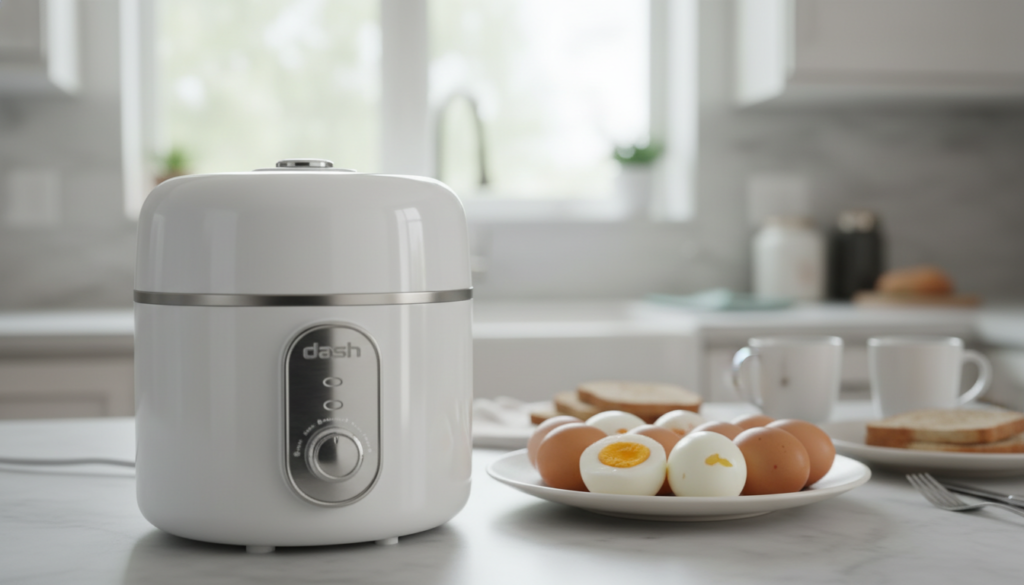

- Eggs in a Dash: In less time than it takes to boil water, the Dash Deluxe Egg Cooker can boil 12 eggs at a time, poach 7…
- Effortless Cooking Experience: Enjoy perfectly cooked eggs every time with the built-in precision thermal sensor of this…
- Easy-to-Store Electric Egg Cooker: The egg cooker accessories store conveniently in the appliance for space-saving stora…
Why it works for meal prep
Capacity wins: the double-decker rack holds a dozen eggs without wobble. The clear dome lid lets you monitor cooking without lifting, saving time and heat loss.
Tray options and handling
The unit includes a poaching tray that can handle up to seven for poaching. An omelet tray offers a simple single-serve breakfast option. Use mitts when removing hot trays.
Cleaning, storage, and dialing doneness
Most parts are dishwasher-safe; only the base must be wiped clean. Pieces nest for compact storage, which frees counter space. If soft-boiled eggs come out too firm, reduce the water line a bit next batch to tune doneness.
Great for big families and anyone who plans lunches around hard-boiled eggs.”
| Feature | What it does | Practical note |
|---|---|---|
| Capacity | Holds a dozen eggs | Good for meal prep and parties |
| Poaching | Poach up to seven | Clean results; use mitts |
| Cleaning & storage | Dishwasher-safe parts; nested trays | Base is hand-wipe only |
Best Budget Egg Cooker: Dash Rapid Egg Cooker in a Compact Size
For budget-focused kitchens, a compact Dash Rapid model proves that low price doesn’t mean low performance. This compact cooker nails consistent boiled eggs and reliable poached eggs when you follow the measuring cup marks.
Great for small households: the unit holds enough for a couple of breakfasts without taking over counter space. Runny centers and set whites appeared consistently in our tests when the cup guidance and water amounts were followed.
Features shoppers care about: one-button operation, a clearly notched measuring cup, and a loud timer-style alert that’s hard to miss. Many removable parts are dishwasher-safe; the base should be wiped clean like most electric models.
Use it for quick weekday cooking: toast-topping boiled eggs, salad add-ins, or small-batch meal prep. Start with the included cup markings, then tweak the water slightly to match your preferred yolk texture.
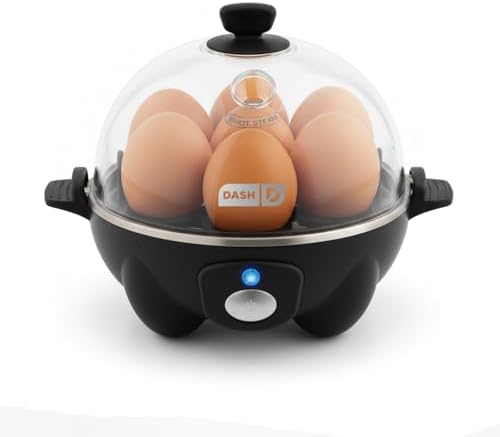
- Eggs in a Dash: Use the Dash Rapid Egg Cooker to make hard-boiled eggs, soft-boiled eggs, poached eggs, scrambled eggs, …
- Effortless Cooking Experience: Enjoy perfectly cooked eggs every time with the built-in precision thermal sensor of this…
- Easy-to-Store Electric Egg Cooker: The egg cooker accessories store conveniently in the appliance for space-saving stora…
- Compact size and easy storage for small kitchens
- Simple controls and clear cup guidance for repeatable results
- Dishwasher-safe trays (base is hand-wipe only)
| Feature | What it offers | Practical note |
|---|---|---|
| Capacity | Small household servings | Saves space and time |
| Cleaning | Removable, dishwasher-safe parts | Base requires wiping |
| Alert | Loud timer-style buzzer | Easy to hear in busy kitchens |
Best Microwave Egg Cooker: Nordic Ware Egg Cooker for No-Cord Convenience
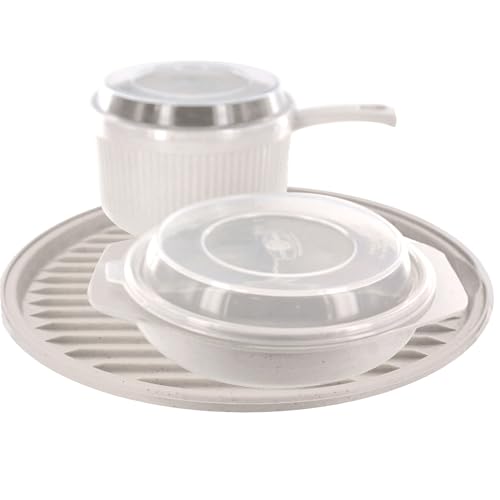
A circuitry-free cooker trades electronics for simplicity, using plain water and microwave steam to set the whites and yolks. The Nordic Ware microwave egg cooker is ideal when you need a compact, no-plug option for small kitchens, dorms, or RVs.
Why it works
The unit has no heating element or circuit board. You add water to the base, place up to four eggs in the tray, and the microwave supplies the heat. That simplicity means fewer parts to fail and an easy-to-store device that takes little counter space.
Capacity limits and safe handling
Capacity is limited to four eggs, so this cooker is not for batch meal prep or large families. In one test it finished in about 9 minutes 30 seconds, but timing varies by microwave wattage. Expect one or two trial runs to match your preferred doneness.
Safety note: the base can hold boiling water and trapped steam after cooking. Use oven mitts, a steady surface, and caution when lifting the plastic tray to avoid scalds.
| Feature | Nordic Ware | Practical note |
|---|---|---|
| Heat source | Microwave-generated heat | No electronics; simple operation |
| Capacity | Up to 4 eggs | Good for singles or couples |
| Typical time | ~9:30 (varies) | Depends on microwave wattage |
| Safety | Base holds hot water | Use mitts; stable surface required |
“A small, no-cord device that fits tiny kitchens — but handle hot water carefully.”
Best Egg Cooker for Egg Bites: Dash Egg Bite Maker
If you buy café-style egg bites often, this compact model turns that treat into a home routine.
What it does best: the Dash Egg Bite Maker produces fluffy egg bites in about 10–12 minutes using handled silicone cups. Fill the cups with a simple mix, add the measured water, close the lid, and start the device. The cups release easily, so popping out bites is low-fuss and tidy.
Timing and prep: a typical run finishes in 10–12 minutes, making the process realistic for busy weekday mornings. Small batches heat fast and hold well for grab-and-go food prep.
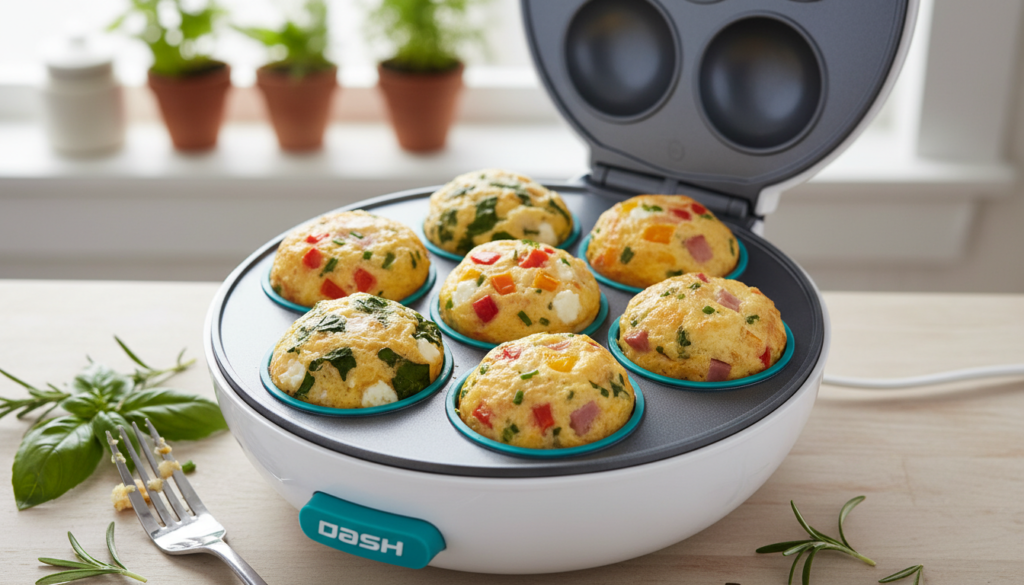

- Bites in Minutes: The Dash Family Size Egg Bite Maker is perfect for making protein-packed bites for the whole family wi…
Tradeoffs and real-world notes
The main downside is the lack of an audible alarm. Many users pair the cooker with a separate timer to avoid overcooking. The indicator light can be unclear, so plan one trial to dial in timing for your preferred texture.
This model has limited versatility compared with multi-use cookers. It works for tiny grilled cheeses, mini desserts, or reheating small snacks, but it does not replace a boil-or-poach cooker for batch hard-cooked eggs.
“Great as a second device for fans of handheld bites; choose it if egg bites are your main format.”
How to Choose the Right Egg Cooker for Your Kitchen Space and Routine
Pick a cooker that fits how often you use it and how many servings you make each week.
Capacity and who each size fits
Capacity ranges from four eggs in compact microwave-style units to a dozen eggs in double-decker machines. Choose four eggs for solo use or a dozen eggs for meal prep and families.
Versatility for real kitchens
Decide whether you want a machine that only makes hard-boiled eggs or one with trays for poached eggs, omelets, and egg bites. If you’ll steam vegetables or make egg bites often, prioritize accessory quality.
Controls: water-measurement vs. timers
Water-measurement systems offer repeatable doneness via a measuring cup and evaporative shutoff. Timer or dial systems can feel more flexible but may be inconsistent if the control is vague.
Design details that matter
Look for clear dome lids, non-slip feet, long cords, and handles placed away from steam. Note that some models, including certain Hamilton Beach versions, lacked audible alerts in tests.
- Capacity (4 vs. dozen eggs)
- Accessories included (poach, omelet, egg bites)
- Alert type and measuring cup
- Dishwasher-safe parts and storage design
| Decision | What to check | Why it matters |
|---|---|---|
| Capacity | 4, 6–8, or 12 eggs | Matches servings and storage needs |
| Controls | Water-measurement or dial/timer | Repeatability vs. customization |
| Design | Clear lid, cord length, handle, feet | Daily safety and ease of use |
“The right cooker is the one you actually use every week—pick a device that fits your routine.”
Measuring Cup, Water Levels, and Doneness: Getting Consistent Results
Precise water measurement is the simple secret to repeatable yolk texture. In steam-based machines, the measuring cup and its markings act as the control panel for cooking time and final doneness.
Why clearly marked measuring cups beat guess-and-check
Good cups show legible lines for soft, medium, and hard, and often add guidance by egg count. When markings are clear, you follow the cup instead of relying on vague timing charts. That clarity reduces trial-and-error and makes the cooker usable by anyone in the household.
First, check the manual for listed water amounts tied to egg count. If the manual lacks specifics, measure and record your preferred line levels on a piece of tape or a spare cup before the original goes missing. Keep that note with the device for future reference.
Common frustrations and practical tips
Some measuring cups include a piercer that can make the cup wobble. Fill the cup over the sink or hold it steady while pouring to avoid spills. If your manual assumes you’ll never lose the cup, document settings during a few test runs so you can reproduce results later.
| Issue | Clear indicator | Quick fix |
|---|---|---|
| Unclear markings | Legible soft/medium/hard lines | Mark your own levels on a spare cup |
| Lost cup | Manual lists water amounts | Record preferred fill lines and keep a copy |
| Piercer wobble | Stable base cup design | Fill over sink; hold cup when measuring |
| Inconsistent doneness | Repeatable water amounts by egg count | Use documented amounts for each run |
“Precise water measurement helps you repeat the same yolk texture every time — which is the whole reason to buy a cooker.”
Egg Piercing Tools: Helpful Feature or Unnecessary Hassle?
Some models ship with a tiny needle meant to pop shells, but the tool often creates more trouble than help. Makers say it releases pressure to reduce cracking during steam cooking.
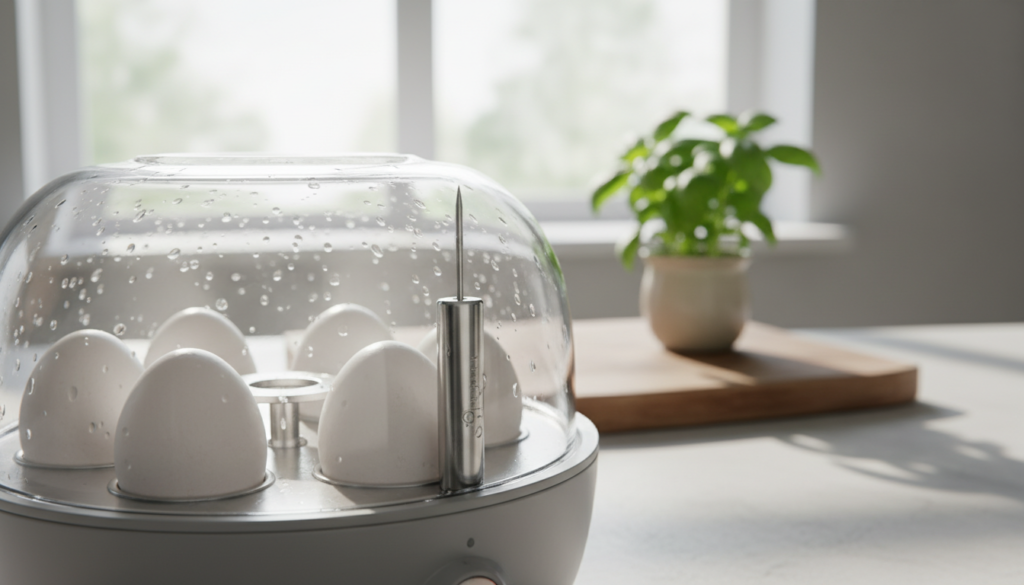
Why piercing can cause leaks and hotplate messes in some models
Piercing can let raw whites squeeze out through the shell. Those drips land on the hotplate and bake in place.
Burned-on proteins make cleaning harder and may stain plastic or scald the heating element. In short, the piercer trades one small risk for a consistent cleanup headache.
Food-safety and peeling considerations based on testing notes
Important safety point: the Egg Board of America advises against piercing because it can introduce bacteria through the shell. That warning matters when you handle cooked food for kids or shared meals.
| What the piercer aims to do | Common real-world outcome | Practical advice |
|---|---|---|
| Vent pressure to prevent cracks | Sometimes causes whites to leak and burn | Skip piercing on first runs to compare |
| Make peeling easier | Peeling on winning models was fine without it | Cool eggs quickly in cold water after cooking |
| Built-in convenience | Adds a small plastic or metal part to clean | Treat piercer as optional, not required |
Takeaway: you can usually skip the piercer and still get easy-to-peel hard-boiled eggs if you chill them in cold water right after cooking. Treat the accessory as optional: test both methods and pick the cleaner, safer routine for your kitchen.
“Piercing raises contamination risk and often creates burned-on residue; it should not be a deciding feature when you compare models.”
Cleaning, Storage, and Long-Term Ownership Tips
A clean device lasts longer and stays ready when mornings get busy. Regular upkeep keeps water spots, mineral buildup, and lost accessories from turning a helpful appliance into clutter.
Dishwasher-safe parts vs. hand-wash-only bases: Most removable trays and lids are dishwasher-safe. The base usually is not — wipe it gently with a damp cloth and never submerge the electrical part.
Preventing mineral buildup: After use, empty and dry the reservoir when possible. For hard-water residue, dampen a cloth with white vinegar and wipe the heating plate. Repeat descaling every few months, depending on local water quality.
Storage and counter-space strategies
Pick a machine with nesting trays if you want neat storage. Models that stack trays, lids, and measuring cups reduce lost pieces and save cabinet space.
Large-capacity cookers need a taller cabinet spot because of the dome lid. If you lack that space, choose a compact model you can keep on the counter or store horizontally.
- Keep the measuring cup with the device so water marks stay available.
- Rinse trays right after use to avoid stubborn food residue.
- Wipe the base; avoid rinsing electrical components.
| Care task | How often | Why it matters |
|---|---|---|
| Wipe base and heating plate | After each use | Prevents residue buildup and electrical issues |
| Dishwasher trays & lids | Weekly or as needed | Keeps food-safe surfaces clean and ready |
| Vinegar descaling | Every 2–6 months | Removes mineral buildup from hard water |
| Store nested accessories | Always | Reduces lost parts and saves storage space |
“Simple, regular care keeps the device ready and extends useful life — which is why upkeep matters more than fancy features.”
A Great Way to Get Started on the Right Foot!
14-Day Boiled Egg Diet Plan
Recipe Guide Printable BundleHealthy, easy meals laid out for you day-by-day. A simple two-week structure you can start immediately.
- 14 Daily Meal Ideas
- Printable PDF Guides
- Quick & Simple Recipes
- Instant Download
Get Your Printable Guide →Instant Download • Start Right Away
Instant Download! Start Right Away!
Conclusion
Bottom line, pick a cooker that matches your routine: quick boiled eggs, reliable poached eggs, or focused egg bites prep.
Deciding factors are simple — capacity that fits your household, a clear water measurement for repeatable doneness, audible alerts (or no alarm if you use a timer), and easy cleanup of trays and lids.
If you need a short guide: choose the Cuisinart Egg Central for all-around versatility, Dash Rapid for dozen-egg meal prep, the compact Dash for value, and Nordic Ware for microwave-only convenience. Note Hamilton Beach models vary on alerts and tray design.
Consistent results come from steady water levels and a quick ice-bath cool-down. Pick the model that fits your counter space, then use it to save time and make eggs more consistent year-round.