
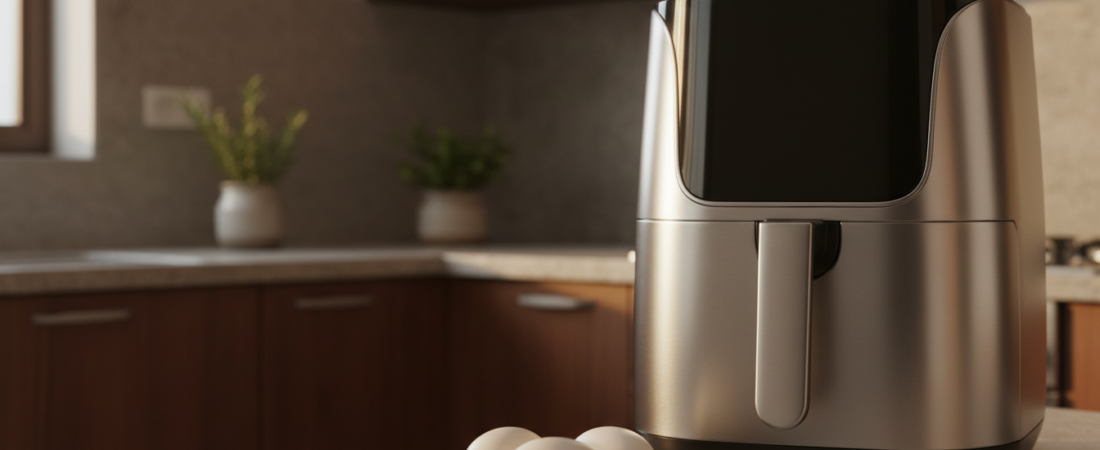
Surprising fact: one study found that many home cooks cut prep time by up to 30% when they switch to air fryer boiled eggs for weekly meal prep.
This method uses dry convection heat to cook whole eggs instead of boiling them in water. It gives a practical, low-mess way to make soft, jammy, or fully set yolks for breakfast or snacks. Less cleanup and easier peeling are big wins.
Expect clear cook-time ranges and a simple step-by-step so you can repeat results with your model. Because units differ by wattage and design, a quick test egg helps you dial in perfect doneness.
Three textures are possible: runny, jammy, and fully set. An ice bath immediately stops cooking and locks the yolk texture. Seasoning and serving ideas make these great for meal prep and high-protein snacks.
Food safety note: refrigerate cooked eggs within two hours and store them properly for the week.
Key Takeaways
- This method gives reliable, low-mess boiled eggs with dry heat.
- Follow cook-time ranges and run a test egg to calibrate your unit.
- Ice baths halt cooking and set yolk texture for runny to hard levels.
- Easier peeling and simple seasoning make them meal-prep friendly.
- Refrigerate within two hours and store for safe, high-protein snacks.
Why Make “Boiled” Eggs in the Air Fryer?
Skip the kettle: a circulating-hot-air cooker gives steady, hands-off results for whole eggs. That steady convection heat cooks through shells without a pot of boiling water, so you get a cleaner, lower-effort routine.
No boiling water, less mess, more consistency
Set it and walk away: once you find the right time for your model, you can repeat the same doneness every batch. The process cuts splashes and stovetop cleanup.
Easy-to-peel shells with convection-style cooking
Dry heat and moving air often help the shell separate from the membrane. Many cooks report easier peeling compared with traditional methods.
Perfect for meal prep, snacks, and high-protein breakfasts
This approach works for soft, jammy, or fully set yolks, so it fits many recipes. Cook a batch, chill in an ice bath, store, and grab for quick protein on busy mornings.
Note: results vary by unit size and wattage, so run a test egg and adjust timing for consistent results with your device.
What You Need for Eggs in the Air Fryer
A short shopping list and a couple basic tools are all you need to get consistent results. Gather the ingredients and gear before you start so batches stay reliable.
Ingredients
Use large eggs for standard timing; small, medium, or jumbo will change minutes needed. Add finishing seasoning after cooking — plain salt and pepper work well.
For a quick upgrade, try Everything Bagel Seasoning or a favorite bagel seasoning blend.
Tools
- A well-vented air fryer basket or a raised fryer basket insert so hot air circulates around the shells.
- Tongs for safe removal and a sturdy bowl large enough for an ice bath.
- A trivet or rack insert helps when your basket is very flat and you want stacked batches.
Fill that bowl with cold water and plenty of ice to stop cooking fast. Grocery-store eggs that are a few days old often peel cleaner than very fresh farm eggs. Remember: there’s no boiling water in the basket — only cold ice water afterward to chill.
Best Temperature Settings to Cook Eggs Evenly
Low and steady heat gives the most consistent results. Aim for a range that gently sets the white while letting the yolk reach your desired doneness.
A Great Way to Get Started on the Right Foot!
14-Day Boiled Egg Diet Plan
Recipe Guide Printable Bundle
Healthy, easy meals laid out for you day-by-day. A simple two-week structure you can start immediately.
- 14 Daily Meal Ideas
- Printable PDF Guides
- Quick & Simple Recipes
- Instant Download
Instant Download! Start Right Away!
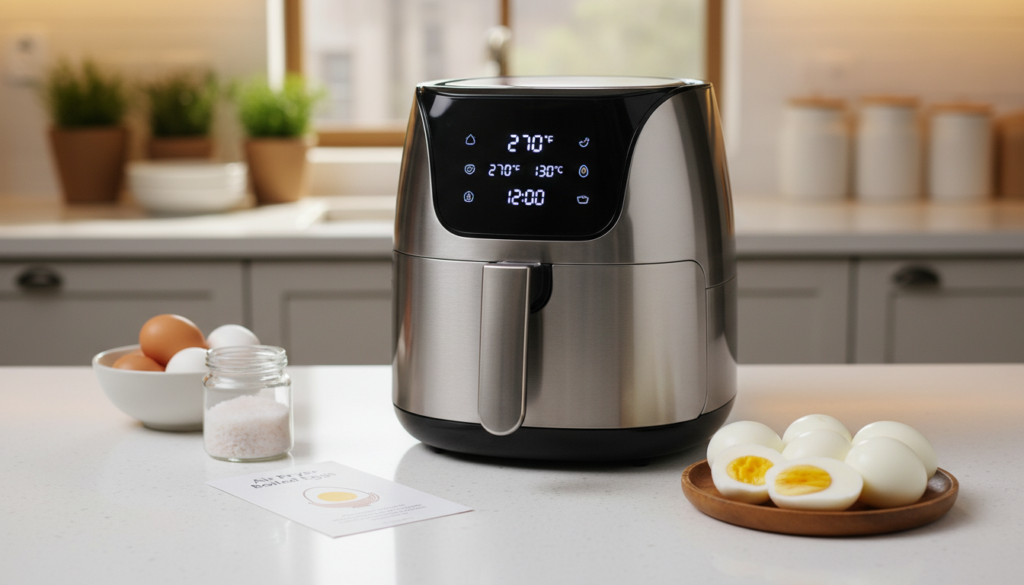
Low-and-slow ranges (250°F–275°F)
250°F works well in larger basket models to mimic a simmer and slow the protein set. For a slightly faster finish, use 270–275°F.
When your unit won’t go below 300°F
If your device has a 300°F minimum, you can still cook successfully. Shorten the time by about 1–2 minutes and test one egg first.
Why higher temps raise the burst risk
High heat forces internal steam and pressure to build quickly. That fast expansion can crack shells or cause bursting.
Preheating changes timing. If the chamber is already hot, eggs air will finish a bit faster. Write down your final temp and minutes so you can repeat your perfect batch.
| Setting | Typical use | Adjustment note |
|---|---|---|
| 250°F (120°C) | Gentlest, steady cook | Best for larger baskets; longer time, very even whites |
| 270–275°F (132–135°C) | Slightly quicker, reliable | Good balance of speed and texture |
| 300°F (min) | Fallback setting | Reduce minutes by ~1–2; test one egg first |
Safety tip: always use tongs and a cooling bath to handle hot shells right after cooking. Record the exact temp and minutes that match your model for repeatable success.
Air Fryer Boiled Eggs Cook Times by Doneness
A few minutes’ difference makes the yolk runny, jammy, or fully set. Below are clear ranges to help you pick the right minutes and repeat results.
Soft (runny center)
Target: set white, runny yolk. At ~270°F aim for 9–11 minutes. At 250°F plan ~10 minutes as a reference.
Jammy (custardy center)
Target: creamy, custard-like yolk. Try 12–13 minutes at ~270°F for reliable jammy texture.
Hard (fully set)
Target: fully set yolk for salads or slicing. Typical ranges: 13–15 minutes at ~270°F or 15–16 minutes at 250°F.
Adjustments: wattage, basket fullness, and egg size
Higher wattage units (1400–1700W) and emptier baskets cook faster. Crowded baskets slow and can cook unevenly. Small or medium eggs often need 1 minute less; jumbo may need 1–2 minutes more.
| Doneness | 270°F (minutes) | 250°F (minutes) | Notes |
|---|---|---|---|
| Soft (runny) | 9–11 | ~10 | Set white, runny yolk |
| Jammy (custardy) | 12–13 | — | Best for creamy centers |
| Hard (fully set) | 13–15 | 15–16 | Good for salads and slicing |
Pro tip: cook one test egg at your chosen time, then scale to a batch once the minutes match your device and basket.
How to Make Air Fryer Boiled Eggs Step-by-Step
Start by getting your device warm so timing stays consistent from the first egg to the last. If your model needs preheat, run it at 250°F or 270–275°F for about 5 minutes. This small step reduces timing surprises.
Place eggs with space for airflow
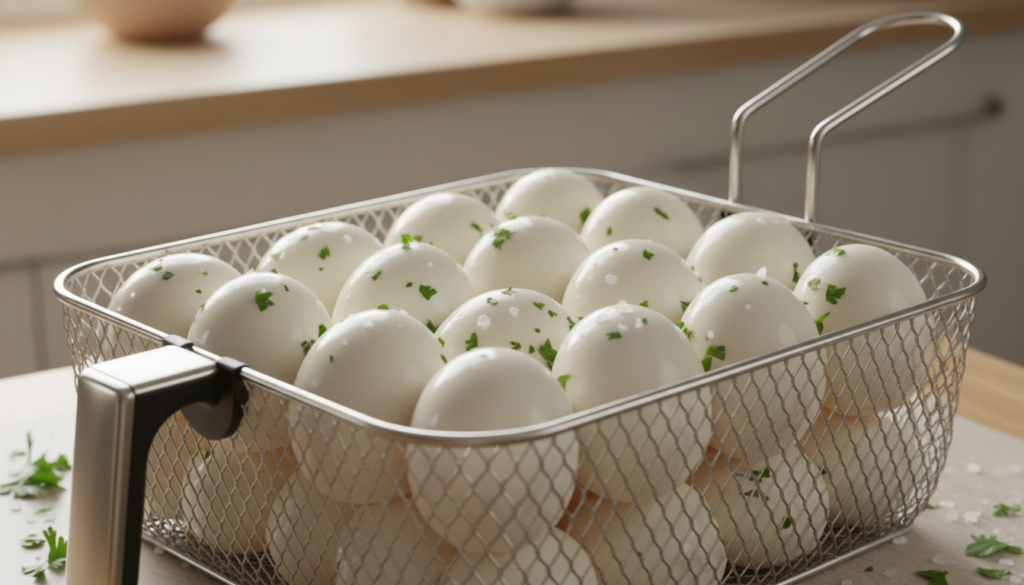
Gently place eggs in the air fryer basket so each has a little room. Don’t crowd the basket; leave gaps so hot air circulates and shells cook evenly.
Cook to your chosen doneness
Decide if you want soft, jammy, or fully set before you set the timer. Then start the device and cook eggs for the minutes that match your target. Test one egg first if you’re unsure.
Stop cooking with an ice water bath
Use tongs to remove hot eggs one at a time. Transfer them straight into an ice water bath made with cold water and plenty of ice. The chill stops carryover cooking and locks the yolk texture.
Repeat the same routine for a full batch once your test egg looks right. Write down the final temp, minutes, and placement so you can reproduce perfect results every time.
The Ice Bath Method That Stops Cooking Fast
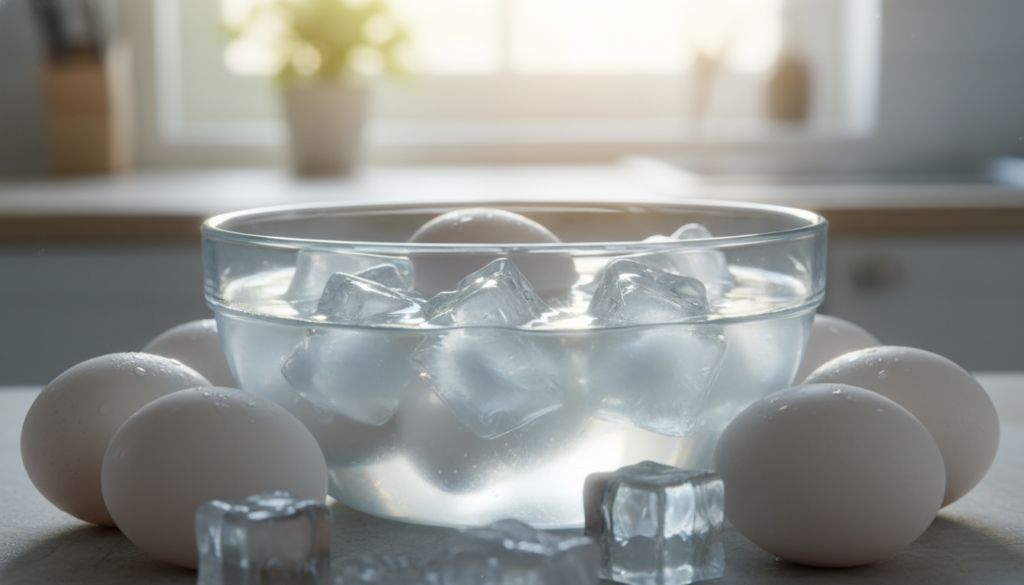
A rapid chill after cooking locks the center and makes peeling simpler. An ice bath is a bowl filled with ice and cold water that cools shells fast and ends carryover cooking. This step is crucial when texture changes by the minute.
A Great Way to Get Started on the Right Foot!
14-Day Boiled Egg Diet Plan
Recipe Guide Printable Bundle
Healthy, easy meals laid out for you day-by-day. A simple two-week structure you can start immediately.
- 14 Daily Meal Ideas
- Printable PDF Guides
- Quick & Simple Recipes
- Instant Download
Instant Download! Start Right Away!
How to build the ice water bath
Use a large bowl. Fill it halfway with ice. Add cold water until the mix reaches about 3/4 full so the pieces can be fully submerged.
How long to chill for easier peeling without overcooling
Timing depends on how cool you want them. For a quick peel, 4–5 minutes until cool to the touch works well. For fully chilled results, 8–10 minutes is better.
- What the bath does: it stops carryover cooking and fixes yolk doneness, which matters for soft and jammy centers.
- Simple ratio: bowl half ice, then add cold water to cover.
- Don’t overthink it: the goal is rapid cooling, not leaving shells in cold water all day.
- Optional tip: a splash of vinegar in the bath can loosen shells for easier peeling.
- Multiple batches: refresh the ice so the bath stays truly cold.
| Step | Ice | Water | Time |
|---|---|---|---|
| Build bath | Half the bowl | Fill to 3/4 with cold water | Immediate |
| Quick chill | Plenty of ice | Cold water to submerge | 4–5 minutes |
| Full chill | Plenty of ice, refresh if needed | Cold water to submerge | 8–10 minutes |
How to Peel Air Fryer Eggs Without Losing the Whites
A clean peel starts with a gentle routine. Cool the eggs in an ice bath, then use a controlled cracking method to remove the shell without tearing the white.
Crack-and-roll technique for cleaner peels
Tap the shell all over to create many small cracks. Then gently roll the egg on the counter while applying light pressure. This loosens the membrane and makes the shell come off in larger pieces.
Why start at the bottom
Begin peeling at the fattest end where the air pocket usually sits. That gap gives you an easy place to slip under the membrane and lift the shell away with less damage to the white.
Cold eggs vs. room temperature eggs
Peel once eggs are cool from the ice bath but not ice-cold. Many cooks find a cool but not frozen egg peels best. Some prefer room temp starts; either works if you use the same routine each time.
- If shells stick: peel under a thin stream of cold water to help separate tiny pieces.
- Freshness note: grocery-store eggs usually peel easier than very fresh farm eggs.
- Timing tip: cooling properly is as important as cooking minutes for an easy peel.
Troubleshooting Common Air Fryer Egg Problems
Simple checks on temperature and minutes solve most common cooking issues. Below are fast fixes for color, doneness, cracking, and presentation so you waste less time and get consistent results.
Green ring around the yolk
The green ring is a safe sign of overcooking or too-high heat. It won’t hurt you, but it changes texture and color.
Fix: shorten the minutes next batch or lower the temperature into the 250–275°F range when possible.
Undercooked or overcooked centers
If centers are underdone, add 1 minute next time. If they are overdone, subtract 1 minute. Repeat a test egg until the target texture matches your notes.
Cracking or bursting in the basket
Keep temps under 300°F to reduce bursting risk. Avoid drastic overheating and don’t overcrowd the fryer basket so heat circulates evenly.
Small cracks happen and aren’t always a failure. Repeated bursts usually signal too high temperature or too long a time.
Centered yolks for deviled eggs
For even presentation, store the carton on its side in the fridge for about 24 hours before cooking. It helps the yolk settle toward the center.
“Keep a simple log of temperature, minutes, egg size, and basket load — troubleshooting then becomes a one-time learning curve.”
- Quick tip: note model, minutes, and batch size so you repeat perfect hard boiled or hard boiled eggs every time.
Tips for Cooking a Full Batch in an Air Fryer Basket
When you make a full batch, spacing and airflow determine whether every egg cooks the same way.
A Great Way to Get Started on the Right Foot!
14-Day Boiled Egg Diet Plan
Recipe Guide Printable Bundle
Healthy, easy meals laid out for you day-by-day. A simple two-week structure you can start immediately.
- 14 Daily Meal Ideas
- Printable PDF Guides
- Quick & Simple Recipes
- Instant Download
Instant Download! Start Right Away!
Don’t crowd the fryer basket
Leave gaps between shells so convection can reach each side. If eggs touch or stack, some will lag behind and finish later than others.
Test one egg first
Always run a single test to find the exact minutes for your model. Wattage, basket fullness, and egg size can change timing by a minute or two.
Batching and tools
Cooking in smaller batches gives more consistent doneness than overfilling the basket. Use built-in grooves or a rack insert to stop rolling and to boost circulation.
Create your cook time chart
Note temp, minutes, batch size, and preferred yolk texture. Keep the chart for future recipes and quick meal prep.
| Tip | Why it matters | Quick action |
|---|---|---|
| Spacing | Ensures even convection cooking | Leave 1/2″ between shells |
| Test egg | Calibrates minutes for your model | Cook one, adjust time, then scale |
| Use a rack | Prevents rolling and improves airflow | Place eggs in grooves or on a trivet |
| Log times | Speeds repeatable meal prep | Record temp, minutes, batch size |
Seasoning Ideas and Easy Ways to Serve
A simple sprinkle can turn plain cooked eggs into a deli-style snack in seconds. Start with a classic finish, then experiment with bold toppings for variety during the week.
Basics: sea salt and pepper, plus everything bagel
Peel, slice, and finish with sea salt and pepper for a reliable snack. It’s quick and highlights the natural taste.
Everything bagel seasoning makes a great one-step topper. It adds crunch, garlic-onion notes, and a deli vibe with very little fuss.
Flavor twists for different cravings
Try paprika for smoky warmth, chili flakes for heat, or garlic powder for a punch. Ranch seasoning and za’atar also pair nicely when you want a creamy or herby edge.
These savory finishes help the slices feel fresh in salads, on toast, or packed in lunch recipes. They also keep the snack high in protein and satisfying.
| Seasoning | Flavor | Best pairing |
|---|---|---|
| Everything bagel | Garlic, onion, sesame crunch | Toast, avocado, simple salads |
| Paprika | Smoky warmth | Roasted veggies, wraps |
| Chili flakes | Bright heat | Toast with tomato, snack boxes |
| Ranch or garlic powder | Herby or savory punch | Potato salad, sandwiches |
Meal-prep tip: store plain, chilled slices and add salt or bagel seasoning just before eating. That stops watery or overly salty bites and keeps each serving tasting fresh.
Meal Prep Uses: From Egg Salad to Deviled Eggs
Prep once, then mix and match these simple ideas for quick weekday meals. A single batch of cooked shells turns into multiple lunches and party-ready bites. Below are fast, practical uses that save time and add flavor.
Quick egg salad lunches and snack boxes
Chop a few into a classic egg salad for grab-and-go lunches. Mix with mayo, mustard, and herbs, then portion into containers.
Pack slices or halves with crackers, raw veggies, and fruit for snack boxes that travel well.
Deviled eggs for parties and holidays
Turn halves into deviled eggs with a simple yolk mash, mayo, and a dash of paprika. For prettier presentation, use the centered-yolk tip so each half looks uniform.
These are easy to scale for gatherings and make classic appetizers for holidays.
Sliced eggs on salads, toast, wraps, and sandwiches
Layer slices over green salad or grain bowls to add richness and texture. A Caesar-style salad gets extra creaminess from a sliced portion.
Top avocado toast with slices and seasoning for a filling breakfast. Fold into wraps or sandwiches to upgrade weekday lunches.
Kitchen strategy: cook once, store in the fridge, and rotate uses through the week so breakfasts and lunches stay varied and simple.
Storage, Food Safety, and Make-Ahead Tips
Stored correctly, cooked eggs stay fresh and safe for simple weekday meals. Follow a few basic rules to keep quality high and reduce food-safety risk.
How long hard boiled eggs last in the fridge
Rule: hard boiled eggs keep up to 7 days in the refrigerator. Refrigerate within 2 hours of cooking to meet safety guidelines.
Why use an airtight container and avoid slicing early
Store peeled items in an airtight container to prevent odors and stop the surface from drying out. A sealed container also limits moisture loss and fridge transfer smells.
Don’t slice ahead: cut eggs just before serving. Sliced items dry faster and absorb fridge smells, so keep most whole until use.
Freezing boiled eggs: what to expect
Freezing is not recommended for best texture. Whites often become watery or mushy, and yolks may turn mealy. For consistent quality, make weekly fresh batches instead.
Simple make-ahead plan and nutrition note
Cook a batch, chill in ice water, peel a few for quick snacks, and keep the rest whole in a container. Eggs pack fat and protein; pair them with fiber-rich fruit, veg, or whole grains for balanced meals.
This post may contain affiliate links. Some links are affiliate links and we may earn a commission at no extra cost to you (including Amazon affiliate program).
Conclusion
The easiest route, to repeatable results is a low-temp cook at about 250–275°F, timed minutes to suit your yolk, and an immediate ice bath to stop carryover cooking.
Test a single egg in your unit first. Once the texture matches your notes, confidently scale up to a full batch and save the minutes and temp in a simple chart.
Give every shell room in the basket so hot air circulates. Proper spacing helps each piece cook evenly when you make a larger batch.
For the cleanest peel: cool fully, use the crack-and-roll method, and start at the fat end where the air pocket sits. Then enjoy sliced or chopped for salads, deviled mixes, or simple seasoned snacks.
Save your timing chart and jot model notes—repeatable success is one test and one note away.