
Surprising fact: recent 2025 trials found that saturated fat—not dietary cholesterol from eggs—was the main driver of LDL changes in most people.
This two-week plan is a U.S.-friendly, practical guide built to be simple and realistic. It uses high protein meals to help with calorie control and keep prep easy.
This is not a magic fix. Expect structure, clear rules, a grocery list, meal prep steps, and two full weeks of templates. I’ll also explain why common eggs and chloresterol myths persist and what the 2025 AJCN and University of South Australia data imply for heart health.
Key points: if your breakfast includes eggs, the bigger issue is often what you pair with them—saturated-fat sides like bacon or sausage. Follow simple swaps to protect cholesterol while still enjoying protein-rich meals.
Safety note: if you have diabetes, known heart disease, or take cholesterol-lowering meds, check with your clinician before big diet changes.
Key Takeaways
- The plan is a realistic, two-week high-protein approach to support weight loss.
- Recent 2025 studies link LDL shifts more to saturated fat than dietary cholesterol.
- What you eat with eggs often matters more than the eggs themselves.
- The guide includes rules, shopping, meal prep, and two weeks of templates.
- Consult a clinician if you have diabetes, heart disease, or use cholesterol meds.
A Great Way to Get Started on the Right Foot!
14-Day Boiled Egg Diet Plan
Recipe Guide Printable Bundle
Healthy, easy meals laid out for you day-by-day. A simple two-week structure you can start immediately.
- 14 Daily Meal Ideas
- Printable PDF Guides
- Quick & Simple Recipes
- Instant Download
Instant Download! Start Right Away!
What the Boiled Egg Diet Is and How It Works for Weight Loss
This two-week routine pairs simple meals with consistent protein to cut decision fatigue and help control hunger. It uses a hard-boiled egg as a reliable breakfast anchor while adding vegetables, fruit, and lean proteins at other meals.
Why hard-boiled eggs help: protein, calories, and satiety
A large hard-boiled egg provides ~78 calories, about 6.29 g of protein, and ~5.3 g fat. That mix gives solid fullness for a small calorie cost.
High protein at breakfast reduces mid-morning snacking. Portions are easy to count, which helps people stay within daily targets.
What two weeks can realistically change
Expect early scale drops often from water loss. More useful changes are reduced hunger, fewer cravings, and a smaller waistline for some people.
Results vary by starting weight, activity level, sodium, and processed food intake. The plan focuses on consistency and quality basics rather than extreme restriction.
- Simple definition: a short, structured plan that uses a hard-boiled egg at breakfast as a protein anchor.
- Not an all-egg crash diet: best paired with vegetables, fruit, and lean protein at other meals.
- Per day structure: repeating simple meals reduces choices and improves adherence.
| Item | Per serving | Why it helps |
|---|---|---|
| Hard-boiled egg | ~78 calories; ~6.29 g protein | Low calorie, high satiety for breakfast |
| Vegetables | Low calories; high fiber | Adds volume and micronutrients |
| Lean protein (lunch/dinner) | Varies; moderate calories | Maintains fullness and protects muscle |
Who This Plan Is For in the U.S. and When to Choose a Different Approach
For many Americans, a repeatable meal pattern beats complex dieting when time is tight and goals are clear. This plan suits busy adults who want a simple breakfast-to-dinner framework without elaborate recipes or macro tracking.
Busy adults seeking a simple routine
Why it fits: portable, quick breakfasts save time on workdays, commutes, and school runs. Meals follow an easy template to cut decision fatigue.
When to talk with a clinician first
Personalization matters. Patients with diabetes, known cardiovascular disease, significant kidney disease, or a history of disordered eating should consult their provider before starting.
Experts note that in a trial covered by ACC/ABC News, adults 50+ with existing heart disease or two or more risk factors showed no meaningful LDL/HDL change when consuming high weekly fortified servings versus an egg-free period over four months. Still, clinicians can advise based on lab results and meds.
| Who this helps | Who should pause or personalize | Practical note |
|---|---|---|
| Busy U.S. adults seeking structure | Patients with chronic diseases listed above | Ask a clinician if you change consumption suddenly |
| People wanting easy, portable meals | Those with severe kidney issues or active eating disorders | Stress or binge/restrict cycles mean pick a different plan |
| People who prefer simple rules over tracking | Anyone on meds affecting lipids or glucose | Clinician input protects long-term health |
eggs and chloresterol myths: What Research Says About Dietary Cholesterol
What you eat doesn’t always predict lab numbers when it comes to cholesterol. The body adjusts how much it makes, so dietary cholesterol rarely maps 1:1 to blood cholesterol for most people.
Why dietary intake often differs from blood markers
Research finds about 75% of people are normal responders with minimal changes in plasma after higher intake. Small rises in total values tend to be modest per 100 mg dietary cholesterol—roughly a 2.2–2.5 mg/dL increase.
Normal responders vs hyper responders
Hyper responders show rises in both ldl and hdl. That means two people can eat the same meal and see different cholesterol levels. Tracking labs is the reliable way to know which group you fall into.
Why ratios matter more than total numbers
Clinicians focus on the ldl/hdl pattern rather than total alone. An increase in both ldl and hdl may keep the ratio stable, which matters more for risk than a single total number.
| Group | Typical change per 100 mg dietary cholesterol | Clinical note |
|---|---|---|
| Normal responders (~75%) | Total +2.2–2.5 mg/dL; small ldl change | Minimal lab impact for most people |
| Hyper responders | Both ldl ↑ ~1.9 mg/dL and hdl ↑ ~0.4 mg/dL | Monitor labs with a clinician |
| Practical takeaway | Track labs, focus on saturated fat | Diet context matters more than single foods |
Eggs, Heart Health, and the Real Driver: Saturated Fat vs Cholesterol
A careful trial from 2025 compared three controlled diets over 5-week periods to find what changes LDL most. The randomized crossover design from AJCN/UniSA separated added dietary cholesterol from saturated fat to see which one mattered.

A Great Way to Get Started on the Right Foot!
14-Day Boiled Egg Diet Plan
Recipe Guide Printable Bundle
Healthy, easy meals laid out for you day-by-day. A simple two-week structure you can start immediately.
- 14 Daily Meal Ideas
- Printable PDF Guides
- Quick & Simple Recipes
- Instant Download
Instant Download! Start Right Away!
Key takeaway from the 2025 randomized crossover study
The study had 54 participants finish phase one and 48 complete every phase. Researchers found that high dietary cholesterol within a low saturated fat pattern did not raise ldl; in fact, two daily served lowered ldl in that context. The clearest driver of LDL changes was saturated fat, not dietary cholesterol. This is strong study evidence for focusing on fat quality when protecting heart health.
What to limit instead: processed meats and high-saturated-fat add-ons
Practical plate rules:
- Prefer eggs with avocado, fruit, or whole grains rather than with bacon or sausage.
- Limit biscuits, butter-loaded sides, and processed meats that raise saturated fat intake.
- If you have high cholesterol, reduce saturated fat first, then track personal response to this plan with your clinician.
Nutrition Breakdown of a Hard-Boiled Egg (and Why the Yolk Matters)
Understanding what’s inside a hard-boiled egg helps you use it smarter on a calorie-focused plan.
Protein, fat, and calories per serving
A large hard-boiled egg contains about 78 calories, roughly 6.29 g of protein, and ~5.3 g of fat. These numbers explain why it keeps hunger at bay and fits into compact meals.
Vitamins and minerals that support overall health
The yolk concentrates most vitamins: A, B2, B6, B12, biotin, folate, D, E, and K. It also supplies minerals like iron, zinc, selenium, iodine, magnesium, phosphorus, and potassium.
Practical point: choosing only egg whites can cut calories but forfeits many vitamins and important nutrient content found in the yolk.
Lutein, zeaxanthin, and antioxidant benefits
The yolk contains lutein and zeaxanthin—antioxidants that rise in blood after eating and are linked to eye and vascular protection.
Some trials note lower inflammatory markers in people with metabolic risk after regular intake, suggesting potential benefits for inflammation and atherosclerosis pathways. While the yolk holds dietary cholesterol, the overall diet pattern and saturated fat intake weigh more heavily for heart risk in many people.
- Why it matters: protein supports muscle and fullness while yolk nutrients support vitamins and mineral needs.
- How to use it: pair with produce for a balanced, budget-friendly food option that fits U.S. routines.
Your Two-Week Boiled Egg Diet Rules (Simple, Sustainable, and Heart-Smart)
Start this two-week plan with simple rules that keep meals practical and heart-smart.
How many to eat: one egg per day vs two eggs per
Keep a consistent protein anchor at breakfast. Choose one egg per day as a conservative option if you want to be cautious.
Many adults do well with two eggs per day when total calories and saturated fat stay low. The 2025 UniSA/AJCN trial found two eggs daily in a low saturated fat pattern did not raise LDL and sometimes lowered it.
Carb choices: fiber first
Pick carbs that fill you up longer: berries, oats, beans, brown rice, and sweet potatoes. These choices cut hunger and help steady energy.
Fat choices: favor unsaturated fats
Limit saturated fat sources like butter-heavy sides and processed meats. Use olive oil, avocado, and nuts for flavor and satisfaction.
Hydration, sodium, and seasoning swaps
Drink water through the day; low intake can make hunger feel worse. Watch sodium from deli meats and packaged food — it can hide as water weight.
Try salsa, hot sauce, lemon pepper, mustard, or fresh herbs to keep flavors exciting without raising saturated fat.
Personalize safely
If you have high cholesterol labs or take lipid meds, keep the overall dietary pattern heart-smart and check with a clinician about consumption frequency.
| Rule | Practical tip | Why it helps |
|---|---|---|
| Eggs per day | One egg per day (conservative) or two eggs per day (standard) | Protein anchors breakfast; two eggs ok if saturated fat is low |
| Carbs | Choose fiber-rich options (berries, oats, beans) | Reduces hunger and prevents blood sugar spikes |
| Fat | Limit saturated fat; use olive oil, avocado, nuts | Protects heart markers while keeping meals satisfying |
| Hydration & sodium | Drink water; avoid high-sodium processed foods | Prevents water retention and misleading scale changes |
What to Buy: Grocery List for Two Weeks
Start your two-week shopping with simple staples that keep mornings fast and lunches ready. Below is a U.S.-friendly list organized by store section to save time and budget.
Produce & Frozen
- Salad greens, broccoli, bell peppers, cucumbers, tomatoes
- Carrots, frozen veggie blends, microwave steam bags
- Berries, apples, oranges, bananas, frozen fruit for smoothies
Protein & Dairy
- Eggs: buy 2 dozen for one egg/day, 3 dozen for two eggs/day or family use; consider fortified or omega-3 fatty acids-enriched cartons if budget allows
- Chicken breasts or trimmed thighs, turkey, tuna/salmon packets
- Tofu, beans, lentils, nonfat/low-fat Greek yogurt
Heart-Healthy Add-ons & Pantry
- Olive oil, avocado, nuts, seeds
- Salsa, vinegar, mustard, low-sodium broth, spices
- Whole grains: oats, brown rice, whole-wheat bread
Practical tip: buy versatile items so busy adults can mix meals without extra shopping. These choices keep protein high, saturated fat low, and food interesting for two full weeks.
Meal Prep Basics: How to Boil, Store, and Use Eggs Safely
Set aside one kitchen session to transform breakfast into an effortless part of your routine. Batch cooking saves time and makes healthy consumption automatic.
Batch-boiling for the week: cook 6–12 at once depending on household size. Place eggs in a single layer in a pot, cover with cold water, bring to a gentle boil, then remove from heat and cover for 10–12 minutes.
Cool quickly by transferring to an ice bath for 5 minutes. Rapid cooling helps with peeling and reduces bacterial risk.

A Great Way to Get Started on the Right Foot!
14-Day Boiled Egg Diet Plan
Recipe Guide Printable Bundle
Healthy, easy meals laid out for you day-by-day. A simple two-week structure you can start immediately.
- 14 Daily Meal Ideas
- Printable PDF Guides
- Quick & Simple Recipes
- Instant Download
Instant Download! Start Right Away!
Practical peeling and storage tips
- Peeling: crack, roll gently on the counter, then peel under running water to ease shells away.
- Storage: keep cooled cooked items in a covered container in the refrigerator and label the date.
- Shelf life: use within one week for best quality and safety.
Safe use and simple ways to add protein to meals
Slice onto salads, mash with nonfat Greek yogurt for a lighter salad, or toss into grain bowls for added protein. These small swaps keep food varied without extra saturated fat.
When prepared and stored correctly, ready-to-eat breakfasts make sticking to a diet far easier for busy people.”
| Step | Quick tip | Why it helps |
|---|---|---|
| Batch boil 6–12 | One pot, one session | Reduces morning prep time |
| Ice bath cool | 5–10 minutes | Easier peeling; lowers bacterial risk |
| Refrigerate labeled | Use within 7 days | Prevents waste; keeps consumption safe |
Food safety basics: never leave cooked items at room temp longer than two hours. Keep lunch containers chilled during commutes to protect results and reduce illness risk.
The 2-Week Boiled Egg Diet Plan: Week One
Start week one with a simple daily rhythm to cut decision fatigue and stay consistent.
Day structure: breakfast, lunch, dinner, smart snacks
Follow a repeatable pattern: protein-forward morning, produce-heavy lunch, balanced evening meal. Keep planned snacks to stop overeating later.
Breakfast templates built around boiled eggs
- Two egg + mixed fruit bowl.
- One egg with oatmeal, cinnamon, berries.
- Egg slices over nonfat Greek yogurt and berries.
Lunch and dinner templates with vegetables and lean protein
- Upgrade a salad kit: greens, chopped veg, sliced egg, light vinaigrette.
- Chicken bowl: roasted breast, brown rice, steamed broccoli.
- Salmon plate: fillet, quinoa, mixed steamed vegetables.
- Turkey chili with beans for fiber and lasting fullness.
How to adjust portions without breaking the plan
Add nonstarchy vegetables first when still hungry. Increase whole grains only on active days. Keep the morning protein steady to preserve muscle and satiety per day.
| Meal | Example | Why it works |
|---|---|---|
| Breakfast | Eggs + oats or fruit | Protein start reduces mid-morning snacking |
| Lunch | Salad kit + chicken or tuna | Produce keeps calories low, fiber steady |
| Dinner | Sheet-pan chicken + veggies | Satisfying, simple prep for busy adults |
| Fallback | Rotisserie chicken + bagged salad + grain cup | Quick, balanced option when cooking fails |
The 2-Week Boiled Egg Diet Plan: Week Two
Week two focuses on small switches that keep meals exciting without raising saturated fat. Keep the core routine but vary flavors and textures so the plan stays sustainable.
Flavor variations that don’t add saturated fat
Change taste, not the rules. Try salsa verde, kimchi, curry powder, everything seasoning, or a herby yogurt-based sauce instead of butter-heavy toppings.
Tip: citrus, fresh herbs, and vinegar add bright flavor with almost no added fat.
Higher-activity days: add carbs strategically
On training days, increase fiber-rich carbs around workouts. Choose brown rice, quinoa, potatoes, or beans. Keep portions measured so dietary goals and results stay on track.
Eat most carbs within a few hours before and after exercise to support performance and recovery.
Restaurant and takeout swaps to protect heart health
Order grilled proteins, ask for sauces on the side, and swap fries for salad or steamed veggies. Avoid breakfast platters stacked with processed meats; instead pick a simple omelet with vegetables or a grain bowl with lean protein.
“Treat saturated fat like a budget: protect it when ordering out to lower your long-term risk heart.”
- Keep flavors fresh to avoid boredom without changing calories.
- Use activity to guide smart carb timing rather than adding extra portions every day.
- When eating out, prioritize high-quality ingredients and low-saturated-fat choices; this aligns with the 2025 UniSA/AJCN study findings.
Expected Results: Weight Loss, Energy, and What the Scale Doesn’t Tell You
Expect early wins that are mostly about water shifts, not instant fat loss. Many people notice quick scale drops in week one when refined carbs and salty foods fall. That change often reflects fluid, not fat.
What two weeks can show: reduced cravings, steadier energy, and better meal consistency. Those are meaningful results even if the scale moves slowly.
Common first-week changes: water weight vs fat loss
Rapid drops often come from lower glycogen stores and less sodium. Fat loss is slower and shows as gradual trendlines over weeks.
What to track besides weight: waist, hunger, and consistency
Track waist circumference, daily hunger levels, how often you hit planned meals, and energy through the day. These measures paint a fuller picture of health than a single number.
- Watch hydration and sodium — they change water levels quickly.
- Sleep, daily steps, and protein intake help the plan feel easier and improve follow-through.
- High stress or poor sleep raises the chance that progress stalls; aim for a doable routine, not perfection.
“Trendlines matter more than daily shifts—small habit wins add up to lasting change.”
Cholesterol Levels During the Plan: What to Watch If You Have High Cholesterol
Monitoring labs while you try a new breakfast habit helps spot meaningful shifts, not day-to-day noise. Keep a short plan so changes are clear and useful.
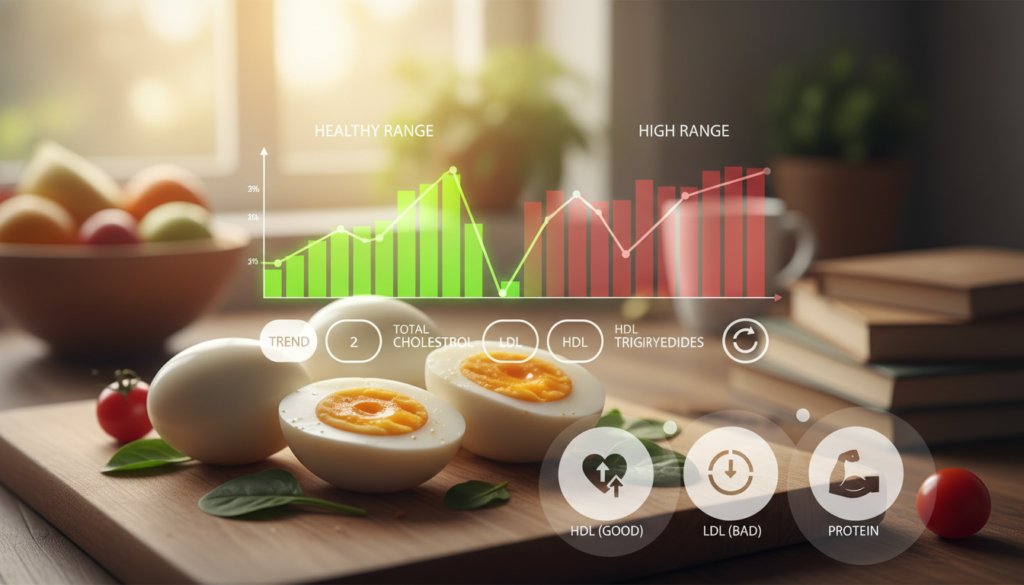
LDL vs HDL: what “good” and “bad” signals mean
LDL carries cholesterol to tissues and higher levels often raise heart risk. HDL helps remove cholesterol from blood and can be protective.
Clinicians look at patterns—how ldl and hdl move together—rather than a single number. Ratios and overall context matter most for long-term risk.
When consumption may require personalization
Some patients are hyper responders, while others have familial high cholesterol or known cardiovascular disease. Those groups need closer follow-up when changing daily intake.
If you fall into these categories, work with your clinician before making big shifts.
How to monitor and build a lower-saturated-fat plate
Start with baseline labs, then recheck cholesterol levels after 8–12 weeks of a consistent plan if your clinician recommends it.
- Simple plate formula: protein + vegetables + fruit or whole grains + olive oil or avocado.
- Limit processed meats, heavy cheeses, and cream sauces that raise saturated fat.
“Reducing saturated fat is often the fastest, evidence-aligned way to lower risk heart disease while keeping meals satisfying.”
A Great Way to Get Started on the Right Foot!
14-Day Boiled Egg Diet Plan
Recipe Guide Printable Bundle
Healthy, easy meals laid out for you day-by-day. A simple two-week structure you can start immediately.
- 14 Daily Meal Ideas
- Printable PDF Guides
- Quick & Simple Recipes
- Instant Download
Instant Download! Start Right Away!
| Step | Action | Why |
|---|---|---|
| Baseline | Fasting lipid panel | Know starting cholesterol levels and ratios |
| Follow-up | Check after 8–12 weeks | See meaningful trends, not daily noise |
| Adjust | Lower saturated fat if ldl rises | Evidence shows saturated fat drives ldl more than dietary cholesterol |
Egg Intake and Cardiovascular Disease Risk: What Large Patterns Suggest
When researchers pool data from many people, single-food effects on long-term heart outcomes often shrink. Large reviews and population analyses give a broader view than small trials.
What large studies show:
Evidence on one egg per day and stroke risk
Multiple meta-analyses report that consuming one egg per day is not linked to higher stroke risk. NHANES III-style analyses also found no association for roughly six units per week and stroke in community samples.
What studies show in adults and older adults, including those with risk factors
In adults 50+ with existing heart disease or two or more risk factors, a controlled 4-month comparison found no meaningful LDL/HDL changes when participants ate more than 12 fortified units weekly versus an egg-free period. That trial suggests modest intake within a low saturated-fat pattern may be neutral for many older adults.
Why overall patterns matter: foods eaten with the breakfast item change outcomes. Meals paired with vegetables, whole grains, and unsaturated fats differ from plates with processed meats, refined carbs, or sugary drinks.
Practical takeaways:
- Big-picture evidence often finds no clear link between moderate daily intake and higher cardiovascular disease risk by itself.
- One egg per day is not associated with increased stroke risk in meta-analytic findings.
- For adults who enjoy a daily serving, focus on lowering saturated fat and adding fiber around that meal.
- If you have established risk factors or known disease, use these findings as context and consult a clinician before changing intake.
| Population | Exposure | Key finding |
|---|---|---|
| General adults (meta-analysis) | One egg per day | No increased stroke risk; neutral for most cardiovascular disease outcomes |
| NHANES III-style cohorts | Up to ~6 per week | No association with stroke in population data |
| Adults 50+ with risk factors (controlled trial) | >12 fortified per week vs egg-free (4 months) | No meaningful LDL/HDL changes; pattern and saturated fat matter |
Common Mistakes That Stall Progress on the Boiled Egg Diet
Small, avoidable mistakes often slow results more than the food plan itself. Spotting and fixing these keeps momentum during the two weeks.
Relying on processed “low-carb” foods and under-eating fiber
Swapping real meals for packaged “low-carb” bars, chips, or shakes feels convenient but often fails. Those items can leave you hungry and trigger cravings later.
Why fiber matters: vegetables, beans, fruit, and whole grains add volume and slow digestion. Without them, hunger returns quickly and adherence drops.
Turning egg meals into high-saturated-fat meals
The problem isn’t the protein anchor; it’s what you pair it with. Loading plates with bacon, sausage, butter, and heavy cheese raises saturated fat fast.
Excess saturated fat and low fiber increase long-term risk for poor heart health and can blunt weight-loss progress.
- Add at least one vegetable serving to every breakfast.
- Cook with olive oil and avoid butter-heavy sides.
- Make processed meats an occasional treat, not a daily habit.
“Consistency beats perfect rules for two weeks — small fixes are the fastest route past a stall.”
How to Transition Off the Two Weeks Without Rebound Weight Gain
A clear exit strategy prevents quick regain after a disciplined two-week period.
Reintroducing carbohydrates gradually
Go slow. Add one higher-fiber serving at a time to test how hunger and energy respond.
Choose oats, beans, brown rice or a potato. Monitor portions for two to three days before adding more carbohydrates.
Better breakfast patterns that keep the wins
Keep a protein-rich morning habit. Options include a boiled egg with fruit, oatmeal topped with Greek yogurt, or a protein smoothie with berries.
These breakfast choices reduce impulse snacking later and preserve muscle while you adjust dietary variety.
Long-term use, heart health, and sustainable cadence
Maintain protein in most mornings to support muscle and steady appetite. Limit saturated fat; focus on fiber, unsaturated fats, activity and sleep to lower risk heart disease.
A practical cadence is 3–7 servings per week depending on preference, labs, clinician advice and overall dietary quality.
| Step | Action | Why it helps |
|---|---|---|
| Slow carb return | Add one high-fiber serving every 2–3 days | Prevents sudden calorie jumps |
| Keep protein breakfast | Egg or yogurt-based start most days | Reduces cravings, protects muscle |
| Focus on pattern | Fiber, unsaturated fats, sleep, activity | Targets long-term heart health |
Conclusion
Treat this two-week plan as a practical reset that highlights which plate habits matter most for heart health.
Key takeaway: the boiled egg diet is a simple structure that helps control calories and hunger while testing personal response to dietary cholesterol and saturated fat. UniSA/AJCN 2025 research shows fat quality often drives LDL changes more than cholesterol from an egg.
Remember: long-term heart disease and cardiovascular disease risk come from broad patterns — fiber, saturated fat, activity, blood pressure, smoking, and overall calories — not one food in isolation.
Personalize if you have high cholesterol, established heart disease, diabetes, or other disease risk. Pick an egg-per-day target, shop, batch-boil, follow week templates, then check levels with your clinician to decide what to keep long-term.