Surprising fact: nearly 6 in 10 U.S. households now prioritize plant-forward meals at least a few times a week, shifting how people think about everyday nutrition.
The term Flexitarian Protein Sources means choosing mostly plants while keeping some animal foods for variety, ease, and taste. This approach matters for busy weeknights, budgets, and long-term health.
We ask whether eggs are the “best” choice by weighing nutrition, convenience, cost, and how well they fit a plant-forward lifestyle. The article compares eggs to beans, tofu, nuts, and a few smart animal options so readers can rotate choices rather than pick one hero food.
You’ll get practical takeaways: per-serving protein numbers, simple meal-building ideas, and quick add-ons that make dinners satisfying. Remember, overall health depends on whole foods, fiber, and variety—not a single food to fix everything.
Key Takeaways
- A flexible approach blends vegetables, legumes, grains, and occasional animal items for balance.
- “Best” mixes nutrition, ease, cost, and how well an item supports plant-forward meals.
- Eggs are convenient, but plant options and other animal choices offer useful trade-offs.
- Expect clear per-serving numbers and weeknight meal ideas in the next sections.
- Focus on total diet quality—variety and whole foods matter most for long-term results.
Why Protein Matters on a Flexitarian Diet
If you’re shifting toward more plants, it helps to know how protein keeps your body running well.
What protein does for your body
Protein repairs muscle, tendons, and skin. It also helps the immune system make antibodies so you fight infections better.
That matters when you eat more plants because some plant meals need planning to deliver the same repair and immune benefits as animal items.
How much protein you need per day
A simple baseline is about 0.36 grams per pound of weight each day. For example, a 150-lb adult needs roughly 54 g/day.
Needs rise during pregnancy, breastfeeding, or intense training. If you fall into those groups, personalized guidance can help.
A Great Way to Get Started on the Right Foot!
14-Day Boiled Egg Diet Plan
Recipe Guide Printable Bundle
Healthy, easy meals laid out for you day-by-day. A simple two-week structure you can start immediately.
- 14 Daily Meal Ideas
- Printable PDF Guides
- Quick & Simple Recipes
- Instant Download
Instant Download! Start Right Away!
Simple signs you might not be getting enough protein
Look for regular weakness or fatigue and feeling hungry soon after meals. Those are easy clues you may lack adequate nutrients.
- Make sure there’s a protein item at each meal rather than tracking every macro.
- Benefits include steadier energy, longer fullness, and more satisfying plates even with less meat.
“Include a protein source at every meal — most people don’t need to track obsessively to meet needs.”
Next: eggs can help hit daily totals, but they’re just one practical option among many in a plant-forward diet.
Are Eggs the Best Protein Choice for Flexitarians?
Eggs often get singled out as a quick way to add quality nutrients to a meal. They are handy when you want a fast boost and can anchor a simple, veggie-forward plate.
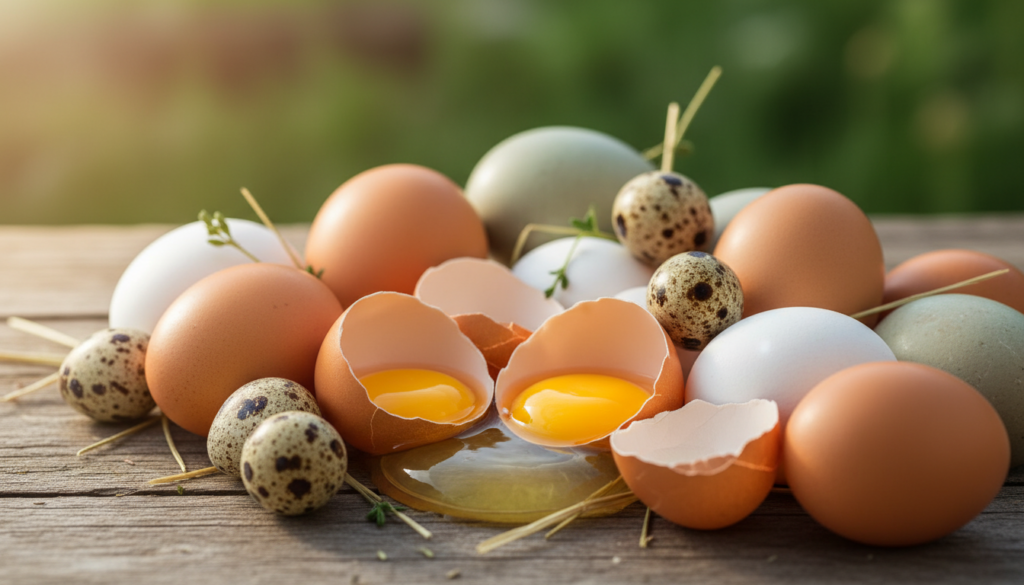
Egg nutrition basics: protein per egg and what you get from the yolk
Each egg delivers about 6–8 grams of proteins, making it a convenient option for busy days. The yolk holds most of the nutrition density: vitamin D, omega-3 fatty acids, and B vitamins.
“The yolk contains vitamin D, omega-3 fatty acids, and B vitamins.”
Eggs vs. egg whites: trade-offs for calories and nutrients
Egg whites cut calories and keep the protein, but they omit many nutrients found in the yolk. Choosing only whites is a clear calorie trade-off, not a full nutrition swap.
When eggs fit best into a plant-forward lifestyle
Whole eggs work well as an occasional anchor for breakfast or as a quick add-on to a vegetable-heavy bowl. They are one practical animal product among others you might rotate.
Keep variety in mind: eggs provide complete amino acids, but plant mixes can meet needs too. Your personal level of animal intake can be weekly, occasional, or more frequent depending on goals and taste in a flexitarian diet.
- Quick baseline: ~6–8 g per egg
- Yolk benefit: added vitamin and fatty acids
- Practical tip: use eggs to complement, not replace, plant proteins
Flexitarian Protein Sources You Can Build Meals Around
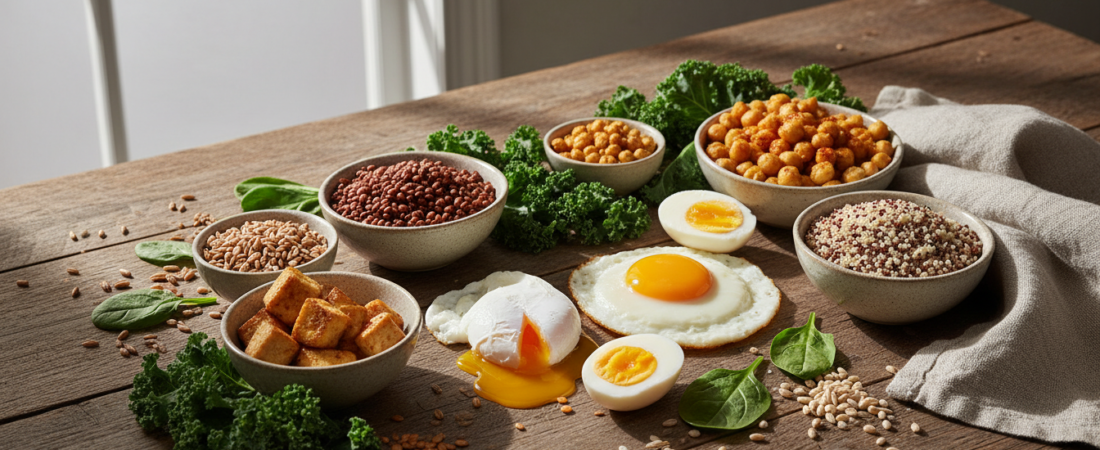
Keep a few high-protein staples on hand and you can pull together satisfying meals fast. These items batch-cook well and let protein come from plants instead of relying on meat every night.
Lentils
Lentils add about 8–12g per 1/2 cup cooked depending on type. Red lentils soften fast for soups and dals; green or brown hold shape for tacos, curry, or grain bowls.
Beans
Beans provide roughly 6–9g per 1/2 cup cooked plus ~6–8g fiber. They keep you full and support heart health. Try chili, burrito bowls, or smashed-bean toast for quick meals.
Edamame and whole soy
Edamame is a complete protein, meaning it has all essential amino acids. One cup shelled gives ~18g, so toss it in salads, stir-fries, or snack bowls for a fast boost.
Tofu
Tofu is extremely versatile—stir-fries, scrambles, or blended desserts. Expect ~8g per 3.5 oz (or 10–12g per 1/2 cup baked). Look for short ingredient lists and non-GMO options.
Tempeh
Tempeh is fermented soy with a firm bite and about 15–16g per serving. Steam briefly to cut bitterness, then marinate or pan-fry so flavors stick.
Seitan
Seitan is wheat gluten with a chewy, meat-like texture and ~15g per 1/2 cup cooked. Use it in fajitas, sandwiches, or stir-fries. Avoid if you avoid gluten.
Green peas
Don’t overlook peas: one cooked cup gives about 8g. Blend them into soups, add to pasta, or toss into fried rice for an easy vegetable and protein lift.
“Batch-cook a few staples so protein is convenient, affordable, and varied.”
Bottom line: these plant-based foods can form the backbone of a satisfying meal—rotate them and keep meat as an occasional add-on for variety.
A Great Way to Get Started on the Right Foot!
14-Day Boiled Egg Diet Plan
Recipe Guide Printable Bundle
Healthy, easy meals laid out for you day-by-day. A simple two-week structure you can start immediately.
- 14 Daily Meal Ideas
- Printable PDF Guides
- Quick & Simple Recipes
- Instant Download
Instant Download! Start Right Away!
Seeds and Nuts That Add High-Protein Power
A handful of seeds and nuts can turn a simple bowl into a filling meal with extra bite.
Seeds and nuts act as quick add-ons that lift calories, texture, and nutrients without extra cooking. They work best as protein boosters—not as meal bases—so sprinkle, blend, or spread them to make plant-forward meals more satisfying.
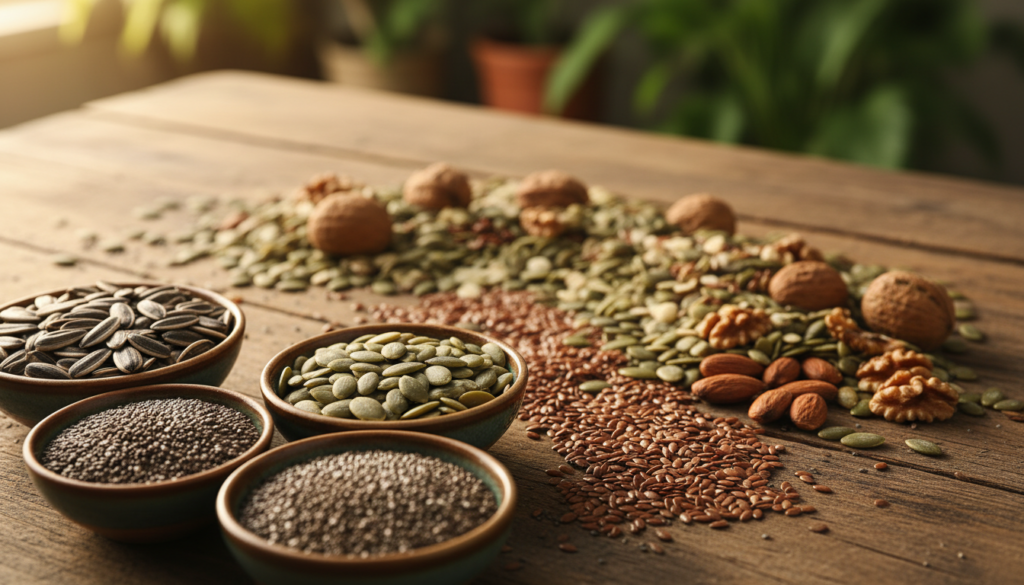
Pumpkin and hemp: standout, subtle boosts
Pumpkin seeds are a real standout. One ounce has about 7g, and a 1/2 cup roasted gives roughly 19g. Sprinkle them on salads, soups, or granola, or roast with paprika and cumin for a savory crunch.
Hemp seeds taste mild and blend into many dishes. Expect ~10g per ounce and about 14g per 1/2 cup shelled. Stir them into oatmeal, smoothies, or yogurt for a stealthy boost.
Sunflower and chia: crunch and breakfast-friendly thickeners
Sunflower seeds offer budget-friendly crunch—about 8g per ounce, ~12g per 1/2 cup roasted. Toast lightly and add to grain bowls, roasted veggies, or salads for texture.
Chia seeds shine at breakfast. They thicken puddings and smoothies and can act as a vegan “chia egg” (1 tbsp chia + 2.5 tbsp water). Use them as an oatmeal topper or in a make-ahead pudding.
Peanuts and nut butters: satisfying with portion awareness
Peanuts provide about 9g per 1/4 cup and ~13–14g per 1/2 cup roasted. Nut butters add creaminess and satiety but are calorie-dense. Choose unsalted versions and measure portions to control calories and sodium.
- Why they help: a tablespoon or sprinkle can turn a light plate into a filling meal.
- Easy ideas: hemp in dressings, pumpkin on soup, sunflower on bowls, chia in breakfast jars.
- Watch portions: seeds and nuts are nutrient-dense and calorie-dense—small amounts go a long way.
| Item | Common Portion | Approx. Protein |
|---|---|---|
| Hemp seeds | 1 oz / 1/2 cup shelled | ~10g / ~14g |
| Pumpkin seeds | 1 oz / 1/2 cup roasted | ~7g / ~19g |
| Sunflower seeds | 1 oz / 1/2 cup roasted | ~8g / ~12g |
| Peanuts | 1/4 cup / 1/2 cup roasted | ~9g / ~13–14g |
“A small sprinkle of seeds adds flavor, texture, and staying power to plant-forward meals.”
High-Protein Grains and Plant-Based Products That Round Out Your Plate
Whole grains are more than fillers—they add steady energy and meaningful protein when paired with beans or tofu. Oats deliver about 5g per 1/2 cup dry, while quinoa or barley add roughly 5–6g per 1/4 cup uncooked. Ancient grains like teff, millet, and amaranth bring variety and texture.
Plant-based beverages and nutritional yeast
Soy milk and pea milk are quiet helpers; many brands match cow’s milk on gram-for-gram protein. Use them in smoothies, overnight oats, or coffee for an easy boost.
Nutritional yeast gives about 2g protein per tablespoon and packs B vitamins. Sprinkle it on popcorn, pasta, or roasted vegetables for a savory, cheesy hit.
Picking meat substitutes
Look for short ingredient lists, clear grams of protein, and moderate levels of saturated fat and sodium. Choose products that support plant-based eating goals rather than replacing whole foods entirely.
“Mix grains with legumes across the day—amino acid balance improves and overall protein quality rises.”
| Item | Common Portion | Approx. Protein |
|---|---|---|
| Oats | 1/2 cup dry | ~5g |
| Quinoa / Barley | 1/4 cup uncooked | ~5–6g |
| Nutritional yeast | 1 tbsp | ~2g |
Animal Products in Moderation: Smart Flexitarian Picks Beyond Eggs
Smartly chosen animal items help round out meals and add variety without dominating the plate. Use them as occasional tools to simplify planning and boost nutrients while keeping plants central to each meal.
Dairy that pulls its weight
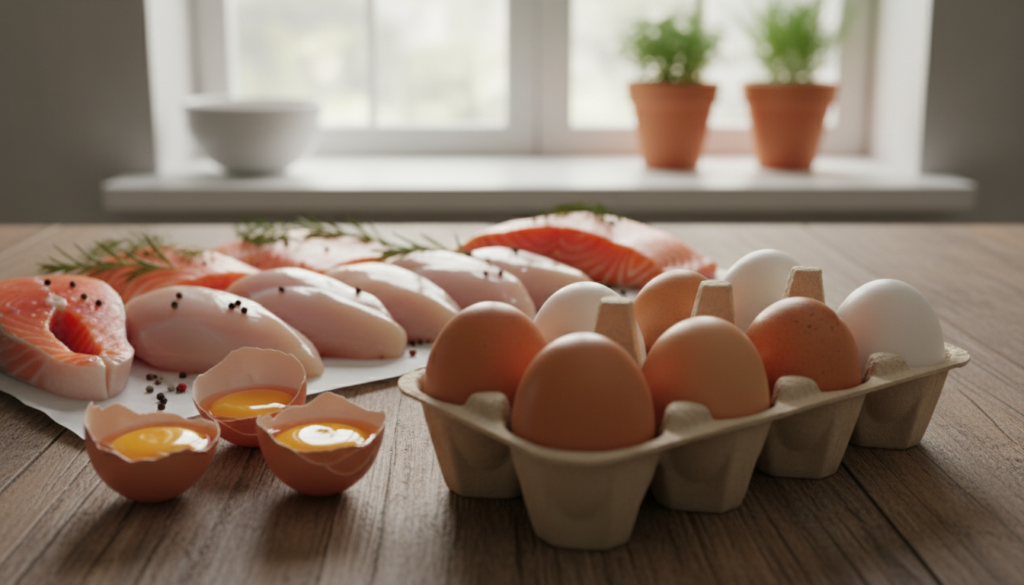
Plain Greek yogurt and cottage cheese each provide about 13 grams or more per serving. They make easy bowls: yogurt + berries + seeds or cottage cheese + sliced fruit and a sprinkle of nuts.
These dairy items are quick, portable, and pair well with fiber-rich vegetables, whole grains, or legumes to keep meals balanced and supportive of long-term health.
Fish and poultry as occasional add-ins
Treat meat and fish as small accents rather than the centerpiece. A modest portion of salmon or a bit of roasted chicken adds flavor, essential fats, and reliable protein without overwhelming the plate.
- Example: quinoa + roasted veg + 3–4 oz chicken.
- Example: big bean salad + a serving of salmon for extra omega-3s.
“Use animal products as complements—choose less-processed items and let plants remain the base of the meal.”
Eggs are one useful option, but rotating in dairy, fish, and poultry prevents fatigue and keeps your menu interesting. When you pick higher-quality animal products, they fit neatly into a plant-forward, health-focused routine.
How to Get Enough Protein Across the Day Without Overthinking It
You don’t need to track grams obsessively. Instead, make sure each meal has a clear protein anchor and let vegetables, whole grains, and healthy fats fill the rest.
Plant-forward breakfast ideas with optional eggs
Start simple: oatmeal made with soy milk and hemp, chia pudding with fruit, or avocado toast topped with pumpkin seeds.
Want eggs? Try a veggie omelet or a jammy egg on greens as an optional add-on to boost your morning source protein.
Lunch and dinner templates that treat meat as a side dish
Build a bowl: grain + beans or lentils + lots of vegetables + a bold sauce. Example: quinoa + black beans + salsa + roasted peppers.
For dinner, stir-fry vegetables with tofu or edamame and keep fish or chicken as a smaller side so plant-based foods remain the main event.
Easy ways to add protein with seeds, beans, and soy
Quick boosters take ten seconds: sprinkle seeds, add nutritional yeast, toss in peas, or stir in canned beans.
Rotation helps: lentils one day, tofu the next, tempeh later, then Greek yogurt or fish occasionally to keep meals interesting.
“Small, consistent boosts at each meal make it easy to get enough protein across the day.”
Bottom line: make sure consistency beats perfection—this practical plan fits busy schedules, family dinners, and a flexible diet.
Conclusion
Think of your weekly pattern, not one perfect food: small swaps add up to big gains.
Eggs are convenient and nutrient-rich (about 6–8 g per egg, plus vitamin D and omega-3s in the yolk), but they aren’t automatically the best choice for everyone.
Plenty of plant options—lentils, beans, tempeh, edamame, grains, and seeds—can meet daily needs while adding fiber and variety. Aim to include a clear protein anchor at breakfast, lunch, and dinner so you don’t have to catch up later.
Treat meat as a side, focus on whole foods, and use animal items when they add convenience or joy. If you cut back a lot, watch B12, iron, vitamin D, and omega-3s and ask a pro if needed.
Action step: try two or three new plant proteins this week and pair them with your usual vegetables and grains.