
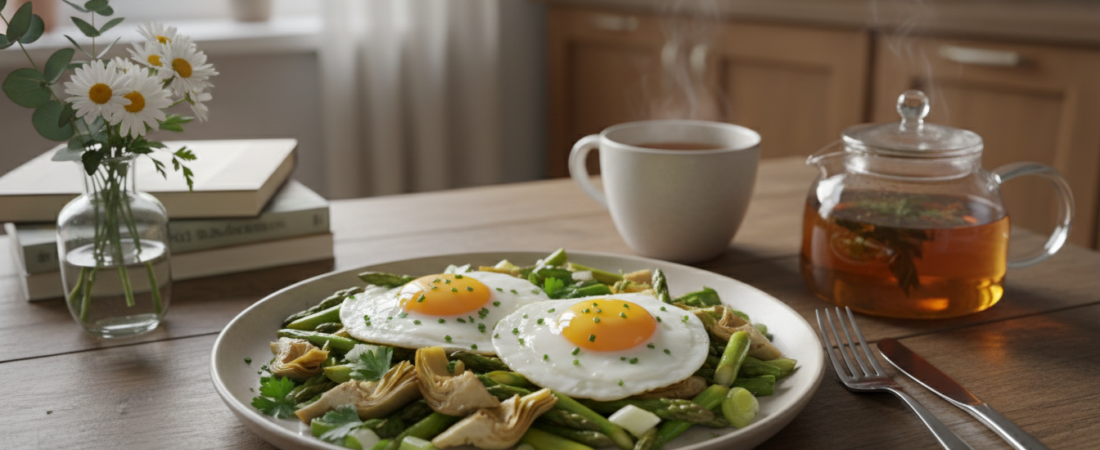
Surprising fact: GI doctors say people who eat a balanced morning meal report fewer bouts of bloating and reflux and steadier energy through the day.
What this means in practice: a practical, easy morning plate blends protein, a fiber-rich carb, and healthy fat to help digestion and steady energy.
Here we focus on eggs as a simple protein base and prebiotic vegetables for fiber that supports beneficial bacteria in the gut.
Expect quick scrambles, omelets, shakshuka-inspired ideas, and toast upgrades that fit busy mornings. We also cover hydration, smart sides like yogurt or kefir and fruit, and what to limit if mornings trigger reflux.
This guide is for anyone who wants a filling, repeatable morning routine for the workweek. Recipes stay flexible—swap veggies, use leftovers, and build 2–3 go-to combos you can repeat.

Key Takeaways
- Balanced morning meals cut common GI complaints for many people.
- Eggs give easy, versatile protein for quick breakfasts.
- Prebiotic vegetables add fiber that feeds beneficial microbes.
- Include hydration and smart sides like yogurt or fruit.
- Keep recipes flexible so you can repeat them during the week.
Why breakfast matters for gut health in the morning
A well-timed morning meal sets digestion in motion and shapes energy for the hours ahead.
How a balanced breakfast supports digestion and steady energy
How a balanced breakfast supports digestion and steady energy
Eating soon after you wake signals the digestive tract to start moving. This helps regularity by restarting the rhythm that paused overnight.
A balanced plate combines protein, fiber-rich carbs, and healthy fats. Protein boosts satiety, while fiber helps bowel regularity and slows sugar spikes. Together, these parts keep energy steady through late morning.
The big take-home message is not skipping breakfast; balanced meals with protein + fiber-rich carbs + healthy fats help keep you full and may reduce reflux, bloating, constipation.
Why skipping breakfast can backfire for your gut
Why skipping breakfast can backfire for your gut
Skipping the first meal can lead to larger, heavier eating later. That often brings discomfort, bloating, and reflux for people with sensitive stomachs.
Big, greasy, or very sugary first meals can also irritate the esophagus and slow digestion. Simple egg-and-vegetable combos are a practical solution that follow the GI-doctor template and help you start day without surprise symptoms.
| Component | Benefit | Quick examples |
|---|---|---|
| Protein | Improves satiety and reduces overeating | Eggs, yogurt, lean turkey |
| Fiber-rich carbs | Supports bowel regularity and steady energy | Whole-grain toast, prebiotic vegetables, fruit |
| Healthy fats | Slows digestion and increases fullness | Avocado, olive oil, nuts |
Choosing these kinds of foods helps protect overall health and makes mornings more manageable. The next sections show simple egg + veggie combos that hit this balance.
A Great Way to Get Started on the Right Foot!
14-Day Boiled Egg Diet Plan
Recipe Guide Printable Bundle
Healthy, easy meals laid out for you day-by-day. A simple two-week structure you can start immediately.
- 14 Daily Meal Ideas
- Printable PDF Guides
- Quick & Simple Recipes
- Instant Download
Instant Download! Start Right Away!
Hydration first: the easiest gut-friendly habit before you eat
Before you touch any food, a small hydration routine can make the rest of your mornings gentler.
Why GI doctors recommend a full glass of water first thing
Drink about 8 ounces soon after waking — ideally before coffee or breakfast. Dr. Adrienna Jirik recommends this simple step because it helps kick-start digestion and can reduce bloating or constipation after overnight fluid loss.
“The routine of a full glass of water on waking supports stool consistency and primes the digestive tract.”
Simple hydration add-ons that won’t irritate digestion
Keep additions gentle. A splash of lemon can be pleasant if it does not trigger reflux. Plain warm water is another low-risk option for those who dislike cold drinks.
- Keep a water bottle by the bed or pre-fill a glass the night before.
- Drink while eggs cook if you’re short on time.
- If you’re reflux-prone, avoid very acidic add-ins and listen to your body.
Once hydration is handled, you’re set up for a calmer start to the day and better digestion when you sit down to food.
What makes eggs + prebiotic vegetables a gut-friendly combo
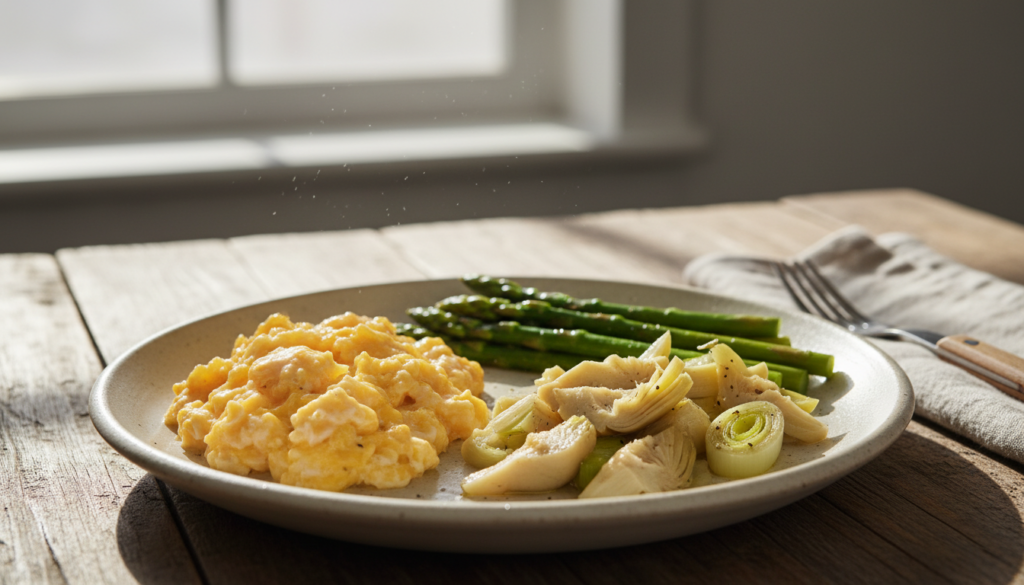
A balanced morning plate anchors energy and reduces mid-morning hunger. The GI-doctor formula — protein + fibre-rich carb + healthy fats — explains why this pairing works so well.
Eggs as an easy, lean protein anchor
Eggs cook fast and deliver steady protein to help you feel full without heavy calories. One egg alongside vegetables gives a simple, repeatable base for busy mornings.
Prebiotic fiber: feeding beneficial gut bacteria
Prebiotic fibers are ingredients that feed beneficial microbes, not the same as probiotics. Oats, apples, and chickpeas all add soluble fibre that microbes break down into helpful compounds.
“Pair protein with fibre and a touch of fat to keep energy steady and reduce cravings.”
Healthy fats and fiber together for better satiety
Adding olive oil for sautéing, avocado on the side, or a sprinkle of seeds pairs fats with fibre to slow digestion and extend fullness.
- Start small when raising fiber — increase beans or greens gradually to avoid bloating.
- Build-it preview: egg + greens/beans + whole-grain toast or oats makes a reliable template.


| Component | Why it helps | Quick examples |
|---|---|---|
| Protein | Promotes satiety and steady energy | Egg, Greek yogurt |
| Fibre | Feeds beneficial microbes and aids regularity | Oats, apples, chickpeas |
| Healthy fats | Slows digestion and increases fullness | Olive oil, avocado, seeds |
Prebiotic vegetables to keep in your fridge for fast breakfasts
Stocking a few simple prebiotic vegetables turns rushed mornings into quick, digestion-supporting meals. Keep a small selection on hand to toss into scrambles, omelets, or quick sautés.
Asparagus tips, kale, and spring greens
Always-ready greens: kale, spinach, and spring greens cook down fast and add fiber without bulk.
Asparagus tips steam or sauté in minutes and lend a springy lift to eggs or shakshuka-style dishes.
Beans and chickpeas for extra fiber
Beans and chickpeas are high-fiber additions that warm quickly. Use canned, rinsed beans to save time and add texture to scrambles or toast.
Apples and kiwis as prebiotic add-ins alongside savory plates
Balance savory eggs with a small side of prebiotic fruit like sliced apple or kiwi. These pair well with yogurt or a light smoothie if you want a drinkable option.
- Fridge formula: greens + a bean + an egg, plus a small side of fruit.
- Keep oats in the pantry for overnight prep or to add to a yogurt side.
- For a quick drinkable side, blend a banana, handful of berries, and a splash of milk.
Gut‑Friendly Breakfasts with eggs and veggie-packed scrambles
If mornings are rushed, a fast scramble with seasonal vegetables delivers protein and fiber with minimal fuss.
Kale and pea scramble with a side of fruit
Sauté chopped kale until wilted, add frozen peas to warm through, then pour in beaten eggs and scramble until just set.
Finish: serve with a small side of sliced fruit for extra fiber and a fresh contrast.
Spinach-forward scramble inspired by green smoothie staples
Cook baby spinach in olive oil, then add eggs and fold until soft. Keep a banana or berries on the side for a quick fruit pairing.
Tip: this gives the same greens-and-fruit combo as a smoothie without needing a blender.
Courgette-style zucchini scramble with feta
Shred zucchini, squeeze out moisture, and sauté briefly. Add eggs and crumble feta at the end for salt and creaminess.
Shredded zucchini cooks quickly and keeps the dish light for a fast morning meal.
Leftover veggie-and-grain breakfast bowl with eggs
Warm quinoa or brown rice, fold in reheated vegetables, and top with a fried or soft-scrambled egg.
This stretches last night’s food into a fast, balanced plate that takes about ten minutes when you reheat smartly.
Quick digestion note: cook vegetables well and introduce beans or grains slowly if you’re sensitive.
| Recipe | Prep time (minutes) | Key ingredients | Quick tip |
|---|---|---|---|
| Kale & peas scramble | 8–10 | Kale, peas, eggs, fruit | Sauté kale well to soften fibre |
| Spinach-forward scramble | 6–8 | Spinach, eggs, berries/banana | Pair with fruit for extra fiber |
| Zucchini & feta scramble | 7–10 | Zucchini, eggs, feta | Squeeze moisture to avoid sogginess |
| Leftover grain bowl | 5–10 | Quinoa/rice, veggies, egg | Reheat grains before adding egg |
Omelets that boost fiber without sacrificing flavor
An omelet can be a smart, time-saving way to pack more fibre and variety into your week. Make vegetables the main filling instead of an afterthought to turn a simple eggs-based plate into a true plant delivery system.

A Great Way to Get Started on the Right Foot!
14-Day Boiled Egg Diet Plan
Recipe Guide Printable Bundle
Healthy, easy meals laid out for you day-by-day. A simple two-week structure you can start immediately.
- 14 Daily Meal Ideas
- Printable PDF Guides
- Quick & Simple Recipes
- Instant Download
Instant Download! Start Right Away!
Vegetable omelet to help you eat more plants each week
Use kale, peas, and courgette (zucchini) to follow the “30 plants a week” idea and boost fibre. Chop or shred so they cook fast. Rotate different greens and roasted leftovers to increase variety across the week.
High-fiber omelet fillings that cook in minutes
Quick picks include chopped spinach, thawed peas, sautéed mushrooms, diced zucchini, and warm roasted veg. Add a small amount of cheese for satisfaction, herbs for brightness, and a dot of butter or a splash of olive oil for flavor.
“Treat veggies as the main filling and the omelet becomes a simple, repeatable fibre delivery system.”
- Minute omelet workflow: pre-cook veggies, whisk eggs, pour, fold, eat.
- Weekly goal: rotate plants to support a diverse microbiome and keep meals interesting.
- Pair with whole-grain toast or fruit if you want a fuller healthy breakfast.
| Focus | Quick fillings | Flavor tips |
|---|---|---|
| Leafy greens | Spinach, kale | Sauté, finish with herbs |
| Crunch & sweetness | Peas, zucchini | Add small cheese crumble |
| Hearty options | Mushrooms, roasted veg | Pre-roast for depth; use olive oil |
Shakshuka-inspired egg breakfasts with gut-friendly greens
Shakshuka turns eggs into a warm, saucy vehicle for seasonal greens and beans. The basic idea is simple: a tomato or vegetable sauce cooks low and slow, then you nestle eggs until just set. It’s a great way to add leafy greens, asparagus tips, and canned beans into one satisfying pan.
Spring greens shakshuka with asparagus and broad beans
Start with a light tomato or green base, sauté asparagus tips and broad beans until tender, then fold in chopped spring greens. Make wells and crack eggs into the pan; cover briefly until whites are set and yolks are runny or cooked to your liking.
Kimchi and beans shakshuka for a tangy, fermented twist
Add chopped kimchi to a mild tomato base for bright, fermented flavor. Stir in rinsed beans for fibre and texture. Keep spice low at first—adjust chili and kimchi amount to avoid triggering sensitivity.
Best breads for mopping: sourdough and whole-grain options
Choose sturdy, higher-fibre slices like sourdough or a hearty whole-grain loaf for dipping. These breads hold the sauce and add structure, making each bite more satisfying.
- Gut-comfort tip: if fermented foods cause symptoms, use a small amount of kimchi or pick a milder version.
- Meal-prep hack: make the sauce base ahead, reheat, then add eggs fresh for a fast morning recipe.
| Shakshuka Style | Key veggies/beans | Flavor note |
|---|---|---|
| Spring greens | Asparagus tips, broad beans, kale | Bright, seasonal, mild |
| Kimchi & beans | Kimchi, white or cannellini beans | Tangy, fermented; spice adjustable |
| Bread pairing | Sourdough, whole-grain slices | Sturdy, higher fibre for mopping |
Avocado toast upgrades that pair well with eggs and prebiotic veggies
Transform a slice of rye or sourdough into a balanced meal by layering avocado, vegetables, and an egg. Avocado toast is an easy base that gets more nourishing when you add fiber-rich greens or beans and a source of protein.
Chickpea, kale, and feta toast with a soft egg: Mash a few chickpeas with lemon and olive oil, warm chopped kale until tender, scatter crumbled feta, then top with a soft-cooked egg. This adds soluble fiber, savory cheese, and satisfying protein in one slice.
Miso chickpeas and avocado with sliced boiled egg
Mix drained chickpeas with a splash of miso and sesame oil for quick umami. Spread avocado on toast, add the miso chickpeas, and finish with sliced boiled egg for extra staying power.
Smoked salmon, avocado, and when to be cautious
Smoked salmon adds omega-3 fats and savory depth. It pairs well with avocado, especially on fiber-rich rye. Keep portions moderate if rich foods trigger reflux, and skip heavy dressings.
| Upgrade | Key add-ins | Bread choice |
|---|---|---|
| Chickpea & kale | Chickpeas, kale, feta, soft egg | Whole-grain or rye |
| Miso chickpeas | Miso, chickpeas, avocado, boiled egg | Sourdough or whole-grain |
| Smoked salmon | Smoked salmon, avocado, lemon | Rye or seeded loaf |
| Mix & match | Sprouts, roasted asparagus, leftover greens | Any hearty slice |
Quick tips: choose rye or whole-grain for more fiber; sourdough if you prefer a milder, tangy loaf. Rotate toppings—sprouts, roasted asparagus, or leftover veg—to keep avocado toast interesting and balanced.
Make-ahead gut-friendly breakfasts to simplify busy mornings
Prep the night before and mornings become calm: small make-ahead dishes cut decision fatigue and keep you nourished.
Why make-ahead helps digestion: having ready options reduces the chance you skip a meal or grab sugary processed food. That steady start supports regularity and steadier energy.
Overnight oats template (serve with eggs)
Combine rolled oats with milk or yogurt, a pinch of salt, and a touch of honey. Refrigerate overnight and top in the morning.
Chia strategy and chia pudding with apple
Mix 1–2 tbsp chia seeds into a small cup of yogurt or milk. Chill until thick, then grate an apple on top for extra pectin and fibre.
Prep-ahead roasted veggie trays
Roast zucchini, asparagus, and onions on one tray. Portion into containers so you can reheat and add eggs in minutes.
| Prep item | Time | Serve-with |
|---|---|---|
| Overnight oats | 5 min | Eggs or nut butter |
| Chia pudding | 5 min + chill | Grated apples |
| Roasted tray | 25–30 min | Scrambled or fried egg |
Tip: portion meals into a grab-and-go bowl to make mornings effortless and nourishing.
Smart sides and toppings that support digestion
The right side dishes bring probiotics, fiber, and texture to your morning plate without extra fuss. Small additions can boost nutrition and keep you full through the morning.
Greek yogurt, kefir, and probiotic-friendly options
Greek yogurt is a quick probiotic-friendly choice that pairs well with savory eggs or a small sweet side. Kefir offers a drinkable probiotic option when you want something lighter than a bowl.
If you avoid milk, try coconut or almond-based yogurt and dairy-free kefir alternatives to get similar texture and fewer triggers.
Berries, bananas, and seasonal fruit for fiber
Fresh berries and a sliced banana add soluble fiber and natural sweetness. They pair well with eggs and take almost no prep time.
Nuts, seeds, and healthy fats to round out the plate
Add a small handful of nuts and a sprinkle of seeds (chia, flax, or pumpkin) for crunch and healthy fats. These toppings help satiety and improve texture.
“A simple yogurt bowl — yogurt + berries + a bit of granola — makes a convenient, nourishing side.”
| Side | Benefit | Quick tip |
|---|---|---|
| Greek yogurt | Probiotics, protein | Use plain and add fruit |
| Berries | Fiber, antioxidants | Pair with yogurt or eggs |
| Nuts & seeds | Crunch, healthy fats | Keep portions small (1 oz) |
Moderation matters: if dairy, high-fat toppings, or crunchy add-ins trigger symptoms, scale back and personalize your plate.
What to limit for a calmer gut in the morning
Some common morning foods quietly trigger bloating, reflux, or midmorning crashes. Choosing fewer of these items helps your digestion and overall health without dramatic rules.
Sugary pastries and highly processed breakfast items
Why limit them: dessert-like pastries and ultra-processed options spike blood sugar and leave you hungry soon after. They can also increase bloating and indigestion.
Smarter swap: fruit with plain Greek yogurt or overnight oats for steady carbs and more lasting protein.
Greasy sandwiches and processed meats
Greasy breakfast sandwiches and processed meats such as bacon or ham often cause sluggish digestion. High fat and salt can worsen reflux for many people.
Moderation tip: think of bacon and ham as occasional, not daily, choices.
Coffee and acid reflux: when to try decaf
For people who experience reflux, caffeine can relax the lower esophageal sphincter and make symptoms worse. Consider decaf or drinking coffee after you eat.
“If reflux is an issue, try decaf or have coffee with a meal rather than on an empty stomach.”
Small practical notes: watch portions of peanut butter and butter—high-fat spreads may trigger discomfort if eaten alone. Pair them with whole-grain toast and a source of protein, like eggs, to balance the plate.
| What to limit | Why | Smarter swap |
|---|---|---|
| Sugary pastries | Blood-sugar spikes, low satiety | Fruit + yogurt or overnight oats |
| Greasy sandwiches | High fat increases reflux risk | Eggs + sautéed greens on whole grain |
| Processed meats (bacon/ham) | Salt, additives; occasional food | Lean turkey or mashed chickpeas |
| Black coffee on empty stomach | May worsen acid reflux | Decaf or coffee after a balanced meal |
How to build your own egg-and-veg gut-friendly breakfast formula
Use a short, repeatable template that makes assembling an egg-and-veg plate fast and reliable. The goal: create two or three mini-plans you can repeat during the week.
The GI doctor template: protein + fibre-rich carb + healthy fats
Simple rule: pair a reliable protein with a fibre-rich carbohydrate and a small serving of healthy fats.
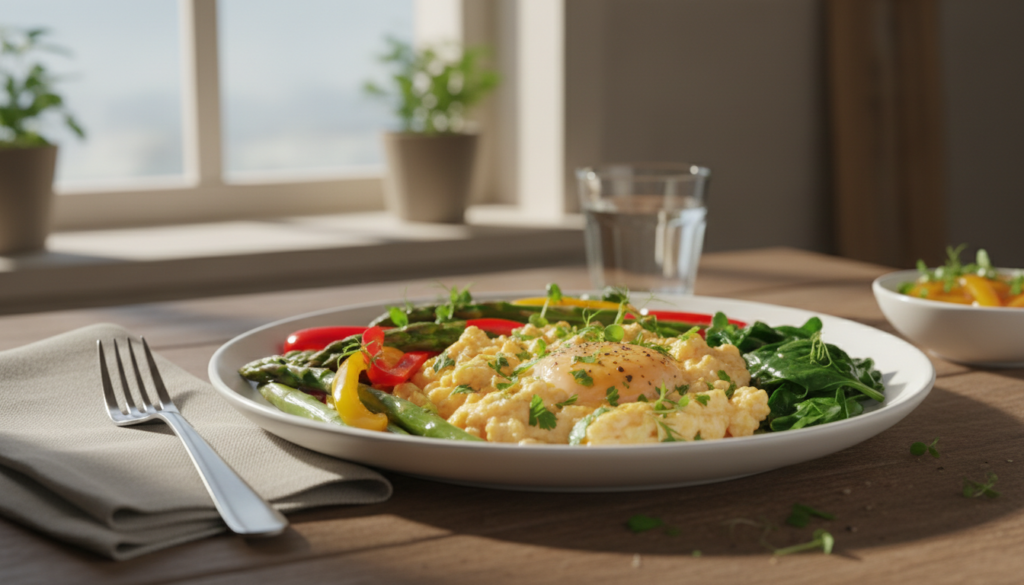
Example: eggs + whole-grain toast or oats + avocado or olive oil. Eggs provide steady protein while vegetables and oats add fibre.
Timing and portion tips to avoid bloating and reflux
Eat within an hour of waking if you can. If you feel nauseous, have a small piece of fruit or a boiled egg first, then finish the meal later.
Increase beans, chia, or high-fibre foods slowly. Cook vegetables well and keep fats moderate if reflux flares. Avoid lying down right after eating.
Two or three go-to plans to repeat all week
Pick 2–3 plans that take just minutes so consistency is easy. Here are quick builds you can swap through the week.
- Veggie scramble + whole-grain toast + avocado — fast, savory, and filling.
- Vegetable omelet + beans + a small piece of fruit — higher fibre and protein.
- Egg bowl over quinoa with warm greens — reheats well and feels hearty.
Oats option: overnight oats or quick oatmeal work as the fibre-rich carb when you skip bread. Use rolled oats for faster cook times.
Smoothie backup: blend spinach, fruit, and yogurt or kefir for a quick start. Add a boiled egg on the side for extra protein and staying power.
A Great Way to Get Started on the Right Foot!
14-Day Boiled Egg Diet Plan
Recipe Guide Printable Bundle
Healthy, easy meals laid out for you day-by-day. A simple two-week structure you can start immediately.
- 14 Daily Meal Ideas
- Printable PDF Guides
- Quick & Simple Recipes
- Instant Download
Instant Download! Start Right Away!
| Plan | Prep time (minutes) | Key parts | Quick tip |
|---|---|---|---|
| Veggie scramble | 6–10 | Eggs, sautéed greens, whole-grain toast, avocado | Cook greens until soft to ease digestion |
| Omelet + beans | 8–12 | Eggs, canned beans, mixed veg, fruit | Rinse beans; add herbs for flavor |
| Egg bowl | 5–10 | Fried/soft egg, quinoa, warm greens | Use leftover quinoa to save time |
| Oats / Smoothie | 2–10 | Overnight oats or quick oats; smoothie with spinach + yogurt | Add a boiled egg for extra protein |
Conclusion
Small changes—hydrating first and keeping a short ingredient list—turn rushed mornings into reliable, nourishing starts.
Drink a glass of water, then build a simple breakfast you can repeat. Aim for a protein anchor like eggs, a fiber-rich carb, and a small healthy fat.
Stock easy ingredients: greens, beans or chickpeas, oats, yogurt, chia or other seeds, fruit, whole-grain toast, and avocado. These make fast bowls, scrambles, or a smoothie with a boiled egg on the side.
Keep it consistent: pick two or three meals you enjoy and rotate them through the week. If reflux or bloating appears, scale portions, try decaf, and increase fiber and fats slowly.
Try one new idea this week—a greens shakshuka, chickpea-avocado toast with an egg, or a veggie scramble bowl—and build from there for better morning health every day.