

Surprising fact: nearly one in four Americans who try strict low-carb plans report higher cholesterol within months, a signal that short-term wins can come with trade-offs.
This piece explains, in plain language, how these three approaches differ, what they promise, and which trade-offs matter most for people in the United States today.
We will cover why many see rapid weight loss and more steady blood sugar from cutting carbs, and why exclusionary plans can raise the chance of nutrient gaps and heart concerns.
Expect clear comparisons of allowed foods, typical side effects, sustainability, and who each approach may suit best. This is informational content, not medical advice; individual responses vary with health history and medications.
If you have diabetes, heart disease risk, kidney issues, or a history of disordered eating, seek professional guidance before trying strict low-carb approaches.
Key Takeaways
- All three cut carbs to help weight loss, but they differ in what foods are allowed.
- Simpler food rules can boost short-term results but may cause long-term nutrient gaps.
- Cholesterol and heart risk can rise for some people on strict low-carb plans.
- Think about energy, blood sugar, food variety, and sustainability when choosing.
- Talk to a clinician if you have heart, kidney, or metabolic conditions.
What these low-carb diets are and why they’re trending in the United States right now
When you cut carbohydrates, the body runs low on its usual sugar fuel and starts using stored fat instead. This change reduces reliance on glucose and produces ketones, which the body can use for energy. People notice quick weight shifts, fewer hunger spikes, and a simple set of rules to follow. Those practical wins drive popularity across the United States.
Ketosis is the metabolic state where the body breaks down fat into ketones for fuel. Ketones are a normal alternative energy source — not a trendy mystery chemical — and many report steadier energy and fewer blood sugar swings once they adapt.
For context, Dietary Guidelines suggest about 225–325 grams of carbohydrates daily on a 2,000-calorie plan. Research also notes the brain needs roughly 120 grams of carb per day for some people. That helps explain why some feel great with lower intake while others feel sluggish, especially with heavy mental or athletic demands.
All three plans cut carbs, but the rules, limits, and nutrition risks differ. The next sections compare core rules, typical carb limits, and real-world food choices.
A Great Way to Get Started on the Right Foot!
14-Day Boiled Egg Diet Plan
Recipe Guide Printable Bundle
Healthy, easy meals laid out for you day-by-day. A simple two-week structure you can start immediately.
- 14 Daily Meal Ideas
- Printable PDF Guides
- Quick & Simple Recipes
- Instant Download

Instant Download! Start Right Away!
Keto vs. Carnivore vs. Egg Diet: core rules, carb limits, and food choices
Here’s a clear, side‑by‑side look at what each low‑carb plan actually allows and bans. Use this to spot how strict each approach feels in daily life and which nutrients may be at risk.

keto basics
The keto approach is high in fat, moderate in protein, and very low in carbs. Typical targets sit around 20–50 grams of carbs daily, and it includes both animal products and low‑carb plant foods.
carnivore basics
This is an elimination style that allows mostly animal products: meat, fish, eggs, and sometimes dairy. Carbs are near zero and plant foods are removed, which cuts fiber and many micronutrients.
egg plan basics
The egg plan centers meals on eggs with a narrow set of add‑ons. It’s often used short‑term as a reset, not as a varied long‑term strategy.
At‑a‑glance allowed and restricted foods
- Allowed (keto): meat, fish, eggs, dairy, low‑carb vegetables, nuts, and fats.
- Allowed (carnivore): mostly animal foods only — meat, fish, eggs, limited dairy.
- Allowed (egg plan): eggs as centerpiece with limited extras.
- Commonly restricted: grains, added sugar, high‑carb foods, and many fruits.
Biggest strategic difference: the ketogenic path keeps plant foods and fiber, while the animal‑only plan removes them entirely, changing micronutrient and gut‑health trade‑offs.
Food variety and flexibility: what you can actually eat day to day
Daily menus show how flexible a plan feels in real life. Below are realistic day‑of‑eating examples to illustrate true variety and how easy each approach is to follow.
Keto-friendly variety
Sample day: scrambled eggs with spinach and avocado for breakfast; salad with grilled salmon, olive oil, and nuts for lunch; steak with roasted low‑carb vegetables and cheese at dinner.
This plan keeps many plant foods and vegetables, so people get taste variety and flexible meal building.
Carnivore simplicity
Sample day: bacon and eggs, ribeye for lunch, pan‑fried fish for dinner. Snacks are mostly animal products like cheese or cold cuts.
Choices are predictable and low decision fatigue, but repetition and limited restaurant options can make social meals hard.

Egg-plan realism
Sample day: eggs for breakfast and lunch, a small serving of meat at dinner, few plant foods overall.
Short-term structure can help, but repetition risks boredom and real-life flexibility is low for families and travel.
| Plan | One-day sample | Variety | Dining-out ease |
|---|---|---|---|
| Keto | Eggs, salad with fish, steak + veg | High — vegetables, nuts, dairy | Good — many low-carb options |
| Carnivore | Eggs, ribeye, fish | Low — mostly animal products | Challenging — limited menu choices |
| Egg plan | Multiple egg meals, small meat portion | Very low — repetition risk | Low — few easy swaps |
Bottom line: Variety and flexibility shape satisfaction, hunger, and long‑term adherence. These factors often matter more than perfect macros when people try to keep weight off.
Weight loss results: what drives fat loss on keto, carnivore, and egg-based plans
Many people see fast changes on strict low‑carb plans, but the reasons are a mix of appetite shifts, water loss, and real fat reduction.
Main drivers of weight loss: Higher protein and fat intake often increases fullness. That makes it easier to eat fewer calories without constant hunger. Strict rules also cut ultra‑processed foods, which can lower total calorie intake by default.
Rapid early weight loss commonly happens when carbohydrates drop. When you reduce carbs, glycogen stores fall and each gram of glycogen releases about 3 grams of water. The scale can move quickly even before meaningful fat loss begins.

Why appetite and satiety often increase with more protein and fat
Protein is the most filling macronutrient. When meals have more protein and fat, people report less frequent hunger. That effect helps reduce daily intake and supports steady fat loss.
Why rapid early weight loss can happen when carbs drop
Initial drops are largely glycogen and water. That explains dramatic first‑week numbers on many low‑carb plans. Fat loss follows more slowly once the body adapts.
Weight regain risk when strict diets aren’t sustainable
Ketosis can help burn fat, but it does not cancel out overeating. If a strict plan is abandoned and old eating habits return, weight often comes back quickly.
| Factor | How it affects weight | Practical note |
|---|---|---|
| Protein & fat intake | Increases fullness, lowers calories | Helps reduce snacking and overall intake |
| Carb reduction | Quick glycogen and water loss | Expect fast early drops, then slower fat loss |
| Diet structure | Rules reduce processed foods | Clear rules can improve adherence short-term |
| Sustainability | Limits long-term success if too restrictive | Choose a plan you can follow consistently |
Bottom line: For lasting weight loss, pick a plan that controls appetite and fits your life. Short-term wins are common, but long-term weight change depends on sustainable intake and habits.
Blood sugar, insulin, and steady energy: potential benefits for metabolic health
Reducing carbohydrate intake can calm rapid sugar peaks and ease pressure on insulin soon after changes are made. That shift is one reason low‑carb plans are discussed for metabolic health in the United States.
How carb restriction helps short term
Cutting carbs lowers the size and frequency of post‑meal blood sugar spikes. Fewer spikes mean the pancreas needs to release less insulin, which can improve short‑term glucose control.
Research shows many people see quick improvements, though lasting benefits depend on adherence, food quality, and lifestyle.
How different approaches affect blood and sugar levels
The high‑fat, low‑carb path keeps some plant foods and targets a tight carb limit to induce ketosis and stable glucose. The animal‑only route removes almost all carbs, producing very low blood sugar variability for some people.
Both can reduce glucose swings, but long‑term effects vary by protein and fat sources, micronutrient intake, and overall health.
A Great Way to Get Started on the Right Foot!
14-Day Boiled Egg Diet Plan
Recipe Guide Printable Bundle
Healthy, easy meals laid out for you day-by-day. A simple two-week structure you can start immediately.
- 14 Daily Meal Ideas
- Printable PDF Guides
- Quick & Simple Recipes
- Instant Download
Instant Download! Start Right Away!
Energy on ketones versus glucose
When ketones become a main fuel, many report steadier mental focus and fewer mid‑day crashes. Energy often feels more even compared with high‑sugar patterns that cause rapid ups and downs.
However, highly active people or those with certain conditions may feel worse on very low carbs and should watch symptoms closely.
Check objective markers like blood sugar readings and lipid panels rather than relying only on how you feel. That gives a clearer picture of true health benefits and risks.
| Topic | Short‑term effect | Longer‑term note | Practical tip |
|---|---|---|---|
| Blood sugar spikes | Reduced after carb cut | Depends on adherence and food quality | Track fasting and post‑meal readings |
| Insulin demand | Often lower | May improve insulin sensitivity short‑term | Monitor meds with a clinician |
| Energy levels | Can feel steadier on ketones | Athletes may need more carbs | Adjust intake to activity |
| Overall health | Benefits reported by many | Risk varies by nutrient gaps and lipids | Use labs to guide choices |
Health risks and side effects to consider before choosing a diet
Before you pick a plan, know the common health trade‑offs that can appear when whole food groups are cut.
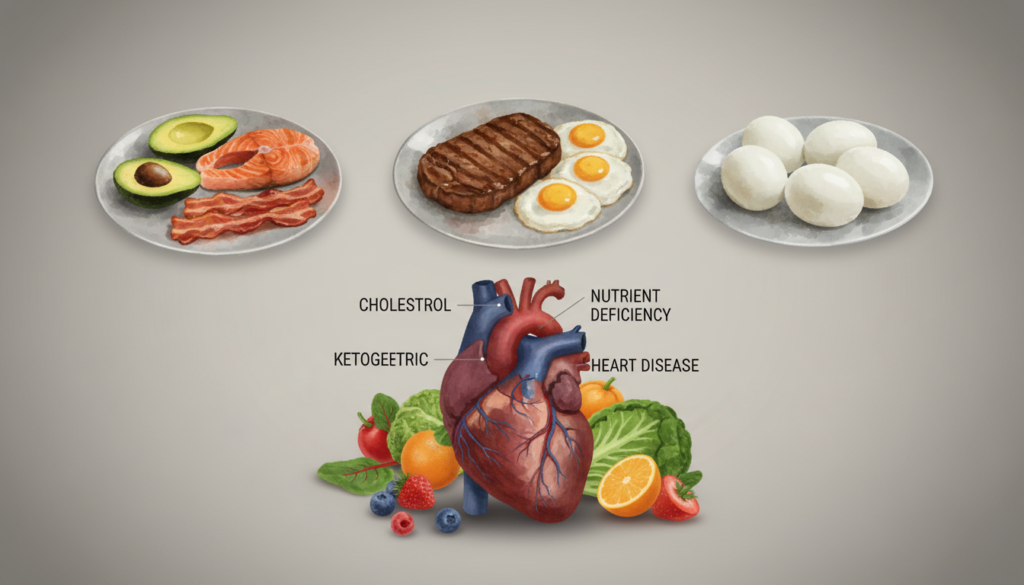
Nutrient gaps and low fiber
Biggest risk: removing fruits, vegetables, and grains raises the chance of vitamin and mineral shortfalls and low fiber.
The carnivore approach removes most plant sources, increasing deficiency risk for fiber, vitamin C, folate, and certain phytonutrients. Long‑term research is limited, so effects are less predictable.
Digestive effects to watch for
Common side effects include constipation, nausea, and fatigue.
These often stem from low fiber, shifts in hydration, and changes in electrolytes. Adding salt, water, or fiber supplements can help, but persistent symptoms need medical review.
Cholesterol changes and heart disease risk
High‑animal‑fat plans can raise cholesterol levels in some people. That change may increase heart disease risk depending on baseline factors.
Monitor labs: fasting lipids and other markers show how a given plan affects your cardiovascular profile. Regular checks matter, especially with family history or existing risk.
“Any restrictive plan can work short term, but safety depends on food choices and medical oversight.”
- Note: the keto approach allows more plant foods, so it can lower some deficiency risk — but “keto done poorly” still causes gaps.
- Action: talk with a clinician or registered dietitian if you have diabetes, take glucose‑lowering meds, or have cardiac concerns.
- Practical tip: consider baseline labs and follow‑up testing while trying a stricter plan.
Who each diet may be best for based on goals, preferences, and overall health
Choosing the right low‑carb path depends on your goals, daily habits, and how you measure success. Below are practical matches to help people self‑select based on what matters most in real life.
When the keto diet may fit better
Good match: you want plant variety, more flexibility, and easier restaurant options.
This approach keeps many plant foods, which helps with fiber and micronutrients. It works well for people who want steady energy and a plan that adapts to family meals.
When the carnivore option may appeal
Good match: you want extreme simplicity or an elimination‑style reset and accept tight restrictions.
This choice can reduce decision fatigue, but it requires regular health monitoring and a willingness to trade variety for simplicity.
When an egg diet may be considered
Good match: short‑term structure for habit reset. Many use it briefly to simplify intake and reduce cravings.
It is not ideal long term because variety and some key nutrients will be limited.
When none of these may be a good idea
High activity needs, frequent low blood sugar, gut health problems, or a history of restrictive eating make strict approaches risky. Prioritize sustainable intake, adequate nutrients, and medical oversight if you try a strict plan.
A Great Way to Get Started on the Right Foot!
14-Day Boiled Egg Diet Plan
Recipe Guide Printable Bundle
Healthy, easy meals laid out for you day-by-day. A simple two-week structure you can start immediately.
- 14 Daily Meal Ideas
- Printable PDF Guides
- Quick & Simple Recipes
- Instant Download
Instant Download! Start Right Away!
Conclusion
Choose a path you can follow, because all three low‑carb approaches cut carbs but differ in scope and sustainability.
Core takeaway: the keto approach usually offers the best balance of ketosis benefits and variety, while the carnivore option is the most restrictive and raises bigger questions about nutrients, fiber, and long‑term effects on overall health.
The egg plan is highly limited and best suited as a short‑term structure rather than a lasting way of eating. All can support short‑term weight loss and steadier energy, but they carry risks like nutrient gaps and cholesterol changes.
Practical next steps: pick the diet you can maintain, favor whole foods, and consider checking labs if you try a high‑animal‑fat plan. Consult a clinician before starting, especially with diabetes meds or heart risk.