
You have likely encountered bold promises surrounding a popular eating plan centered on hard-boiled eggs. Many claims suggest it leads to rapid body transformations. It is time to separate fact from fiction regarding this highly restrictive approach to nutrition.
Countless individuals turn to trendy plans hoping for quick results. Understanding the truth behind the hype can help you make smarter choices for your personal wellness journey. This guide will examine the most common misconceptions.
We provide evidence-based insights to evaluate if this strategy aligns with your long-term goals. You will discover why some assertions are misleading and how this regimen truly affects your system.
By the end, you will have a clear picture of the realities. This knowledge empowers you to select sustainable eating habits that support your health, rather than opting for short-term fixes.
Key Takeaways
- This article clarifies common misconceptions surrounding a popular egg-centric eating plan.
- Learn to distinguish between evidence-based facts and exaggerated claims about rapid results.
- Gain insight into how this restrictive regimen actually impacts your physical well-being.
- Understand the scientific perspective on its effectiveness for maintaining weight management.
- Empower yourself to make informed decisions that prioritize long-term wellness over temporary solutions.
Overview of the Boiled Egg Diet Trend
A specific nutritional strategy gained significant attention in 2018 through a published book. This eating approach promises rapid body transformation through strict food guidelines.
Origins and Popular Claims
Arielle Chandler introduced this regimen in her 2018 publication. The author suggests you can achieve substantial weight loss quickly by following her plan.
Proponents claim the strategy leads to losing up to 25 pounds within two weeks. This dramatic result comes from limiting carbohydrate and calorie intake significantly.
Structured Meal Plans and Restrictions
Your daily eating follows a rigid framework with specific foods for each meal. Breakfast always includes at least two eggs with vegetables and fruit.
Lunch and dinner options are limited to lean proteins or more eggs with non-starchy vegetables. The plan completely eliminates snacks between meals.
This narrow selection creates a substantial calorie deficit. The strategy is designed for short-term use only.
| Meal Time | Required Components | Allowed Variations | Restrictions |
|---|---|---|---|
| Breakfast | 2 eggs minimum | Non-starchy vegetables, low-carb fruit | No substitutions allowed |
| Lunch | Eggs or lean protein | Non-starchy vegetables only | No grains or dairy |
| Dinner | Eggs or lean protein | Non-starchy vegetables only | Limited portion sizes |
Research indicates this approach wasn’t developed by nutrition professionals. The strict nature appeals to those seeking clear guidelines but limits nutritional variety.
A Great Way to Get Started on the Right Foot!
14-Day Boiled Egg Diet Plan
Recipe Guide Printable Bundle
Healthy, easy meals laid out for you day-by-day. A simple two-week structure you can start immediately.
- 14 Daily Meal Ideas
- Printable PDF Guides
- Quick & Simple Recipes
- Instant Download
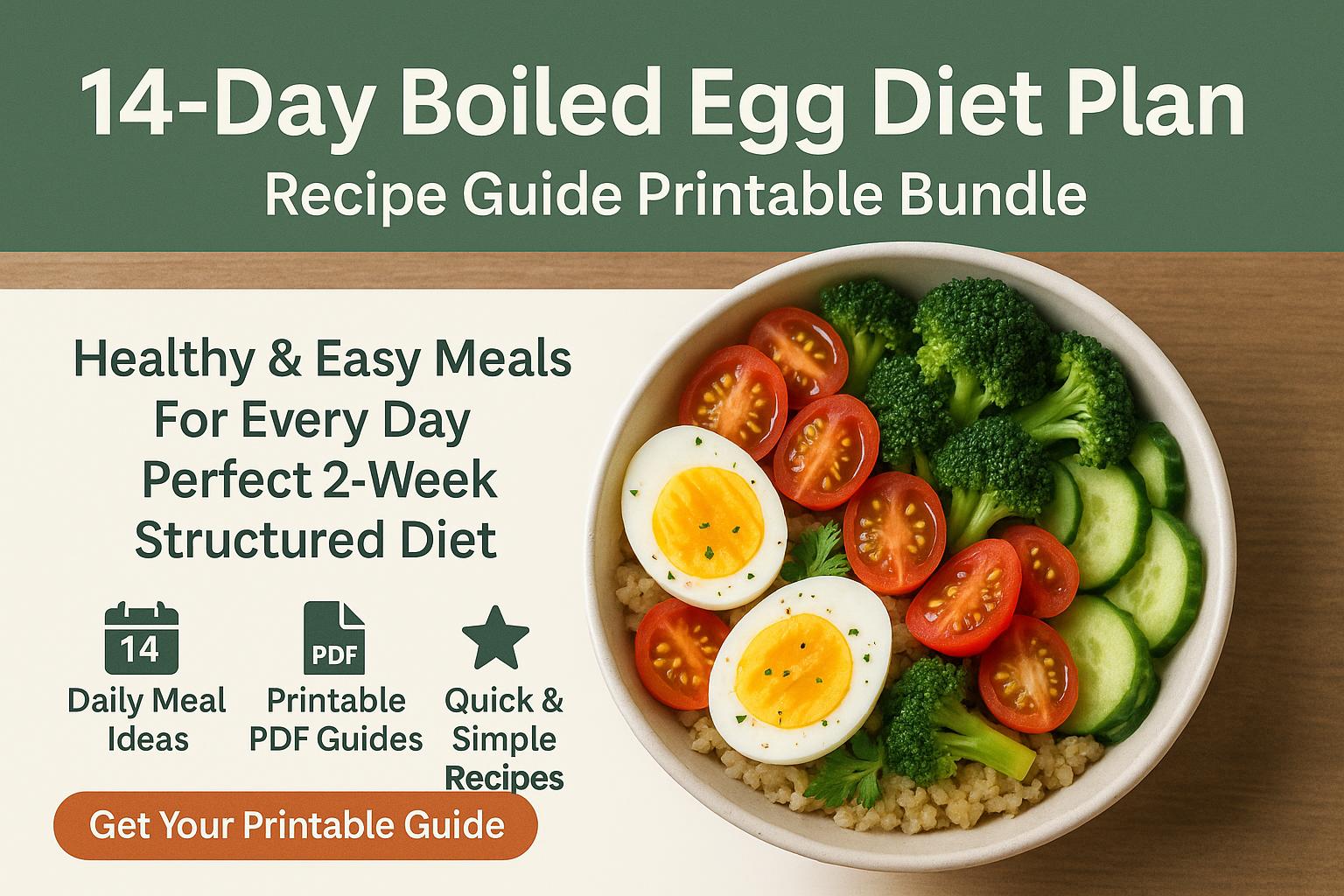
Instant Download! Start Right Away!
Myths About the Boiled Egg Diet Busted
When evaluating nutritional strategies, it’s crucial to separate evidence-based facts from marketing claims. Many misconceptions surround restrictive eating plans that promise quick transformations.
Misconceptions on Quick Weight Loss
You might hear claims of losing substantial pounds in just two weeks. This rapid reduction primarily comes from water weight and muscle mass.
Sustainable fat reduction requires balanced approaches. The initial drop on the scale doesn’t reflect lasting changes.
| Common Belief | Scientific Reality | Long-Term Impact |
|---|---|---|
| Rapid weight loss is permanent | Most regain weight after normal eating | Yo-yo dieting pattern emerges |
| Quick results indicate success | Initial loss is often water weight | Muscle mass decreases, metabolism slows |
| Strict rules make adherence easy | Highly restrictive plans are difficult to maintain | Frustration leads to abandonment |


- HALF COST, HALF TIME, DOUBLE EGGS: Cook 12 eggs at once with our upgraded evoloop egg cooker, stackable design saves spa…
- MULTI FUNCTIONAL EGG COOKER: The Evoloop egg boiler is ideal for a busy solitary person or family to make hard-boiled eg…
- EASY TO STORE and SAVES SPACE: The boiled egg cooker is easy to carry around; The 2-layer design lets you customize it f…

- HALF COST, HALF TIME, DOUBLE EGGS: Cook 12 eggs at once with our upgraded evoloop egg cooker, stackable design saves spa…
- MULTI FUNCTIONAL EGG COOKER: The Evoloop egg boiler is ideal for a busy solitary person or family to make hard-boiled eg…
- EASY TO STORE and SAVES SPACE: The boiled egg cooker is easy to carry around; The 2-layer design lets you customize it f…

- 9-Egg Capacity & Versatile Cooking Modes: Cook up to 9 eggs simultaneously in hard-boiled, medium-boiled, or soft-boil…
- 30-Minute Timer & Auto Shut-Off: Enjoy perfectly cooked eggs every time with the intuitive timer and automatic safety …
- Compact & Modern Design: Sleek white body with stainless steel dome and metallic accents fits seamlessly into any kitc…

- Compact & Counter-Friendly: Maximize your kitchen space with this compact egg cooker that won’t crowd your countertop. D…
- Boil or Poach 14 Eggs at Once: Quickly boil or poach up to 14 eggs simultaneously, making meal prep a breeze. Whether yo…
- Versatile Steaming Function: This electric cooker isn’t just for eggs! Use it to steam dumplings and other small dishes,…

- 400 watt heating system , cook up to 12 whole eggs, 4 poached eggs or an omelet
- Boiling trays, poaching tray and omelet tray included
- Power switch and indicator light for hassle free cooking

- Large 75 ml Cups: PFOA-free non-stick coating. Poach up to 4 XL eggs at a time – perfect for Eggs Benedict or boiled egg…
- Avacraft Premium Material & Performance: Built with heavy-duty stainless steel and a 3-ply aluminum encapsulated bottom …
- Safe & Easy To Handle: Handle and tempered glass lid keep hands safe. Monitor cooking through the lid’s steam vent for i…
False Promises of Complete Nutrient Coverage
Some promoters suggest this approach provides all essential nutrients. The limited food selection actually creates significant gaps in your nutrition.
“While eggs are nutrient-dense, no single food can provide complete nutritional coverage for optimal health.”
Claims about improved blood sugar management and stronger bones lack scientific support. Your body needs variety from different food groups.
Understanding these realities helps you make informed choices. Sustainable wellness comes from balanced eating patterns, not extreme restrictions.
Nutritional Analysis: Eggs, Proteins, and Other Foods
Packed with high-quality protein and essential vitamins, eggs offer a unique nutritional value that deserves a closer look. This analysis breaks down their components and clarifies common misunderstandings.
Understanding their full profile helps you appreciate their role in a balanced eating strategy.
Health Benefits and Nutrient Richness
Eggs are an exceptional source of complete protein. They contain all nine essential amino acids your body requires for muscle repair and metabolic functions.
One whole egg provides about 72 calories. It is a nutrient-dense food, rich in vitamins A, B12, and D.
The yolk holds the majority of these vital nutrients. It includes choline and healthy fats that aid vitamin absorption and promote satiety.
While egg whites are lower in calories, focusing solely on them means missing the yolk’s significant health benefits.
Debunking Egg Cholesterol Myths
For decades, people feared eggs due to their cholesterol content. Modern research has thoroughly debunked this concern.
For most healthy people, eating one egg per day does not significantly increase the risk of heart disease.
Studies show dietary cholesterol has a minimal impact on blood levels. Saturated and trans fats are the primary drivers.
This understanding liberates eggs to be valued for their impressive nutrition, not feared for outdated reasons.
| Egg Component | Calorie Content | Key Nutrients | Primary Health Benefit |
|---|---|---|---|
| Whole Egg | ~72 calories | Complete protein, Vitamins A, B12, D, Choline | Muscle maintenance, nutrient absorption |
| Egg Yolk | ~55 calories | Fats, Fat-soluble vitamins, Choline | Satiety, brain health |
| Egg White | ~17 calories | Pure protein | Low-calorie muscle support |
Short-Term Gains Versus Long-Term Health Impacts
The initial success you might see with highly limited food plans often masks underlying challenges that emerge over time. Understanding this distinction helps you make informed choices about your wellness journey.
Calorie Deficit and Initial Weight Loss
When you consume mostly low-calorie foods, your body enters a significant energy deficit. This forces it to burn stored reserves for fuel, leading to rapid changes on the scale.
Research confirms that low-carb eating patterns can enhance short-term weight management efforts. One analysis of 12 studies found people experienced noticeable loss and improved health markers during limited time periods.

Your metabolism may initially respond favorably to this approach. A study involving 164 participants showed enhanced metabolic function after 20 weeks of reduced carbohydrate intake.
Sustainability and Potential Rebound Effects
However, your body adapts to prolonged calorie restriction by slowing metabolic levels. This protective mechanism can backfire when you resume normal eating patterns.
Most individuals who achieve rapid loss on restrictive plans regain the weight afterward. The approach doesn’t teach sustainable portion control or balanced food choices for lifelong health.
While eliminating processed items benefits management initially, extreme limitations make consistent adherence difficult. Your long-term wellness requires strategies you can maintain as part of your lifestyle.
Risks and Downsides of Restrictive Diets
While some eating plans promise quick results, their restrictive nature often carries hidden costs for your well-being. Understanding these potential drawbacks helps you make safer choices for your health journey.
Highly limited food selection creates significant challenges for meeting nutritional needs. Your body requires diverse sources of vitamins and minerals to function properly.
A Great Way to Get Started on the Right Foot!
14-Day Boiled Egg Diet Plan
Recipe Guide Printable Bundle
Healthy, easy meals laid out for you day-by-day. A simple two-week structure you can start immediately.
- 14 Daily Meal Ideas
- Printable PDF Guides
- Quick & Simple Recipes
- Instant Download
Instant Download! Start Right Away!
Nutrient Deficiencies and Imbalanced Nutrition
Eating only a narrow range of foods dramatically increases your risk of nutritional gaps. Essential compounds found in eliminated food groups become missing from your daily intake.
Whole grains provide vital fiber and B vitamins for digestive health. Starchy vegetables offer important sources of vitamin C, potassium, and magnesium.
Even though eggs contain valuable nutrients, they cannot single-handedly supply everything your body requires. Prolonged restriction depletes your stored reserves of essential vitamins and minerals.
| Missing Food Group | Key Nutrients Lost | Primary Health Functions Affected |
|---|---|---|
| Whole Grains | Fiber, B vitamins, Iron | Digestion, energy production, blood health |
| Starchy Vegetables | Vitamin C, Potassium, Magnesium | Immune function, muscle health, bone density |
| Dairy Products | Calcium, Vitamin D | Bone strength, calcium absorption |
Effects on Energy, Mood, and Overall Health
Severe calorie restriction leads to noticeable physical and mental changes. Many people experience fatigue and difficulty concentrating when following limited eating patterns.
Your immune function may become impaired with insufficient nutrient intake. Hormonal disturbances can affect reproductive health and bone density over time.
Psychological risks include developing unhealthy relationships with food. These patterns may persist long after the eating plan ends.
Consuming too few calories forces your body into conservation mode. This leads to low energy levels and decreased physical performance that impact your daily life.
Balanced Alternatives and Sustainable Eating Patterns
Nutritional approaches that stand the test of time prioritize variety and balance. You can achieve your wellness goals without extreme restrictions that are difficult to maintain.
Many effective strategies exist beyond highly limited plans. These alternatives support long-term success while providing essential nutrients.
Exploring Mediterranean and Low-Carb Options
The Mediterranean eating pattern emphasizes heart-healthy fats, whole grains, and abundant vegetables. This approach supports weight management while reducing cardiovascular risks.
Studies show people following this plan experience sustainable results. It incorporates diverse foods like fruits, legumes, and lean proteins.
Balanced low-carb diets also offer effective alternatives. They allow greater food variety while controlling carbohydrate intake.
| Dietary Approach | Key Components | Health Benefits | Food Variety |
|---|---|---|---|
| Mediterranean | Olive oil, vegetables, whole grains, fish | Heart health, weight management | High diversity |
| Balanced Low-Carb | Protein, non-starchy vegetables, healthy fats | Blood sugar control, fat loss | Moderate diversity |
| Traditional Restrictive | Limited food selection, strict rules | Short-term results only | Very limited |
Incorporating Eggs in a Well-Rounded Diet
Eggs fit beautifully into sustainable eating patterns. Research indicates regular consumption correlates with higher diet quality.
You can enjoy two large eggs several times weekly. Pair them with whole grain toast and fresh vegetables for balanced meals.
This approach provides complete protein without excessive restrictions. It supports your health goals while maintaining enjoyment.
Working with a nutrition professional helps create personalized plans. They ensure you receive all essential vitamins and minerals.
Conclusion
Your path to lasting weight management success lies in balanced eating patterns rather than extreme restrictions. While initial results from highly limited plans may seem appealing, research consistently shows they rarely lead to sustainable outcomes.
Eggs provide excellent nutrition as part of a varied eating approach. They offer quality protein, essential vitamins, and beneficial minerals without excessive calories. However, building your entire plan around them creates nutritional imbalances.
For true health benefits, incorporate eggs into meals with diverse protein sources like chicken, abundant vegetables and fruits, whole grains, and healthy fats. This ensures adequate intake of all nutrients your body needs.
Consider working with nutrition professionals to create a personalized plan. This approach supports your goals while minimizing risks associated with restrictive eating patterns.