
You’re about to explore the nutritional principles driving one of today’s most discussed eating approaches. This high-protein, low-carbohydrate plan has captured attention for its promise of rapid results.
Our comprehensive examination will dive into evidence-based research and physiological effects. We’ll uncover why this restrictive nutritional strategy has gained popularity despite its demanding requirements.
Discover how increased protein consumption from eggs combines with severe calorie reduction. This combination creates specific metabolic conditions that can lead to short-term weight reduction.
We’ll trace the origins of this eating pattern, including its connection to Arielle Chandler’s 2018 publication. You’ll learn whether claims about significant weight reduction in just weeks hold scientific merit.
Throughout this guide, you’ll gain balanced insight into both potential advantages and significant limitations. This information will help you decide if this approach aligns with your health objectives.
Key Takeaways
- This eating plan relies on high protein intake and carbohydrate restriction
- Metabolic changes from this combination can trigger short-term weight reduction
- The approach gained mainstream attention through Arielle Chandler’s 2018 book
- Significant calorie reduction is a key component of the strategy
- Understanding both benefits and drawbacks is essential before starting
- Individual health goals should guide your decision to try this method
- Scientific evidence supports some mechanisms but questions long-term sustainability
Introduction and Overview
When exploring rapid weight loss strategies, you may encounter this controversial eating method that promises dramatic results. The boiled egg diet has captured attention despite receiving a remarkably low Healthline rating of just 1.33 out of 5.
This eating plan originated from Arielle Chandler’s 2018 publication. It’s important to note she lacks credentials as a registered dietitian. This raises questions about the nutritional foundation of her approach.
The program makes bold claims about potential results. Followers are told they could lose up to 25 pounds in merely two weeks. This rapid weight loss comes from a highly structured meal schedule.
Your daily meals would center around consuming multiple servings of eggs. The typical program spans 14 days. During this period, eggs serve as your primary protein source.
This restrictive eating pattern incorporates limited additional foods. You’ll mainly eat non-starchy vegetables and low-carbohydrate fruits. The structured nature appeals to those seeking clear guidelines.
Understanding both mechanisms and limitations is essential before starting this diet. The potential short-term benefits must be weighed against considerable risks. Sustainability challenges are significant with such a restrictive approach.
A Great Way to Get Started on the Right Foot!
14-Day Boiled Egg Diet Plan
Recipe Guide Printable Bundle
Healthy, easy meals laid out for you day-by-day. A simple two-week structure you can start immediately.
- 14 Daily Meal Ideas
- Printable PDF Guides
- Quick & Simple Recipes
- Instant Download
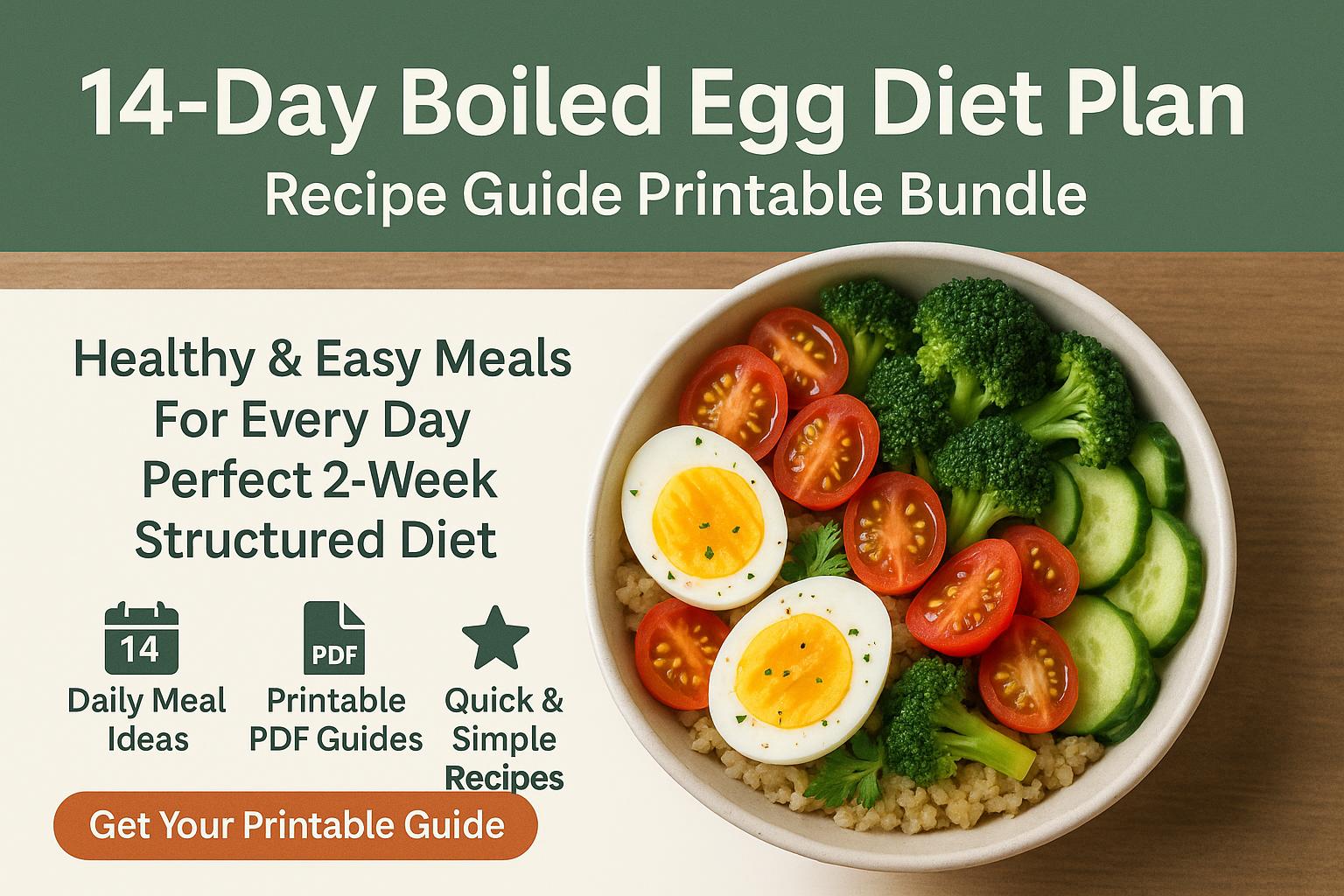
Instant Download! Start Right Away!
What is the Boiled Egg Diet?
This nutritional approach centers on specific food groups while eliminating others to create a metabolic shift. You follow a strict 14-day plan where certain items become your primary fuel sources.
Diet Origins and Key Concepts
Arielle Chandler introduced this method in her 2018 publication. The program emphasizes whole, minimally processed items. You consume mainly proteins and non-starchy vegetables.
The strategy creates a low-carbohydrate, high-protein environment. This combination aims to trigger specific metabolic responses. Your body shifts its primary energy source under these conditions.
Main Food Components and Restrictions
Your meals will feature eggs prepared through boiling, poaching, or scrambling. Additional protein sources include skinless poultry and fish. These foods provide sustained energy without excess carbohydrates.
Non-starchy vegetables like spinach and broccoli offer unlimited consumption. Low-carb fruits such as berries appear in limited quantities. These items provide essential vitamins and fiber.
| Food Category | Allowed Items | Restricted Items |
|---|---|---|
| Proteins | Eggs, skinless poultry, fish | Processed meats, bacon |
| Vegetables | Spinach, broccoli, peppers | Potatoes, corn, legumes |
| Fruits | Berries, citrus, watermelon | Bananas, mangoes, dried fruit |
| Grains | None | Bread, pasta, quinoa |
| Beverages | Water, unsweetened tea | Soda, juice, sweet drinks |
You completely eliminate sugar-sweetened beverages and processed items. Small amounts of healthy fats like coconut oil are permitted. This structured approach ensures consistent nutritional intake.
The Science Behind the Boiled Egg Diet
To grasp how this method functions, we must examine the body’s reaction to severe energy and carbohydrate restriction. The plan’s design naturally creates a significant calorie deficit.


- Cooks 10 eggs in shells to a hard, medium or soft consistency with the 600-watt heater
- Poaching tray with 4-egg capacity and omelet tray with 3-egg capacity
- Brushed stainless steel lid; blue LED indicator, audible alert and standby mode

- MULTI FUNCTIONAL EGG COOKER: The Evoloop egg boiler is ideal for a busy solitary person or family to make hard-boiled eg…
- SIX EGG CAPACITY: Save time and water by cooking up to six eggs to soft, medium, or hard-boiled firmness; this method is…
- EASY TO STORE and SAVES SPACE: The boiled egg cooker measures about 7.6 inches tall and 5.6 inches wide and 8.6 inch len…

- MAKE EGGS 6 WAYS. If you and your family love eggs, you need the world’s most versatile egg cooker in your kitchen. With…
- MAKE 4 EGG BITES, 4 POACHED EGGS OR 9 HARD-BOILED EGGS. Cook up to 4 egg bites or 4 poached eggs in about 10 minutes or …
- PREPARE OMELETS, SCRAMBLED EGGS, FRIED EGGS AND MORE. Built-in 5.25” PFAS-Free nonstick skillet for making omelets, scra…

- HALF COST, HALF TIME, DOUBLE EGGS: Cook 12 eggs at once with our upgraded evoloop egg cooker, stackable design saves spa…
- MULTI FUNCTIONAL EGG COOKER: The Evoloop egg boiler is ideal for a busy solitary person or family to make hard-boiled eg…
- EASY TO STORE and SAVES SPACE: The boiled egg cooker is easy to carry around; The 2-layer design lets you customize it f…

- HALF COST, HALF TIME, DOUBLE EGGS: Cook 12 eggs at once with our upgraded evoloop egg cooker, stackable design saves spa…
- MULTI FUNCTIONAL EGG COOKER: The Evoloop egg boiler is ideal for a busy solitary person or family to make hard-boiled eg…
- EASY TO STORE and SAVES SPACE: The boiled egg cooker is easy to carry around; The 2-layer design lets you customize it f…
Scientific Research and Evidence
Research confirms that consuming fewer calories than you burn leads to weight loss. One large egg contains about 78 calories. Your total daily energy intake on this plan often falls between 800 and 1,200 calories.
This is far below what most adults need. Such a large deficit forces your body to use stored energy.
Caloric and Low-Carb Impact
Eliminating carbs like grains and starchy vegetables has another effect. Your body seeks alternative fuel, potentially entering a state called ketosis.
This combination drives rapid initial weight reduction. However, much of this early loss is water and glycogen, not fat. The extremely low energy intake makes long-term maintenance challenging.
Nutritional Breakdown and Weight Loss Mechanics
Eggs deliver a powerful nutritional punch that supports the metabolic goals of this restricted eating pattern. Their unique composition creates favorable conditions for weight reduction while providing essential nourishment.
Macronutrient Analysis
Each large egg contains approximately 6 grams of high-quality complete protein. This means it provides all nine essential amino acids your body needs. The protein source helps maintain muscle mass during calorie restriction.
The macronutrient profile strongly favors protein and fat over carbohydrates. You get about 5 grams of fat per egg with minimal carbs. This combination supports sustained energy without blood sugar spikes.
Beyond basic macronutrients, eggs offer significant micronutrient value. They provide choline for brain function and vitamin D for immune support. Lutein supports eye health while vitamin A aids vision.
| Nutrient | Amount per Large Egg | Key Benefits |
|---|---|---|
| Protein | 6 grams | Muscle maintenance, satiety |
| Fat | 5 grams | Energy, hormone production |
| Calories | 72 | Low energy density |
| Choline | 147 mg | Brain and liver health |
| Vitamin D | 41 IU | Bone strength, immunity |
However, relying primarily on eggs creates nutritional gaps. The severe restriction of food groups limits overall nutrient diversity. This approach represents a dramatic departure from balanced eating recommendations.
Detailed Analysis of Health Benefits
Consuming nutrient-dense ingredients can yield measurable improvements to your wellbeing. This eating approach emphasizes whole foods while eliminating processed options.
Short-Term Weight Loss Effects
You experience rapid initial results from this structured plan. The combination of high protein and low carbohydrates creates a significant calorie deficit.
Eliminating sugar-sweetened beverages and processed items reduces empty calorie intake. This supports quick weight reduction during the two-week period.
Additional Nutritional Benefits
Your body receives substantial nutritional value from this approach. Eggs provide complete protein and essential vitamins.
You’ll consume more B vitamins, vitamin D, and selenium. These nutrients support energy production and immune function.
Non-starchy vegetables deliver folate and potassium. Low-carb fruits offer vitamin C and antioxidants.
However, remember these advantages are temporary. Long-term health requires balanced nutrition beyond this restrictive pattern.
Downsides and Risks of the Diet
While initial results may seem promising, this eating plan carries significant drawbacks that deserve careful consideration. The extreme restriction creates challenges beyond simple willpower.

A Great Way to Get Started on the Right Foot!
14-Day Boiled Egg Diet Plan
Recipe Guide Printable Bundle
Healthy, easy meals laid out for you day-by-day. A simple two-week structure you can start immediately.
- 14 Daily Meal Ideas
- Printable PDF Guides
- Quick & Simple Recipes
- Instant Download
Instant Download! Start Right Away!
Many people find the monotony psychologically exhausting. Eating primarily eggs and limited foods becomes socially isolating over time.
Potential Nutrient Deficiencies
Eliminating entire food groups creates nutritional gaps in your diet. Your body misses essential nutrients from diverse sources.
The severe calorie restriction triggers biological starvation responses. Your metabolism slows while hunger hormones increase.
Sustainability and Long-Term Concerns
This approach fails to teach sustainable eating habits. You don’t learn proper portion control or balanced nutrition.
Weight regain becomes highly likely after stopping the plan. Research shows most people return to their original weight within two years.
The psychological effects can damage your relationship with food. Viewing items as “good” or “bad” creates unhealthy thinking patterns.
Persistent fatigue and mood disturbances are common side effects. Your immune function and bone health may suffer over time.
Practical Tips for Following the Boiled Egg Diet
Practical implementation of this eating strategy involves thoughtful meal organization and gradual reintroduction of foods. Proper planning ensures you stay on track during the two-week program.
Meal Preparation Ideas
Batch cooking makes this plan easier to follow. Prepare several boiled eggs at once for quick meals throughout the week. Combine them with pre-chopped vegetables for convenient salads.
Keep simple ingredients on hand. Stock up on lean proteins like chicken breast and various non-starchy vegetables. This prevents last-minute deviations from your eating plan.
Transitioning Back to a Balanced Diet
After completing the program, avoid rushing back to previous habits. A gradual approach prevents digestive issues and weight regain. Slowly reintroduce eliminated food groups over several weeks.
Start with small portions of whole grains like oatmeal. Monitor how your body responds before increasing quantities. This careful method supports sustainable weight maintenance.
| Transition Week | Foods to Reintroduce | Portion Size | Frequency |
|---|---|---|---|
| Week 1 | Whole grains (oats, brown rice) | 1/2 cup cooked | Once daily |
| Week 2 | Legumes and starchy vegetables | Small serving | 2-3 times weekly |
| Week 3 | Wider variety of fruits | Standard portion | Daily |
| Week 4+ | Balanced mix of all food groups | Appropriate portions | Regular meals |
Incorporate regular physical activity to support your results. Aim for 30-60 minutes of exercise several times weekly. This combination helps maintain your achieved weight loss.
Focus on developing sustainable eating patterns. Practice portion control and mindful consumption. These habits support long-term health beyond the initial diet period.
Expert and Registered Dietitian Perspectives
Registered dietitians provide essential guidance when evaluating restrictive eating patterns. Their professional insights help you understand both potential benefits and significant concerns.

Professional Opinions and Cautions
Kelly Plowe, MS, RD acknowledges the nutritional value of eggs while highlighting concerns.
Eggs are little nuggets of nutrition, providing protein, choline, vitamin D, lutein and more, but the egg diet, on the whole, is low in carbs which can leave you hungry.
She also notes that repetitive meals can lead to boredom and poor adherence. Nutrition professionals emphasize that the creator lacks registered dietitian credentials.
This raises questions about the program’s scientific foundation. Before starting any weight loss plan, consult qualified healthcare providers.
A registered dietitian can assess your individual needs. They create personalized meal plans rather than one-size-fits-all approaches.
Certain people should avoid this eating plan entirely. Those with heart disease, kidney issues, or egg allergies face particular risks.
Pregnant women, children, and individuals with eating disorders should also steer clear. Experts recommend balanced approaches for sustainable weight management.
Conclusion
The final assessment of this eating method balances short-term potential against long-term sustainability. You’ve examined how this restrictive approach creates rapid weight loss through severe calorie restriction.
However, the evidence clearly shows this diet is nutritionally inadequate and unsustainable. Eliminating entire food groups creates serious nutrient deficiencies that compromise your health.
Registered dietitians consistently caution against such extreme measures. The monotony, health risks, and inevitable weight regain outweigh any temporary benefits.
Instead, focus on sustainable lifestyle changes. Incorporate positive principles like eating more vegetables and lean protein into a balanced eating plan. Work with a registered dietitian to develop personalized strategies for lasting success.