
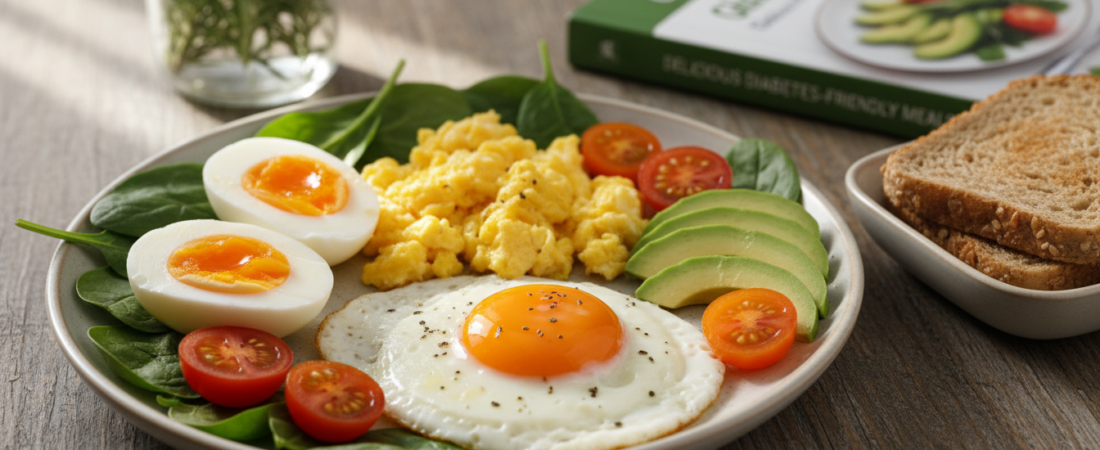
Surprising fact: nearly 40% of adults with high blood sugar worry that a single breakfast choice could raise heart risk more than their long-term eating pattern.
This guide defines what using eggs as a protein-forward option really means: meals that support steady blood sugar while fitting into a heart-healthy eating pattern. A large egg has about 200–207 mg of dietary cholesterol, but current U.S. guidance focuses more on limiting saturated fat and boosting fiber than on cholesterol alone.
This short how-to will explain whether people with high blood sugar can include eggs, how they affect blood sugar and cholesterol, and how to pair them smartly. You’ll also learn to avoid common traps like fatty sides and sugary pastries and get practical tips for weekly targets, simple meals, and fast prep routines.
Key Takeaways
- Eggs are low in carbs and have minimal direct impact on blood sugar when eaten with fiber and healthy fats.
- Focus on overall meal quality; saturated fat often matters more than dietary cholesterol.
- Smart pairings—vegetables, whole grains, and legumes—help balance glucose and heart risk.
- Avoid typical high-fat, high-sugar accompaniments that raise cardiovascular risk.
- Moderation and food context are supported by studies in people with prediabetes and type 2 conditions.
Can People With Diabetes Eat Eggs Safely?
Choosing the right protein at breakfast often helps steady glucose and curb cravings—let’s look at a common option.
Yes — in most cases this food can fit safely into a diabetes-friendly plan. It has very low carbs and a minimal glycemic effect, so it rarely spikes blood sugar the way sugary cereals or pastries do.

A Great Way to Get Started on the Right Foot!
14-Day Boiled Egg Diet Plan
Recipe Guide Printable Bundle
Healthy, easy meals laid out for you day-by-day. A simple two-week structure you can start immediately.
- 14 Daily Meal Ideas
- Printable PDF Guides
- Quick & Simple Recipes
- Instant Download
Instant Download! Start Right Away!
How the protein helps appetite and weight goals
One large boiled item gives about 6.3 g protein, 5.3 g fats, ~0.56 g carbs, and ~77.5 calories. That protein is complete, meaning it supplies all nine essential amino acids needed for muscle and repair.
High-quality protein promotes fullness and may reduce snacking. That can support weight goals, which often improve diabetes outcomes.
Key nutrients in the yolk
The yolk delivers fat-soluble vitamins A, D, E, and K plus antioxidants like lutein. It also provides vitamin B12 and minerals such as iron, copper, and zinc.
| Nutrient | Amount (one large) | Why it matters |
|---|---|---|
| Protein | 6.3 g | Satiety and muscle maintenance |
| Choline | Present | Supports memory and mood |
| Vitamins & minerals | Multiple | Overall health support |
Practical tip: Replace refined-carbohydrate breakfasts with this choice and add fiber-rich vegetables or whole grains. Paired meals help keep blood sugar steady and boost overall nutrient quality.
Do Eggs Raise Blood Sugar or Cholesterol Levels?
Understanding the short-term and long-term effects helps you make smart choices at meals.
Blood sugar basics
Refined carbohydrates raise blood glucose much more than simple proteins. This item contains very little carbohydrate and so rarely causes a quick spike in blood sugar. Most of the post-meal glucose response comes from toast made with refined grains, pastries, or sweetened drinks rather than this protein source alone.
Dietary cholesterol versus saturated fat
A large serving contains about 200–207 mg of dietary cholesterol, which worries many people. Current evidence shows that saturated fat tends to affect cholesterol levels more than dietary cholesterol itself.
That means how you prepare it — frying in butter or pairing with processed meats — can raise cholesterol levels and heart risk more than the food’s cholesterol content alone.

A Great Way to Get Started on the Right Foot!
14-Day Boiled Egg Diet Plan
Recipe Guide Printable Bundle
Healthy, easy meals laid out for you day-by-day. A simple two-week structure you can start immediately.
- 14 Daily Meal Ideas
- Printable PDF Guides
- Quick & Simple Recipes
- Instant Download
Instant Download! Start Right Away!
Why cardiovascular risk matters in glucose management
People with high blood sugar often have mixed lipid changes: higher triglycerides and less favorable HDL. These factors raise heart disease risk, so managing cholesterol and saturated fat intake is part of care.
What research shows
Recent studies in type 2 populations found moderate intake did not worsen key cardiometabolic markers. One 2018 trial noted no adverse effect on blood cholesterol, weight, or blood sugar when participants consumed up to 12 per week. Another suggested one per day may even improve fasting glucose in some people with prediabetes or type 2.
| Topic | What matters most | Practical tip | Source note |
|---|---|---|---|
| Immediate glucose | Carb content of the whole meal | Pair with fiber-rich vegetables or whole grains | Carb impact > protein impact |
| Cholesterol levels | Saturated fat intake | Cook with olive oil; avoid fried sides | AHA guidance emphasizes saturated fat |
| Cardio risk in high glucose | Triglycerides and HDL | Focus on overall meal quality | Insulin resistance affects lipids |
| Study findings | Moderate intake safe for many | Personalize if heart disease present | DIABEGG and 2018 trials |
Context note: Often the sides and cooking method—not the item itself—drive higher blood lipid and glucose responses. If you have existing heart disease or high cholesterol levels, discuss intake and targets with your clinician.
How Many Eggs Fit in a Diabetes-Friendly Meal Plan?
Deciding how many to eat each week starts with looking at studies, meal patterns, and your heart-risk profile.
Moderation targets and what research suggests
Actionable range: many studies support about one egg per day in some groups, and one trial found up to 12 per week caused no adverse changes in cholesterol, weight, or blood sugar.
Use these numbers as starting points, not strict rules. Count servings across the week instead of fixating on each day.
When to personalize intake
Be more conservative if you have existing heart disease, high LDL cholesterol, elevated triglycerides, or multiple risk factors.
Talk with your clinician about targets and labs, and adjust if lipid levels or other markers change.
- Think weekly: total portions across seven days matters most.
- Balance meals: pair with fiber-rich foods and limit saturated fat in cooking.
- Rotate proteins: mix egg-based breakfasts with beans, yogurt, or lean fish to keep variety.
| Recommendation | Why it helps | Practical tip |
|---|---|---|
| ~1 per day (study contexts) | May improve fasting glucose in some people | Include with vegetables and whole grain toast |
| Up to 12/week | No adverse change in some trials | Spread portions across week; avoid daily fried sides |
| Conservative plan | High cardiovascular risk or bad lipid levels | Limit to a few weekly servings; prioritize plant proteins |
Bottom line: moderation and meal context matter more than count alone. Focus on overall health, cooking methods, and what else fills the plate.
How to Include Eggs for Diabetes Diet Without Spiking Risk Factors
Smart cooking and smart pairings matter. Choose methods that keep saturated fat low and emphasize fiber-rich sides. That way, a protein-rich breakfast can help steady blood rather than raise long-term risk.

A Great Way to Get Started on the Right Foot!
14-Day Boiled Egg Diet Plan
Recipe Guide Printable Bundle
Healthy, easy meals laid out for you day-by-day. A simple two-week structure you can start immediately.
- 14 Daily Meal Ideas
- Printable PDF Guides
- Quick & Simple Recipes
- Instant Download
Instant Download! Start Right Away!
Low-fat cooking methods
Boil, poach, or make a light scramble using minimal oil. These ways cut added saturated fat and keep calorie content moderate.
Use heart-healthier fats
When you need oil, use a small amount of olive or canola oil instead of butter. These fats add flavor while supporting better lipid outcomes.
Build a balanced plate
Pair one protein portion with non-starchy vegetables and a high-fiber side like berries, beans, or whole grains. That combo blunts glucose spikes and boosts satiety.
What to limit
Avoid processed meats such as bacon, fried sides, pastries, and heavy cheeses. These add saturated fat and sodium that raise cardiometabolic risk.
Quick meal ideas
- Shakshuka with tomatoes and peppers.
- Avocado on whole-grain toast with a protein portion.
- Salsa scramble with black beans and a side salad.
- Spinach-and-protein bowls with a small serving of nuts and berries.
- High-protein plate: low-fat yogurt, protein portion, blueberries, and cashews.
Context is everything: make this protein displace refined pastries and processed meats rather than sit alongside them. Small swaps and better fats keep meals helpful to blood sugar and heart health.
Grocery and Meal-Prep Tips to Make Eggs a Consistent, Healthy Choice
Prep and shopping habits keep mornings simple and help you avoid drive-thru or pastry temptations.
Simple prep routines
Batch boil a dozen at once and store peeled or unpeeled in the fridge. That gives an instant protein option all week.
Keep whole-grain wraps, frozen vegetables, and low-sodium beans on hand. These items turn a quick breakfast into a balanced plate in minutes.
Quick add-ins and grab-and-build ideas
- Stir in pre-washed spinach, salsa, or chopped tomatoes to boost fiber and vitamins.
- Top a toasted whole-grain wrap with sliced protein and leftover roasted vegetables.
- Pair a peeled portion with fruit or raw veggies for a fast snack.
Label and ingredient checks
Watch packaged “egg-based” foods: egg bites, frozen sandwiches, and breakfast bowls often include cheese, cream, or processed meats that add saturated fat and sodium.
| Item | Watch for | Quick rule | Tip |
|---|---|---|---|
| Egg bites | Cheese, cream | Check saturated fat per serving | Choose low-fat or plain versions |
| Breakfast sandwiches | Processed meat, butter | Scan ingredient list for bacon/sausage | Swap to turkey or veggies |
| Frozen bowls | Added oils, sodium | Compare labels; pick lower-fat options | Add fresh vegetables after heating |
Why this matters: the whole packaged format often raises cholesterol and lipid levels more than a simple prepared portion. Prep ahead, read labels, and you’ll pick quick meals that also support blood-sugar and heart health.
Conclusion
Bottom line: used wisely, this protein helps keep hunger down and steady glucose more than many refined breakfasts.
Practical takeaway: one portion can fit into a diabetes plan because it is low in carbs and nutrient-dense. Pair it with vegetables, whole grains, or legumes to blunt blood sugar and boost fiber.
Cholesterol note: focus on saturated fat and overall meal quality rather than the food’s cholesterol alone. Cooking with olive or canola oil and skipping fried sides protects lipid numbers and heart health.
Limit bacon, processed meats, pastries, and heavy cheeses that raise cardiovascular risk. If you have heart disease or high cholesterol, talk with your clinician about how often to include eggs and the best targets for you.