
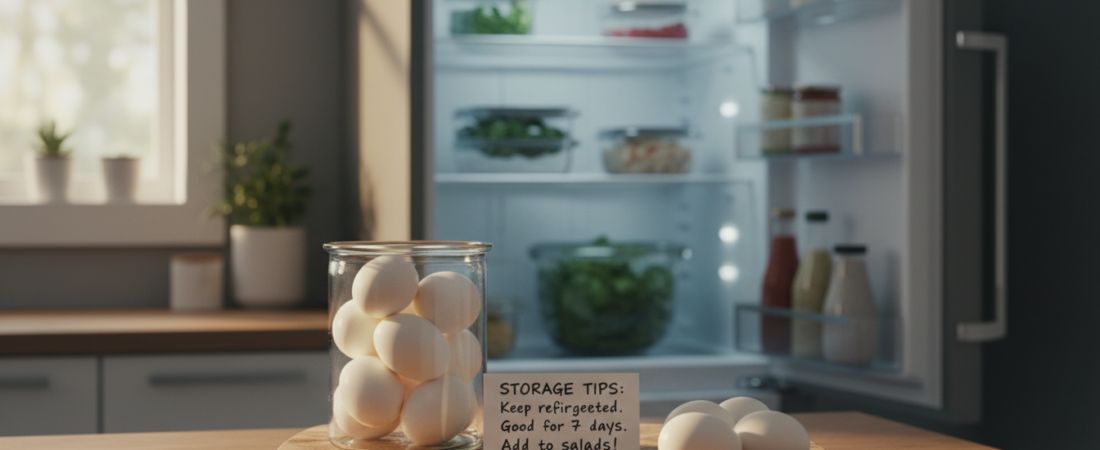
Surprising fact: nearly half of home cooks admit they forget how long a hard-cooked egg sits out, and that lapse can cut freshness and safety fast.
Why this matters: Hard-boiled eggs are a go-to protein for a quick snack or a packed meal. But cooking weakens the shell’s defenses, so proper handling and fridge time are not optional.
In this short guide you’ll learn quick cooling tips, fridge storage rules, how to handle peeled versus unpeeled eggs, timelines, transport suggestions, and freezing options. Expect simple do this, not that rules you can use when batch-cooking for the week or packing lunches.
We’ll repeat the key safety benchmarks: keep items cold, track time out of the fridge, and use clean, sealed containers to cut odor transfer and contamination risk. These steps fit real life and help you enjoy eggs without guessing.
Key Takeaways
- Cool eggs promptly and refrigerate within two hours.
- Use sealed containers to reduce odor and contamination.
- Keep track of time out of the fridge when packing a lunch.
- Choose unpeeled for longer fridge life; peel before eating when needed.
- Follow simple do/ don’t rules to make prep safe and stress-free.
Why hard-boiled eggs need careful storage
Hard-cooked eggs need more care after the pot. Heat removes the egg’s outer film and makes the shell more porous.
How cooking removes the shell’s protective coating and increases risk
“Cooking removes the protective layer on the shell, making eggs more susceptible to air and harmful microorganisms.” — Tracey Brigman, University of Georgia
That exposure lets bacteria and other microbes reach the interior faster. This raises the chance of foodborne illness such as salmonella and means cooked eggs go off sooner.
What “safe” means in the fridge: keeping eggs at 40°F or below
The FDA advises a fridge temperature at or below 40°F. Cold slows how fast bacteria grow, which protects quality and helps eggs last through the week.
- Cooked eggs are more fragile than raw because the barrier is gone.
- Keep a steady cold temperature to limit risk.
- Understanding the why makes the how (cooling, containers, shelf placement) easier to follow.
| State | Risk | Fridge target | How it helps |
|---|---|---|---|
| Raw (unwashed) | Lower | Below 40°F | Shell barrier intact |
| Cooked | Higher | Below 40°F | Cold slows microbes |
| Peeled | Highest | Below 40°F | Use sealed wrap/container |
Cool eggs the right way after cooking
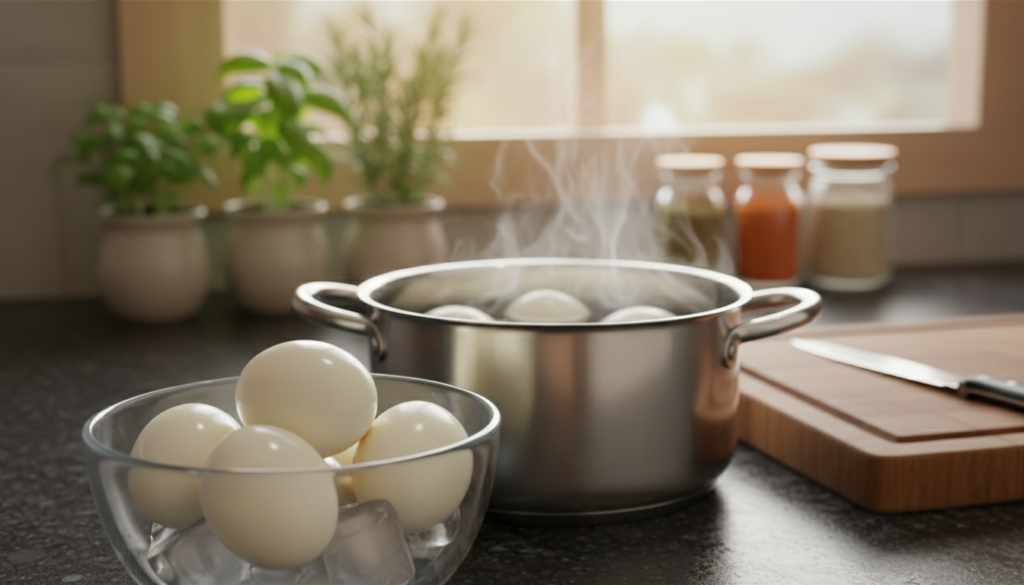
Once the water is off, a few smart steps will chill your hard-boiled egg and cut bacterial growth.
A Great Way to Get Started on the Right Foot!
14-Day Boiled Egg Diet Plan
Recipe Guide Printable Bundle
Healthy, easy meals laid out for you day-by-day. A simple two-week structure you can start immediately.
- 14 Daily Meal Ideas
- Printable PDF Guides
- Quick & Simple Recipes
- Instant Download
Instant Download! Start Right Away!
Why you shouldn’t put hot items straight into the refrigerator
Placing hot food in the fridge can warm nearby items and push them into the temperature danger zone.
“Placing hot items in the refrigerator can warm nearby foods into the ‘temperature danger zone,’ where bacteria multiply.” — Tracey Brigman
Fast cooling method: cold water or an ice bath for a few minutes
Jeanine Flaherty recommends transferring eggs to cold running water or an ice bath for several minutes.
- Drain the pot, then move eggs to a bowl of cold water or ice water.
- Let them sit for 5–10 minutes until they feel cool to the touch.
- Dry and transfer to a clean container once cooled.
When the two-hour clock starts and why it matters
The safety timer begins the moment cooking ends and the food sits at room temperature — that is the time that counts. After two hours cooking or sitting out, risk increases.
Make a habit to refrigerate within two hours and set a timer if you get distracted. This simple step keeps quality and reduces bacterial growth.
Storing boiled eggs safely in the refrigerator
A quick setup—cool, seal, label—makes meal prep easier and safer at home.
Use an airtight container or resealable bag
Cool first, then place eggs into a clean container or resealable bag. Seal it tight to limit exposure to air and reduce odor transfer.
Airtight packaging also cuts the chance of microorganisms reaching the egg surface and keeps the fridge from smelling “eggy.”
Best fridge location
Pick the middle shelf for most stable temperatures. Doors warm faster, so avoid them for long-term keep.
Jeanine Flaherty notes the middle shelf holds a steadier cold, which helps maintain quality for several days.
Label dates for easy weeklong meal prep
Write the cook date on the container with a marker. That lets you rotate food and use the oldest first during the week.
For one-person setups, keep one container for the whole week or pack individual containers for grab-and-go meals.
| Step | Why it helps | How long |
|---|---|---|
| Cool in ice bath | Lowers surface temp quickly to stop bacterial growth | 5–10 minutes |
| Seal in container or bag | Limits air and odor transfer; blocks microbes | Up to 7 days in fridge |
| Place on middle shelf | Most stable temperature in a typical home fridge | Consistent cold for all days |
Peeled vs unpeeled hard-boiled eggs: best storage methods
Deciding whether to peel or leave shells on changes how long your hard-cooked batch stays fresh and how you’ll use them during the week.
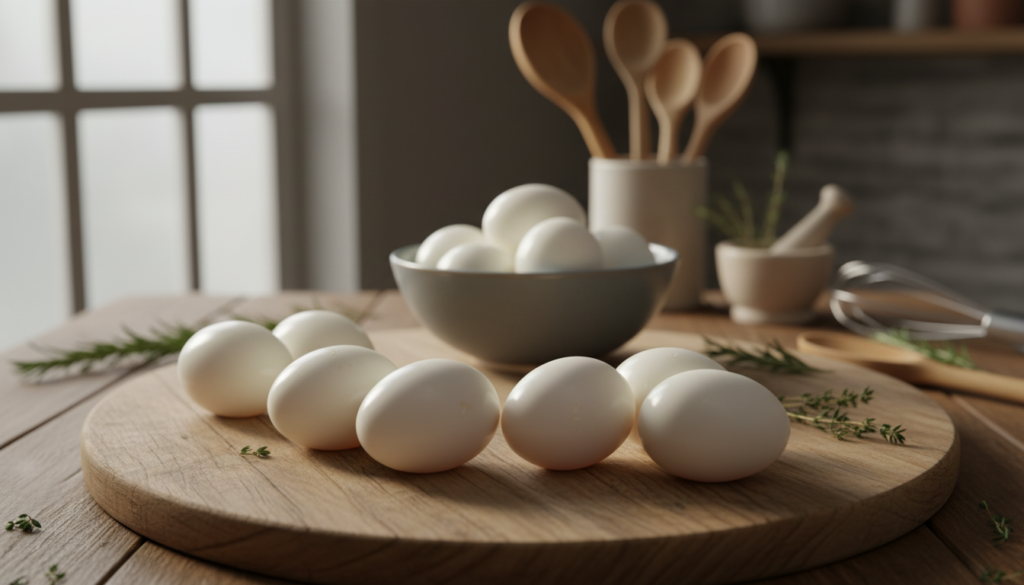
Unpeeled hard-boiled eggs hold up best. The shells act as a physical barrier that cuts odor absorption and limits exposure to microbes. For most meal prep, keep unpeeled hard-boiled eggs in a clean, sealed container and place them on a steady middle shelf.
A Great Way to Get Started on the Right Foot!
14-Day Boiled Egg Diet Plan
Recipe Guide Printable Bundle
Healthy, easy meals laid out for you day-by-day. A simple two-week structure you can start immediately.
- 14 Daily Meal Ideas
- Printable PDF Guides
- Quick & Simple Recipes
- Instant Download
Instant Download! Start Right Away!
How to keep peeled eggs from drying out
If you peel early, put peeled eggs into an airtight container. Lay a damp paper towel over them to keep surfaces from drying. Replace the damp paper if it dries out.
Protecting peeled eggs from odors and cross-contamination
Use tight lids and clean containers to block strong-smelling foods. Keep peeled items away from raw meat or fish in the fridge to reduce cross-contamination risk.
- Quick snack vs meal prep: choose peeled for immediate, ready eat convenience; keep the rest unpeeled for longer hold time.
- Practical tip: peel only what you expect to eat in the next day or two and label containers with the cook date.
How long hard-boiled eggs last in the fridge
Know how long your batch stays fresh so you can plan meals without guesswork. The simple rule for home-cooked food: when cooled and sealed, hard-boiled eggs last up to one week in the fridge.
Home-cooked eggs: the one-week rule for peeled or unpeeled
Whether peeled or unpeeled, properly cooled and packed items keep for about one week. This timeline protects both safety and quality, since texture and flavor decline before spoilage is obvious.
Store-bought pre-packaged eggs: follow the label
Pre-packaged, commercial products may use preservatives or different handling. Always follow the printed expiration and the manufacturer’s guidance rather than the one-week rule.
- Freshness checks: toss anything with a slimy or chalky feel or a sour, sulfur-like odor.
- Don’t gamble—if an item is borderline, discard it to avoid foodborne risk.
- Label containers with the cook date to avoid guessing and to make meal planning easier.
| Item | Recommended timeline | Why it matters |
|---|---|---|
| Home-cooked (peeled) | Up to one week | Higher exposure; use airtight wrap to preserve quality |
| Home-cooked (unpeeled) | Up to one week | Shell adds protection; best for longer meal prep |
| Commercial, pre-packaged | Follow expiration date | Labeled handling may differ from home batches |
Room temperature rules and safe transport
A short set of transport rules will help your prepared food stay fresh on the go. Follow timing and temperature limits so meals stay pleasant and low risk.
A Great Way to Get Started on the Right Foot!
14-Day Boiled Egg Diet Plan
Recipe Guide Printable Bundle
Healthy, easy meals laid out for you day-by-day. A simple two-week structure you can start immediately.
- 14 Daily Meal Ideas
- Printable PDF Guides
- Quick & Simple Recipes
- Instant Download
Instant Download! Start Right Away!
Maximum time out: within two hours
Keep food out of the danger zone: the CDC says do not leave hard-cooked items at room temperature for more than within two hours. Treat that as your baseline for picnics and lunches.
Hot-day exception: shorter window at high heat
If the air is 90°F or higher, the safe window drops. Discard items left at room temperature for more than one hour when heat pushes the temperature into faster bacteria growth.
Picnics and lunchboxes: practical transport tips
Pack eggs last and keep them out of direct sun. Use an insulated cooler or frozen gel packs to keep items cold during travel.
If/then: if items were left room temperature beyond the limit, discard them. If you plan ahead, pack in a cooler and return leftovers to the fridge within two hours.
Freezing hard-boiled eggs and what to do instead
Many home cooks try to freeze whole cooked eggs, but the results usually disappoint. Freezing changes texture and makes the white rubbery and watery after thawing.
Why whole eggs lose texture
The white is mostly water and protein. Ice crystals form during freezing and break the white’s structure. After thawing, the white turns tough and weeps liquid. That makes whole hard-boiled eggs unpleasant to eat.
Freeze yolks for best results
Better option: remove cooked yolks and freeze them for garnishes or recipes. Yolks hold up far better when frozen and work well in salads, spreads, or deviled egg mixes.
Thawing and freezer tips
Thaw frozen yolks in the fridge overnight, never on the counter. Pack yolks in a sealed container or freezer bag to cut freezer burn and limit odor transfer. Label with the date and use within a few months.
| Item | Freezing result | Best use |
|---|---|---|
| Whole hard-boiled eggs | Tough whites, watery texture | Not recommended |
| Cooked yolks only | Good retention of flavor | Garnishes, mixes |
| Thaw method | Refrigerator overnight | Safe and even thaw |
Conclusion
A few consistent steps make meal prep safer and cut waste without extra fuss.
Do this every time: cool cooked items fast in cold water or an ice bath, seal them in an airtight container, and place the container on the fridge’s middle shelf. Keep the refrigerator at or below 40°F to slow microbial growth.
Follow the one-week rule for home-cooked food and rely on the printed date for commercial packs. Limit room-temperature time to two hours, or one hour when air temps hit 90°F or higher.
Batch cook, label dates, and peel only what you plan to eat soon. When in doubt—odd smell or texture—toss the item rather than risk illness. These simple steps make storing boiled eggs safely easy and practical.